 Banff
Banff 
In recognition of international women’s day, let us remember some of Canada’s greatest daughters.
While you may know about famous women like Viola Desmond, and Laura Secord, the accomplishments of the Canadian women included in this article span various social areas and continue to impact social change. These stories are uplifting, sometimes heart wrenching, and all of them are inspiring. These women conquered obstacles and left lasting legacies on Canadian law, culture, or both.
Chloe Cooley
Chloe Cooley was one of the hundreds of women enslaved in Upper Canada in the late 1700s. Although not much is known about Chloe Cooley’s life, we know when her Canadian slave owners sold her to Americans.
The family who claimed ownership of Chloe Cooley sold her as the abolitionist movement gained momentum in Upper and Lower Canada. She resisted as they bound her before placing her in the boat. And her scream was loud enough for enough people to hear. While what happened to her after the incident is not known, the episode was later reported to Lieutenant-Governor John Graves Simcoe, who used the incident as political capital to pass the Act to Limit Slavery in Upper Canada in 1793.
The legislation paved the way for the gradual ending of enslavement and created a legal refuge for those fleeing enslavement, which helped at least 30,000 freedom-seeking Black Americans journey north to Canada over the decades to come.
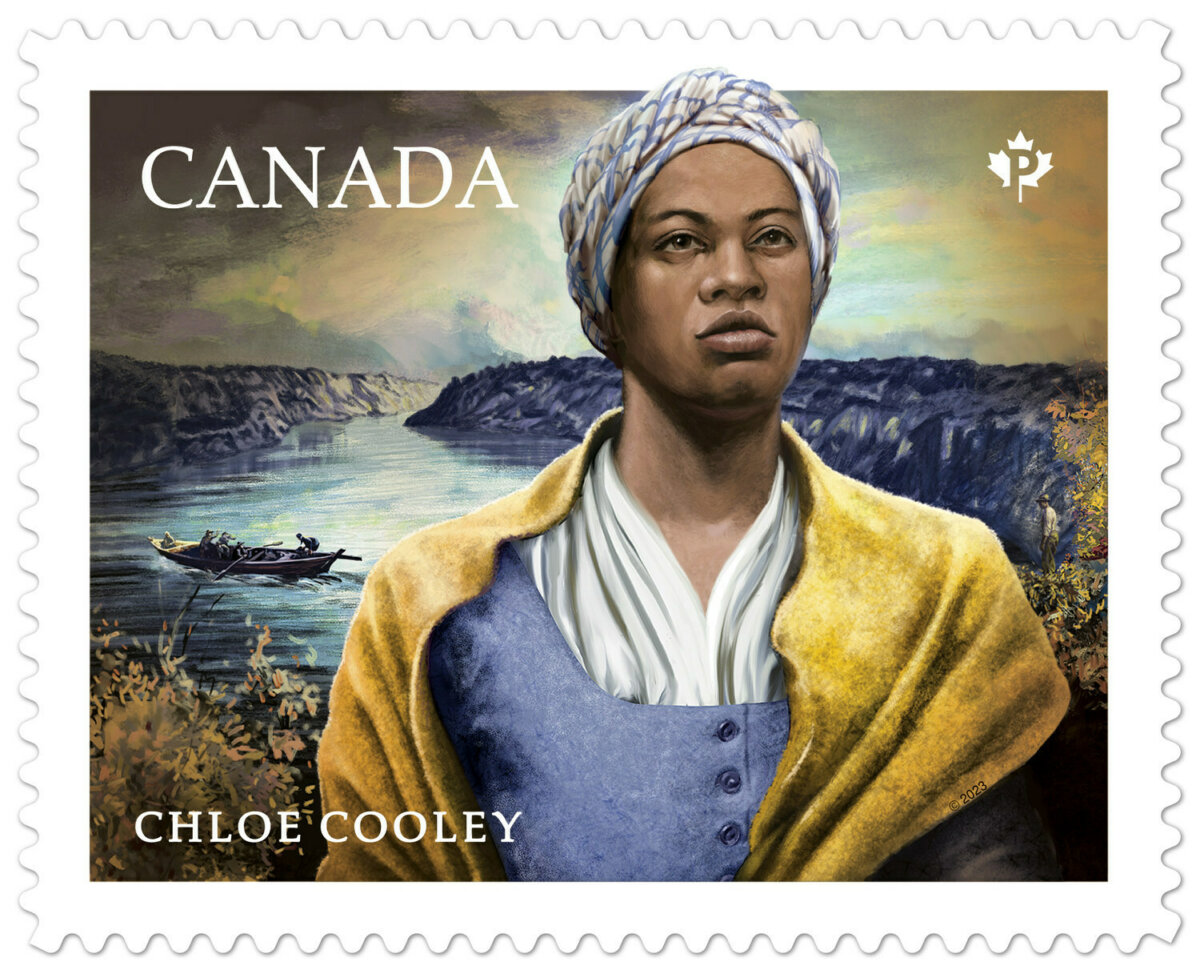
Chloe Cooley Stamp (CNW Group/Canada Post)
Kathleen Rice
In the late 1800s, it was not common for women to take on activities like canoeing, mountaineering, mining, or working land. But Kathleen Rice decided to things a bit differently. She is regarded as one of Canada’s first female prospectors, and is credited for her discovery of copper pyrite in northern Manitoba, among other minerals which she mined. By the brief sounds of things, Rice loved adventure. It is said many of her skills like building fires, mining, or canoeing, were passed on to her from her father. Her contributions to mining in northern Canada are honoured at the Canadian Mining Hall of Fame.
Jennie Trout
Jennie Trout (1841 to 1921) holds the major accomplishment of being the first practicing and licensed female physician in Canada. And her success in the field inspired other women to pursue the same career path. Jennie began her studies at the Toronto School of Medicine, which she fought to attend with friend and fellow student, Emily Stowe. So as Trout became the first licensed female doctor, Stowe followed closely behind as the second female doctor in Canada just five years after Trout.
Both Trout and Stowe faced numerous obstacles and instances of sexism throughout their careers as medical students, and both went on to have long, successful careers in medicine.
The Famous Five
The Alberta Five or the Famous Five, consisting of Henrietta Muir Edwards, Nellie McClung (whose efforts also led Manitoba to become the first province to grant women the right to vote and run for office in 1916), Louise McKinney, Emily Murphy, and Irene Parlby, petitioned the Canadian federal government in 1927 to seek Supreme Court clarification on whether women were eligible to be senators, as part of the broader struggle for political equality, leading to the Persons Case.
Although the Supreme Court ruled unanimously in 1928 that women were not “qualified persons” under the British North America Act, 1867, the five women appealed this decision to the Judicial Committee of the Privy Council, which overruled the Supreme Court on October 18, 1929, concluding that women were “qualified persons” eligible to be appointed to the Senate, paving the way for political equality for women in Canada and initiating the first wave of feminism.
The case marked a significant milestone in Canadian history, even though most women had the vote in federal elections and all provinces except Quebec by 1927. The Famous Five’s efforts set an example for future generations of Canadian women to strive for equal rights and representation.
The Nursing Sisters of Canada
Nursing Sisters of Canada refers to the brave women who assisted Canada’s military during times of war. And while nurses assisted the military before 1899, it was in this year that the Canadian Military established the Canadian Army Nursing Service. This unit began with four nursing sisters in the early 1900s, with 57 on reserve by the start of WWI.
By the war’s end, the Canadian Army Nursing Service had grown to 2700 nurses. For the second world war, Canada had expanded its nursing service to include all branches: army, navy, and air force. The nurses followed the soldiers through every battlefield and warzone, and many lost their lives while on duty.
Thérèse Casgrain
While many women benefited from the Suffrage Act of 1918, it still excluded many groups of women, including Quebecois women. Thérèse Casgrain (1896-1981) was at the forefront of the fight for women’s suffrage in Quebec while she became the first woman to be elected to leadership of a political party.
Casgrain spent the remainder of her career fighting for universal rights when related to things like healthcare or education. She is decorated with multiple awards, including an Honourary Doctor of Law from multiple universities.
Mary Two-Axe Earley
Mary Two-Axe Earley was a Kanien’kehá:ka (Mohawk) elder (1911-1996) who dedicated much of her life to fighting and protesting against those parts of the Indian Act which oppressed status women. She was a vocal feminist in the 1960s-90s through her writing, public speaking, and general campaigning. She campaigned with the Indian Rights for Indian Women (IRIW) group to fight specifically for status women’s property rights under the Indian Act. Section 12(1)(b) stated that women could lose status rights if they married outside of their band, or if they divorced their status husband. These rules did not apply to men. Women were not able to pass down their status to children, either, while fathers could pass status down the line. Two-Axe Earley worked with the IRIW and against the federal government to bring about Bill-C31 in 1985; this resulted in the reinstatement of some women’s status, including her own. She clearly states the importance of the amendments she worked so hard for:
“Now I’ll have legal rights again. After all these years, I’ll be legally entitled to live on the reserve, to own property, die and be buried with my own people.”
Ellen Fairclough
The greatest way to sum up Ellen Fairclough’s political career as Canada’s first woman federal cabinet minister, and therefore her impact on Canadian law and governance, is with human rights activism. Her career started in accounting but quickly grew in politics as she became a member of Hamilton’s city council and then deputy mayor. In 1950, she became the 6h-ever female MP. It was during this tenure in which Fairclough fought for old-age pensions, and equal pay for equal work and created the Department of Labour Women’s Bureau. And in 1957, she became the first woman to be selected for cabinet (by Diefenbaker and his Conservative government). The Conservatives took the 1958 election, enabling Fairclough to become head of the Department of Citizenship and Immigration.
In this position, she created a more inclusive immigration system. And in 1967, Fairclough continued her advocacy by pushing for Indigenous suffrage (the right to vote in federal, provincial, or municipal elections without losing status).


