Calgary
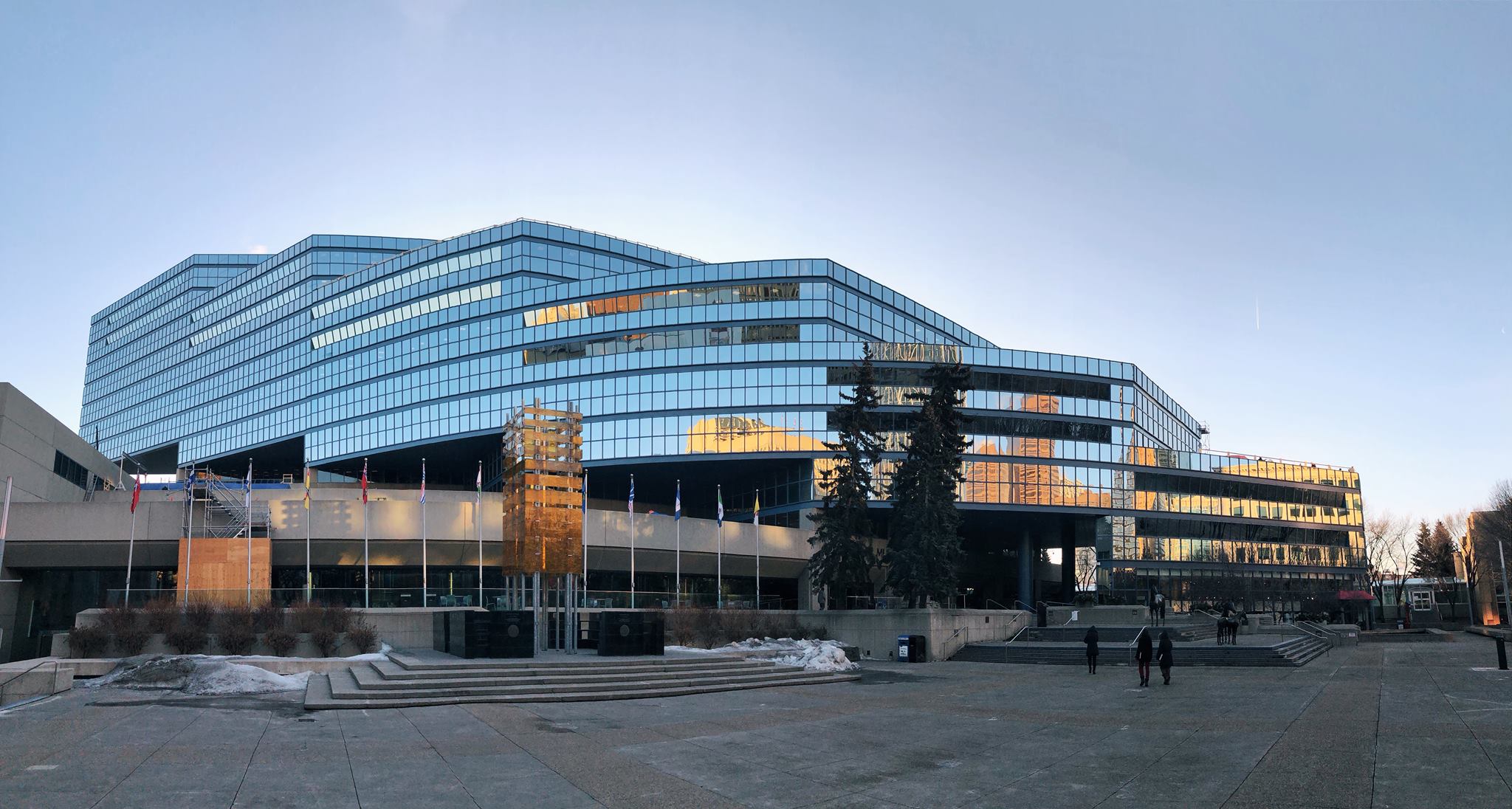
Credit: City of Calgary
The City of Calgary wants the provincial government to reinstate public health enforcement powers and “massively” boost contact tracing as it deals with what its mayor describes as a dire COVID-19 situation.
“Things are unbelievably bad,” Naheed Nenshi said Friday, when the province announced 907 new infections.
“They are much worse than they’ve been at any point during the pandemic and we’re going in the wrong direction.”
There are more than 3,550 active cases in the Calgary zone, including 78 people in hospital and 13 in intensive care.
The province as a whole has 8,593 active cases, 240 people in hospital and 54 in intensive care.
Nenshi made his remarks a day after Alberta Premier Jason Kenney introduced new restrictions for hard-hit areas, including a two-week ban on indoor sports and fitness classes and earlier closing times for restaurants, bars and pubs.
Kenney said his government is also “strongly recommending” there be no gatherings in homes and warned it may have to step in with fines if citizens don’t fall in line.
Calgary Emergency Management Agency Chief Tom Sampson said time will tell whether the province’s latest restrictions go far enough
“I’m a real proponent of a short, sharp, hard break,” he said. “And that includes probably more things than we’ve seen currently in this break that’s been called.”
Sampson said a letter has been drafted to the province asking that city peace officers be given the power to enforce public health orders.
They had been granted that authority at the beginning of the pandemic, but those measures lapsed in June along with the city’s state of emergency.
“I’m optimistic that our provincial government will provide that capacity,” Sampson said, adding he’d prefer citizens follow the rules and that the city not have to crack down.
The city has “essentially zero” power to enforce the latest provincial restrictions, Nenshi said.
“I’ve got women and men out there with uniforms and ticket books who currently cannot write tickets and I think that if there are people who are egregiously and flagrantly putting others at risk, they ought to get a ticket,” the mayor said.
Alberta Health spokesman Tom McMillan said any police agency can enforce orders issued by the Chief Medical Officer of Health, and that bylaw officers can support them. Alberta Health Services can also field complaints.
“The first focus will also be on public education and to work with owners/operators before moving to enforcement action,” McMillan said in a statement.
Sampson said if a liquor-serving establishment is flouting the closure rules, police can issue tickets at their discretion.
“If it’s a wilful and purposeful attempt to get around the closures, they will deal with it.”
Nenshi said his most pressing concern is adding more contact tracers, because two-thirds of active cases have no known source.
“The Number 1, biggest, most important thing we can do right now is massively ramp up the contact tracing and I mean double, triple, quadruple, quintuple the number of people who are doing it,” he said.
He said with such a grim economic situation in the city, he’d like to partner with the province and businesses to put unemployed Calgarians to work contact tracing, potentially with the help of the federal emergency wage subsidy.
“And that should be happening starting now.”
This report by The Canadian Press was first published November 13, 2020.
Lauren Krugel, The Canadian Press