 Toronto
Weather permitting, Canadians will be able to watch the full moon and total lunar eclipse unfold in the early morning hours of March 3, with visibility depending on their location.
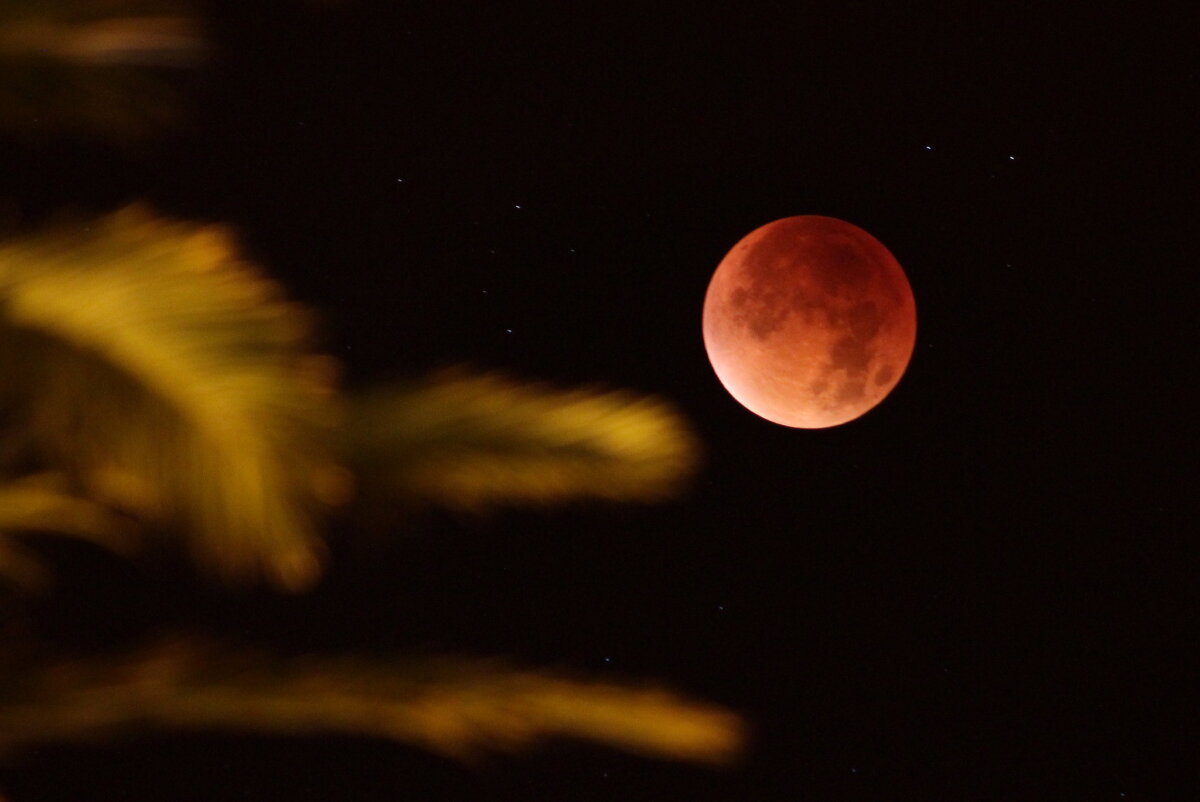
This is the first lunar eclipse of the year, with another partial lunar eclipse in August.
A lunar eclipse occurs when the sun, Earth, and moon line up with Earth in the middle, and Earth’s shadow passes over the moon. For a long lunar eclipse, the centre of the full moon should align with the centre of the Earth’s shadow. A partial umbral eclipse will precede and follow the total eclipse, which means the moon will take over three hours to cross the Earth’s shadow.
A solar eclipse always follows a lunar eclipse, and the March 3rd lunar eclipse follows the February 17th Annular Solar Eclipse, which was visible from Antarctica.
Why is the March 3 Full Moon Called a Worm Moon and a Blood Moon?
Worm Moon:
The March full moon is called the Worm moon because it marks the emergence of larvae from tree bark. According to The Old Farmer’s Almanac, moon names originate from Native American, Colonial American, and other North American traditions, marking the transition from winter to spring. Various cultures have unique names reflecting seasonal changes: Crow Comes Back Moon (Ojibwe), Eagle Moon (Cree), Goose Moon (Algonquin, Cree), Sugar Moon (Ojibwe) for maple sap flow, Wind Strong Moon (Pueblo) for strong winds, and Sore Eyes Moon (Dakota, Lakota, Assiniboine) for snow glare.
Blood Moon:
During a total lunar eclipse, the moon appears red due to Earth’s shadow. Sunlight passing through Earth’s atmosphere gets scattered, with blue light absorbed, leaving only red and orange hues. This refracted light bends around Earth and reaches the moon, creating the “blood moon” effect. The Earth’s atmosphere acts like a filter, allowing only longer-wavelength red light to illuminate the moon. This process gives the moon its striking reddish-orange glow during the eclipse. The phenomenon occurs because of Rayleigh scattering, which removes shorter wavelengths, leaving behind the warm-toned light that colours the lunar surface during the eclipse.
Lunar Eclipse Times in Canada:
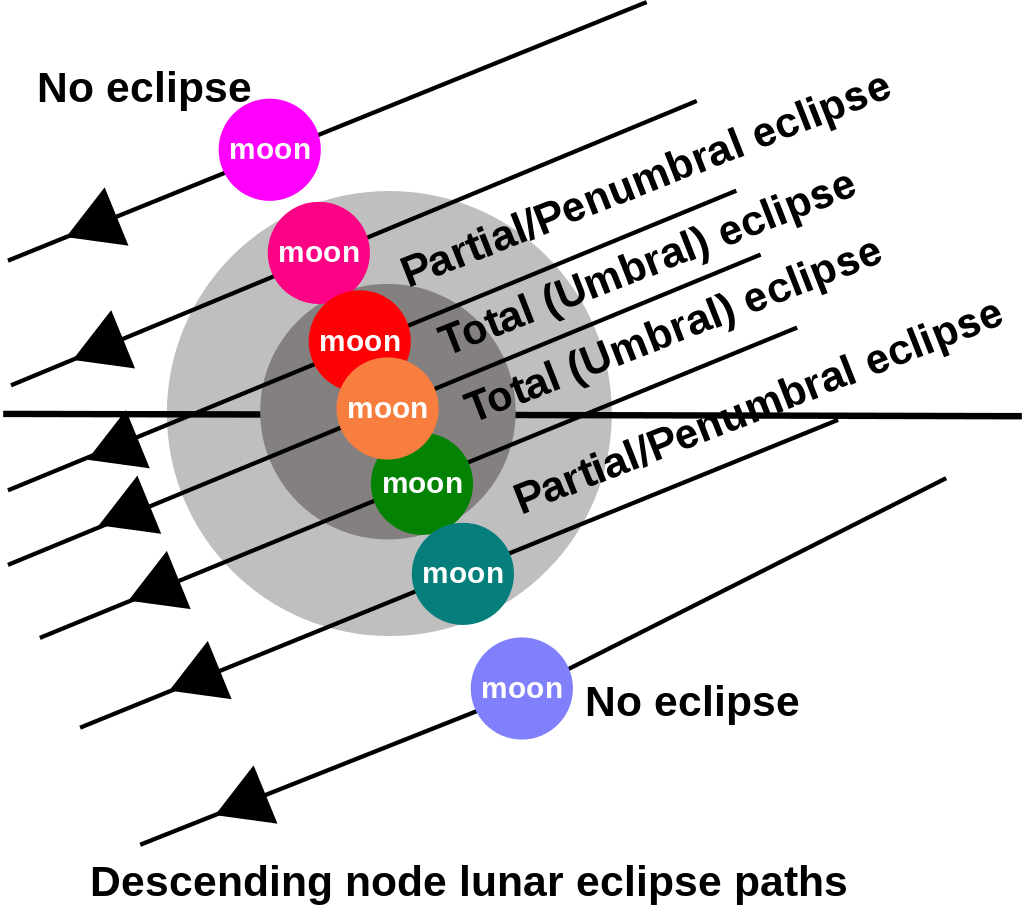
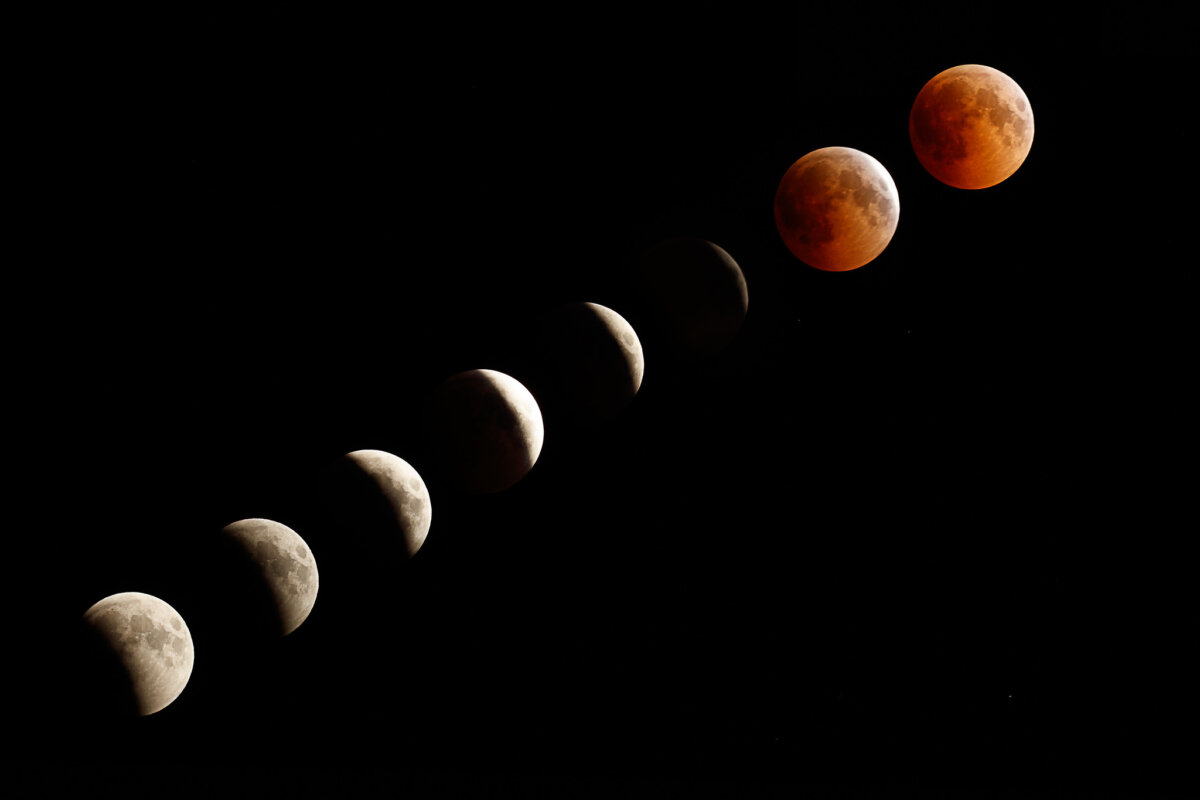
During a total lunar eclipse, the Moon passes through different phases as it moves through Earth’s shadow, creating the stunning “Blood Moon” effect.
- Penumbral Phase Begins – The Moon enters Earth’s penumbra (outer shadow), causing a subtle dimming that is often difficult to notice.
-
- March 3 — 12:44 a.m. PT / 1:44 a.m. MT / 2:44 am CT / 3:44 a.m. ET/4:44 a.m. AT / 5:14 a.m. NT
-
- Partial Eclipse Begins – The Moon starts moving into Earth’s umbra (inner shadow), creating a visible dark curve across its surface.
-
- March 3 — 1:50 a.m. PT / 2:50 p.m. MT / 3:50 p.m. CT / 4:50 a.m. ET/5:50 a.m. AT / 6:20 a.m. NT
-
- Total Eclipse Begins – The Moon is completely within the umbra, slowly turning reddish.
-
- March 3 — 3:04 a.m. PT / 4:04 a.m. MT/ 5:04 a.m. CT / 6:04 ET/5:50 a.m. AT / 7:34 a.m. NT
-
- Total Eclipse (Blood Moon) – The Moon is fully inside the umbra, turning red due to Earth’s atmosphere filtering and refracting sunlight. Shorter blue wavelengths scatter, leaving red and orange hues.
-
- March 3 — 3:33 a.m. PT / 4:33 a.m. MT / 5:33 a.m. CT / 6:33 a.m. ET/ 7:33 a.m. AT / 8:03 a.m. NT
-
- Total Eclipse Ends – The Moon begins emerging from the umbra, gradually regaining its normal brightness.
-
- March 3 — 4:02 a.m. PT / 5:02 a.m. MT / 6:02 a.m. CT / 7:02 a.m ET / 8:02 a.m. AT / 8:32 a.m. NT
-
- Partial Eclipse Ends – The dark shadow completely moves away, restoring the Moon’s usual appearance.
-
- March 3 — 5:17 a.m. PT / 6:17 a.m. MT /7:17 a.m. CT / 8:17 a.m ET / 9:17 a.m. AT /9:47 a.m. NT
-
- Penumbral Phase Ends – The eclipse concludes as the Moon fully exits Earth’s shadow, returning to its original state.
-
- March 3 — 6:23 a.m. PT / 7:23 a.m. MT / 8:23 a.m. CT / 9:23 a.m ET/ 10:23 a.m. AT / 10:53 a.m. NT
-
Maximum Eclipse Times in Canada’s Capital Cities (visible weather permitting):
Viewing conditions for the upcoming lunar eclipse vary across Canada. Western provinces, including British Columbia, Alberta and Saskatchewan, along with parts of Manitoba and Northwestern Ontario, will be able to see all eclipse phases, though some areas may miss the final moments as the moon sets.
In Atlantic Canada, observers will only see a partial eclipse because the moon sets before the blood moon phase. In Ontario and Quebec, visibility depends on location, with some areas able to experience the full total lunar eclipse phase.
- St. John’s — 6:35 a.m. on Tuesday, March 3 (Moon sets at 6:38 a.m., much before total eclipse begins at 7:34 a.m.)
- Charlottetown — 6:46 a.m. on Tuesday, March 3 (Moon sets at 6:49 a.m., much before total eclipse begins at 7:04 a.m.)
- Fredericton — 6:57 a.m. on Tuesday, March 3 (Moon sets at 7:03 a.m., just before total eclipse begins at 7:04 a.m.)
- Halifax — 6:46 a.m. on Tuesday, March 3 (Moon sets at 6:49 a.m., before total eclipse begins at 7:04 a.m.)
- Quebec City — 6:19 a.m. on Tuesday, March 3 (Moon sets at 6:22 a.m., before maximum eclipse at 6:33 a.m. Total eclipse begins at 6:04 a.m.)
- Ottawa — 6:33 a.m. on Tuesday, March 3 (Moon sets at 6:39 a.m., before total eclipse ends at 7:02 a.m. Total eclipse begins at 6:04 a.m.)
- Toronto — 6:33 a.m. on Tuesday, March 3 (Moon sets at 6:52 a.m., before total eclipse ends at 7:02 a.m. Total eclipse begins at 6:04 a.m.)
- Winnipeg — 5:33 a.m. on Tuesday, March 3 (Those in Manitoba and Northwestern Ontario can see a total lunar eclipse and not the complete lunar eclipse as the moon sets before the partial lunar eclipse ends. )
- Regina — 5:33 a.m. on Tuesday, March 3 (The moon only sets after the end of the partial eclipse in Saskatchewan)
- Edmonton — 4:33 a.m. on Tuesday, March 3 (The moon only sets after the end of the partial eclipse in Alberta. )
- Victoria — 3:33 a.m. on Tuesday, March 3. (British Columbians can experience the entire eclipse)
- Whitehorse — 4:33 a.m. on Tuesday, March 3. (Yukoners can experience the entire eclipse. )
- Yellowknife — 4:33 a.m. on Tuesday, March 3.
- Iqaluit — 6:33 a.m. on Tuesday, March 3. (Moon sets at 6:36 a.m., before the total eclipse ends at 7:02 a.m. Total eclipse begins at 6:04 a.m.)
How to See a Lunar Eclipse:
Unlike a solar eclipse, you can watch the lunar eclipse with the naked eye – look up at the moon from your balcony or your backyard. Depending on your location in Canada, the moon is in the west or southwest sky. You can also use binoculars or a small telescope for a clearer view.
This year, the total eclipse lasts about an hour, from 6:04 a.m. to 7:02 a.m. ET. During this phase, the moon turns orange-red, known as a Blood Moon.


