Toronto
For a few weeks this October, the Adams River near Shuswap becomes one of British Columbia’s most remarkable wildlife-viewing destinations. 2026 is a dominant sockeye year, part of a four-year cycle when the largest numbers of fish return to spawn in the river.
Credit: The Adams River Salmon Society
The Salute to the Sockeye Festival runs from October 9 to 25, 2026 at Tsútswecw Provincial Park. The festival is built around the salmon run itself, with interpretive programs, Secwépemc cultural activities, food vendors, an artisan market and opportunities to learn about the salmon life cycle.
What makes the Adams River salmon run worth seeing?
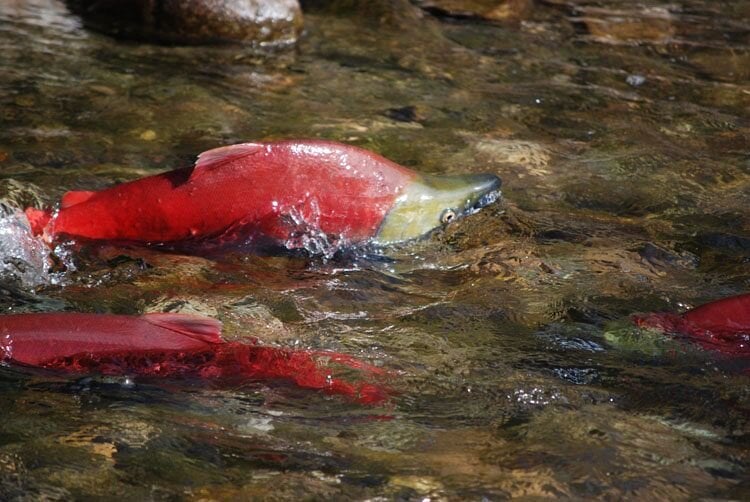
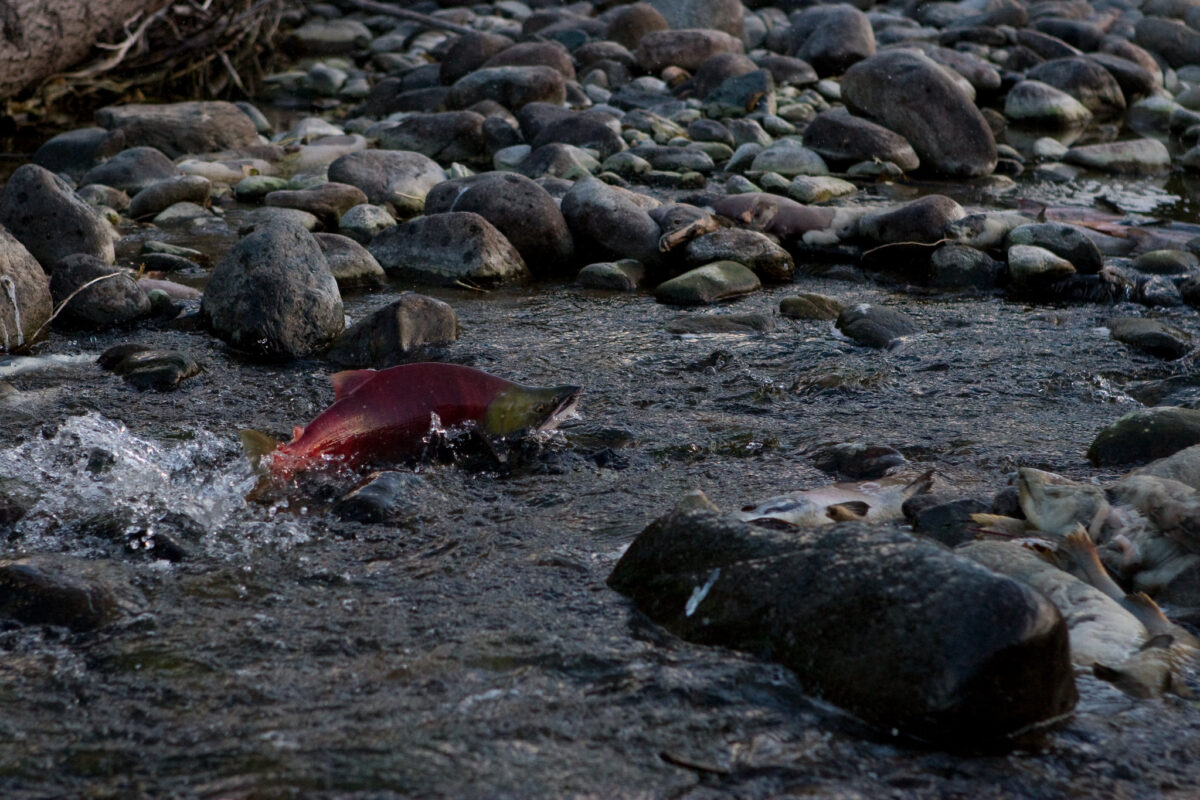
Each fall, Pacific salmon return from the ocean to the rivers where they were born, swimming upstream to spawn and die. Sockeye salmon undergo one of the most dramatic transformations during this journey. Their silver bodies turn bright red, their heads become green, and males develop hooked jaws, humped backs and prominent teeth used to defend spawning areas.
The Adams River in British Columbia is considered home to one of North America’s largest sockeye salmon run. The run follows a four-year cycle, with dominant years bringing the highest numbers of returning fish. During a dominant run, more than one million sockeye can return to the river.
A female sockeye can lay roughly 2,200 to 4,300 eggs. After hatching, young salmon move into Shuswap Lake, remain there until the following spring, then travel through the Thompson and Fraser rivers to the Pacific Ocean. Only a small number survive the full journey and return several years later to spawn.
What Can You See and Do During Salute to the Sockeye Festival ?
Credit: The Adams River Salmon Society
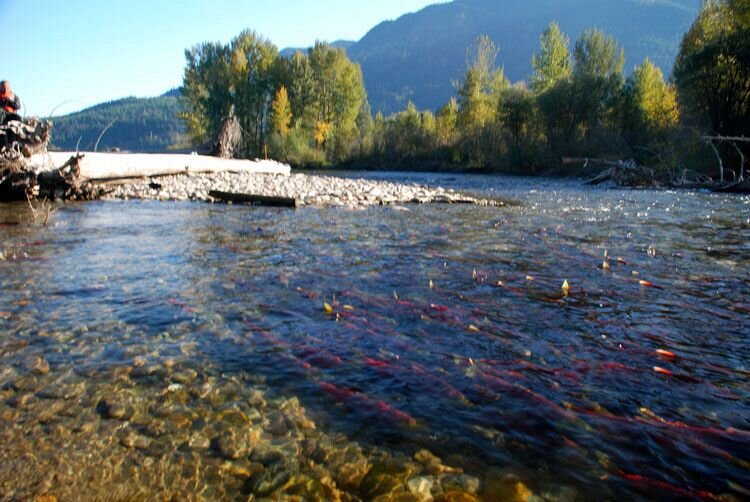
- Watch sockeye spawning in the Adams River. The river is the main attraction. During the dominant run, visitors can watch bright-red sockeye moving through the spawning grounds from designated trails and viewing areas.
- Join interpretive walks and guided programs. The festival offers guided tours and educational programs focused on salmon biology, habitat and the surrounding ecosystem.
- Visit the Interpretive Cabin. Displays explain the salmon life cycle through storyboards, interactive touch screens and a life-sized spawning salmon display. Volunteers are available to answer questions.
- Experience Secwépemc cultural programming. The festival includes cultural entertainment, educational programming and First Nations ceremonies. Opening Day on October 9 includes a welcome ceremony and Skwlāx te Secwepemcúl̓ecw cultural events.
- Browse the artisan and vendor market. Organizers say the 2026 market will have greater participation than in previous years. Items expected include prints, photography, woodworking, pottery, fabric creations, children’s salmon books, artisanal foods and First Nations works such as carvings, baskets, jewellery, beadwork, drums and rattles.
- Eat onsite. Scheduled food vendors include The Lobster Pot, Mini Donuts, Vans Grill and Chase Rotary. Food service runs from 10 a.m. to 4 p.m.
- Walk farther into Tsútswecw Provincial Park. Visitors who want more than the main viewing areas can explore the park’s trails and visit the Winter Home along the Wade Road trails above the Adams River Bridge.
What is different in 2026?
The most important difference is the salmon cycle itself. 2026 is a dominant-run year, followed by 2030 and 2034. These four-year peaks are when the largest sockeye returns are expected, making 2026 a more significant year to visit than an ordinary season.
The festival also has a larger artisan and vendor market, along with interpretive and cultural programming that adds context to what visitors see in the river.
Who will enjoy the trip most?
The event is particularly well suited to families, wildlife watchers, photographers and visitors interested in salmon ecology and Secwépemc culture. You do not need to be a serious hiker to see the fish, since viewing areas are accessible from the lower trail system.
A typical visit can take around two to three hours if you want to see the salmon, visit the Interpretive Cabin and browse the market. Allow more time if you plan to walk several trails or stay for scheduled cultural and educational programming.
Tsútswecw Provincial Park is about 48 km from Salmon Arm, 73 km from Kamloops and 155 km from Kelowna, making it an easy day trip from several Interior B.C. communities. From Vancouver, the park is roughly 425 km away, or about a 4.5-hour drive, while Calgary is approximately 560 km away, with a drive of about six hours.
What should you know before going?
The experience is primarily outdoors, so dress in layers and wear footwear suitable for trails and potentially wet ground. October weather can change quickly, and salmon viewing continues even when conditions are cool or damp.
Visitors should remain on designated trails and avoid disturbing spawning fish. Dogs must be leashed and kept out of the water.
During the festival, Wade Road and Beach Access roads are closed. Parking is available onsite for a fee, and the entrance gates close at 4:30 p.m.
Trip Planning – Salute to the Sockeye Festival
About: The Salute to the Sockeye Festival celebrates the return of sockeye salmon with river viewing, interpretive walks, educational displays and Secwépemc cultural programming. Visitors can explore the Interpretive Cabin, browse an artisan and vendor market, enjoy food onsite and walk nearby trails while learning about the salmon life cycle, migration and the ecological importance of the Adams River.
Dates: October 9 to 25, 2026
Festival site hours: 8:30 a.m. to 4:30 p.m. daily
Vendors and activities: 10 a.m. to 4 p.m.
Admission: $15 per personal vehicle. Lifetime Adams River Salmon Society members are admitted free with a membership card. Commercial and tour groups have separate rates.
Where: Tsútswecw Provincial Park, 2300 Squilax Anglemont Rd., Lee Creek, British Columbia
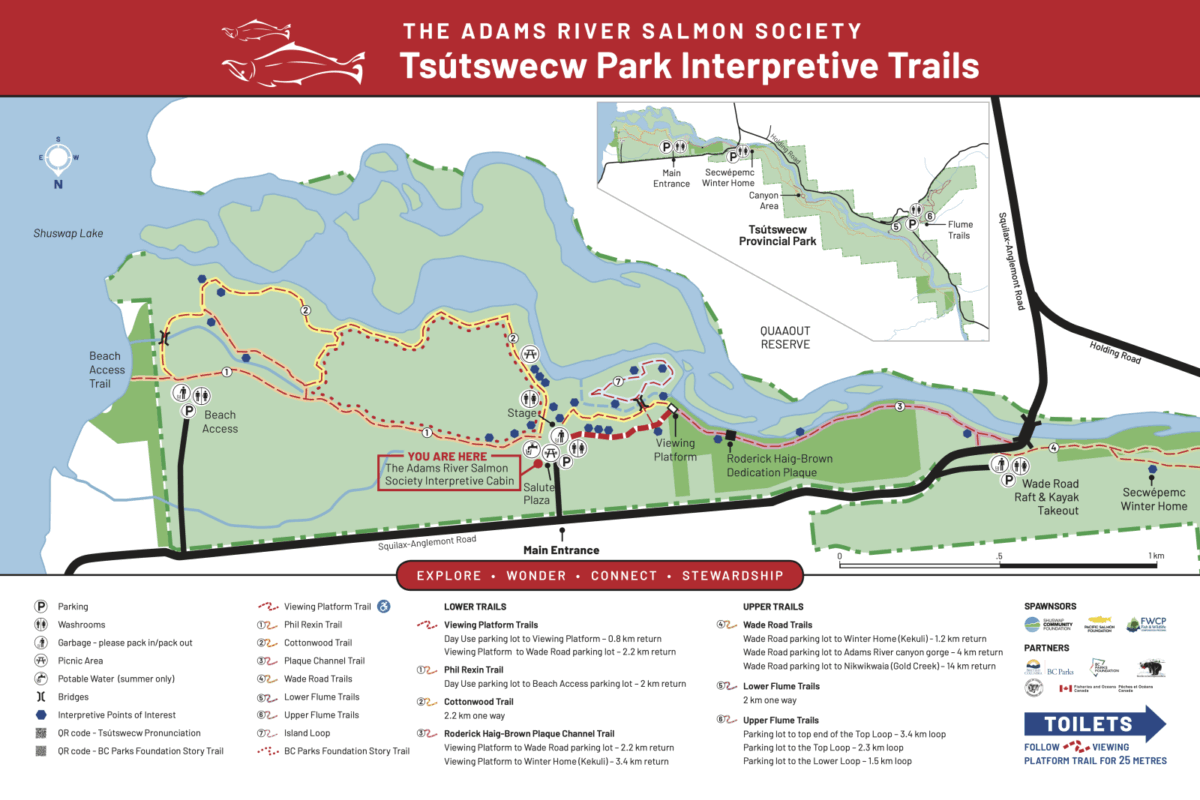
Parking: Paid onsite parking. Entrance gates close at 4:30 p.m., and all vehicles must leave by 5:30 p.m.
Facilities: Food vendors, artisan market, interpretive programming, cultural programming, potable water and portable toilets.
Pets: Dogs must be leashed and kept out of the water.