 Toronto
During the mornings until November 22 of this year, enjoy a display of meteor showers made up of debris shed by Halley’s Comet – you can expect to see as many as twenty Orionids per hour.
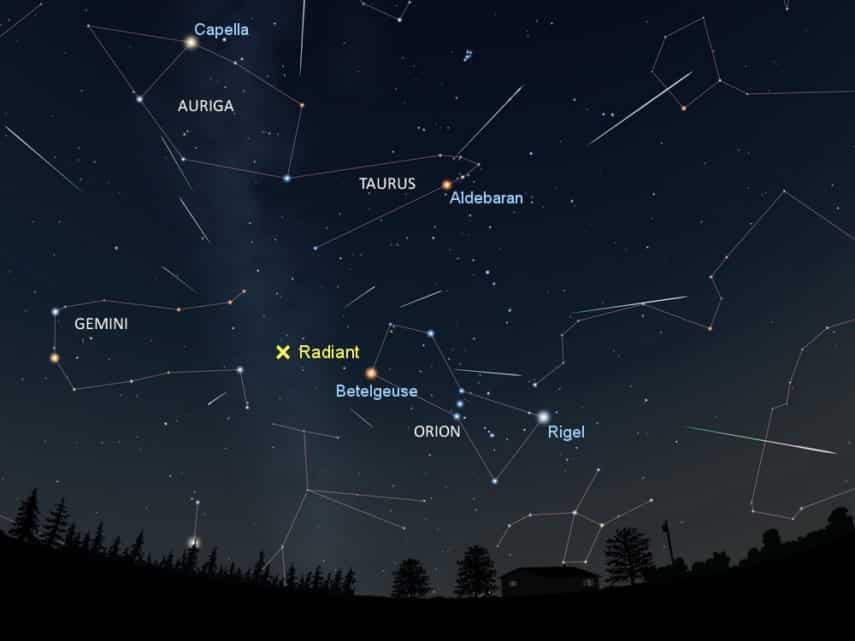
When to See the Orionid Meteor Shower
Earth crosses the Halley’s comet’s debris cloud every year. Orionid meteors appear every year around October to Early November, with a peak of around October 20 – 22 when Earth travels through an area of space littered with debris from Halley’s Comet.
WHEN: September 26 to November 22 of 2024 with a peak during predawn hours (between midnight and dawn) of October 21 (Night of October 20), October 22 (Night of October 21), 2024.
How & Where to see Orionid Meteor Shower:
Moon:
During the peak days of the meteor shower, the moon will be a waning crescent with about 75 to 88 percent illumination.
Unfortunately, this means the bright moonlight may interfere with the visibility of the meteor shower. However, for those eager to catch the event, it’s still possible to see it during the predawn hours if the sky is clear. You might get to spot around 15 to 20 meteors per hour if you view with the moon opposite your viewing direction.
Where to See:
The best way to see it is to get away from city lights, preferably to Dark Sky Preserves. If not, visit open, clear sky areas (so that you have a 360 deg view of the sky) away from city lights (where you can typically see a million stars on a clear starry night) and look up in the direction of the constellation Orion (southwestern sky). The shower appears to radiate from Orion’s belt. The meteors can appear anywhere in the sky.
You can see the shower with the naked eye and do not need astronomy equipment. Make sure you switch off the phone, and your eyes need ~ 30 minutes to adjust to the dark. Make sure you have an hour to observe. If you are carrying a flashlight, cover it with red cellophane wrap or some red filter so that it doesn’t interfere with viewing.
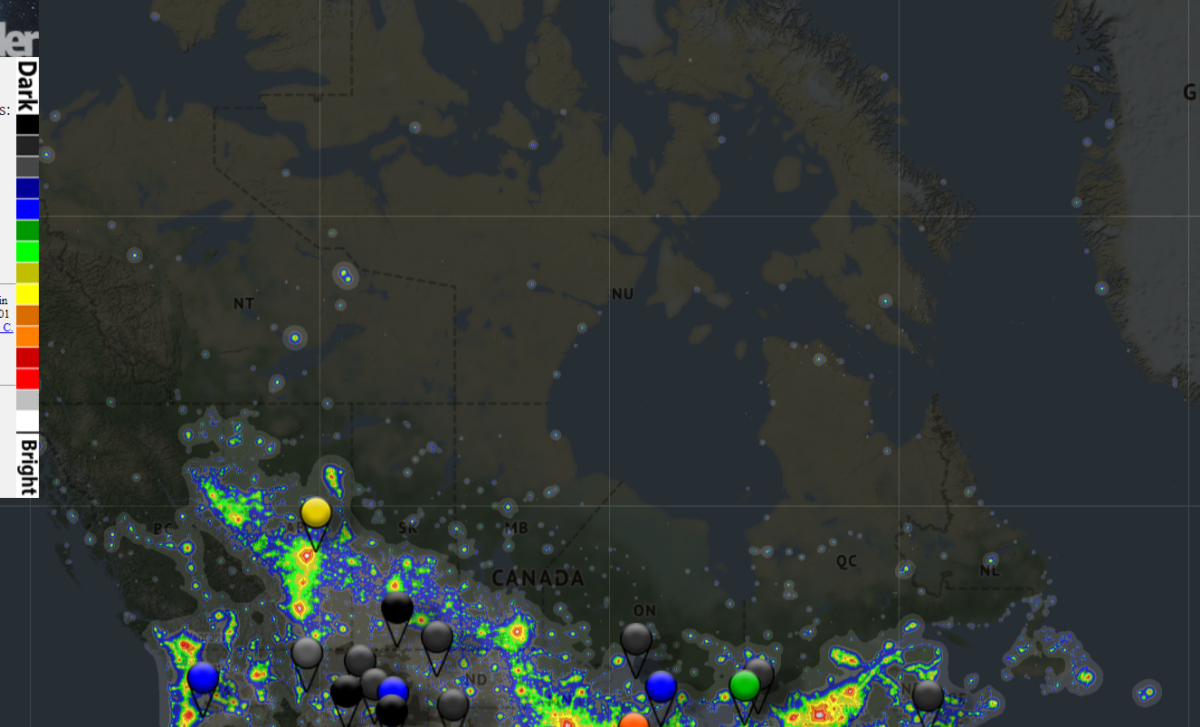
Screengrab: DarkSiteFinder Light Pollution Map.
To find reasonably dark areas near your location, check the darkskyfinder map. Search for a park (or a safe place with no streetlights and away from roads/traffic) within the areas coloured dark (mustard), yellow, green, blue, grey or black (transparent). (Before travelling, please check cloud cover.)
Don’t forget to dress for the weather!
You may also like: