 Moncton
Canadian skywatchers can look forward to a year filled with captivating stargazing opportunities in the new year.
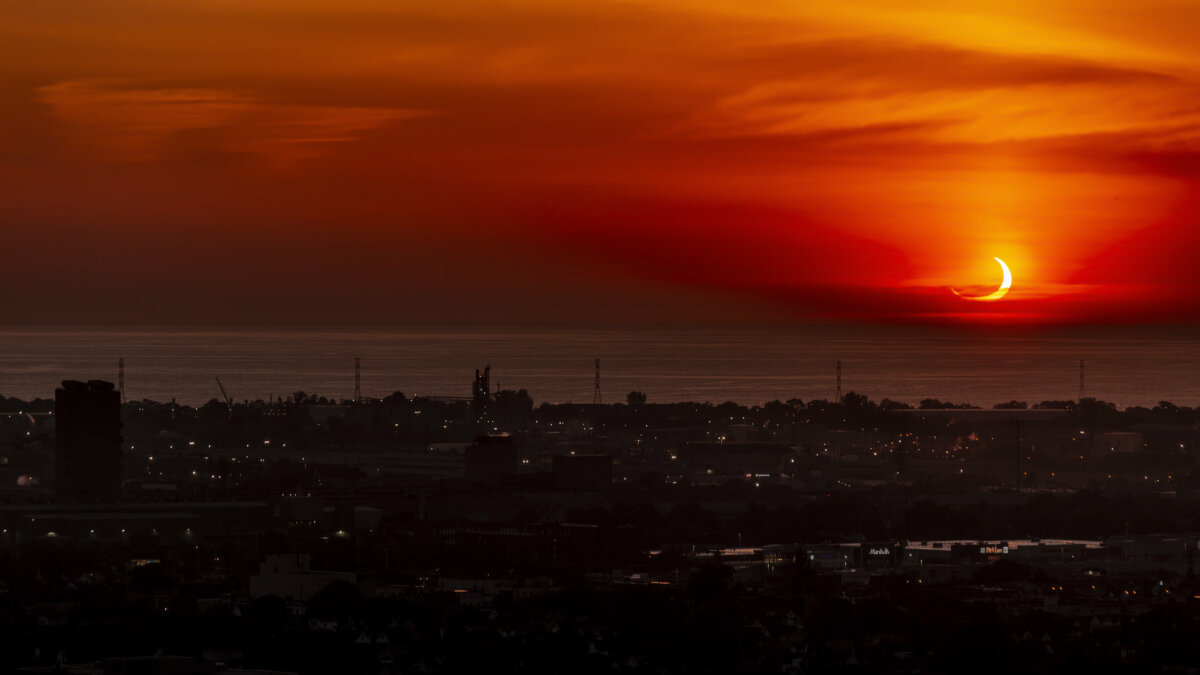
This year, the skies offer exciting celestial events, including a total lunar eclipse and a partial solar eclipse. Astronomy enthusiasts can also look forward to several annual meteor showers, perfect for viewing under Canada’s dark, expansive skies.
Here is the list of annual meteor showers, full moons, eclipses and other celestial events in 2026.
2026 Astronomy Calendar
You may use the calendar to plan your trip to dark sky areas for a better chance of viewing meteor showers.
January
- January 3 — Super Full Moon, also called Wolf Moon. This is also the first supermoon of 2026, located at 362312 km from Earth.
- January 3 to 4 — Quadrantid Meteor Shower – Named for a now-obsolete constellation called the Quadrans Muralis, the Quadrantids originate from an asteroid 2003 EH1. This annual shower usually runs from the end of December to the second week of January.—
- January 10 — Jupiter at Opposition: meaning Earth lies directly between the giant planet and the Sun. Jupiter appears at its brightest and largest of the year, rising at sunset and remaining visible all night. This alignment offers excellent viewing conditions, revealing cloud bands and its four Galilean moons through binoculars or small telescopes.
- January 18 — New moon
February
- February 1 — Full moon, also called Snow moon
- February 17 — New moon
- February 17 — Annular Solar Eclipse. – Not visible from Canada or the Northern Hemisphere. Visible from Antarctica.
- February 28 — Planetary Alignment — a rare six-planet alignment occurs as Mercury, Venus, Mars, Jupiter, Saturn, and Uranus appear along the same arc of the sky. Most will be visible to the naked eye, with Uranus requiring binoculars. This alignment offers a striking opportunity to observe multiple planets in a single evening sky.
March
- March 3 — Full moon, also called Worm moon
- March 3 — Total Lunar Eclipse visible in Western Canada and most of Central Canada. The moon will turn a shade of red/ deep orange colour and is often called a blood moon. Partial lunar eclipse in Atlantic Canada.
- March 19 — New moon
- March 20 — March Equinox
April
- April 1/2 — Full Moon, also called Pink Moon
- April 17 — New Moon.
- April 21-23 — Lyrid Meteor Shower – The Lyrid meteor shower occurs when Earth passes through the cloud of debris left in the orbit of Comet Thatcher(C/1861 G1). The meteor shower lasts from April 15 to April 30.
May
- May 1 — Full moon, also called Flower moon
- May 5 to 6 — Eta Aquarid Meteor Shower – Originating from the debris of Comet Halley, the Eta Aquarids occur annually between April 19 and May 21. The showers are named after Eta Aquarii, the brightest star in the Constellation Aquarius and the apparent radiant point.
- May 16 — New moon
- May 31 — Full moon, also a blue moon.
June
- June 15 — New moon
- June 21 — June Solstice
- June 29 — Full moon, also called the Strawberry moon
July
- July 14 — New moon
- July 28 to 30 — Southern Delta Aquarid Meteor Shower – These faint showers are active from mid-July to late-August and are believed to originate from comet 96P/Machholz. The radiant point of Delta Aquariids appears to come from the constellation Aquarius; the shower is named after the third brightest star within the constellation called Delta.
- July 29 — Full moon, also called Buck Moon
August
- August 12 — New Moon
- August 11-13 — Perseid Meteor Shower – Occurring annually from mid-July to mid-August, the Perseid Meteor Shower occurs when the debris cloud of comet Swift-Tuttle hits Earth’s atmosphere. The showers are so-called because they appear to originate from the constellation Perseus. The moonlight will not interfere with the viewing of the shower.
- August 12 — Partial Solar Eclipse visible from Canada with most coverage in Newfoundland and Labrador (St. John’s – 53.18%), Northwest Territories (Inuvik – 44.22%), and Nunavut (Iqaluit – 61.46%)
- August 12 —Planetary Alignment: Several planets align along the ecliptic in the early morning sky. Venus, Jupiter, Mars, and Saturn are visible to the naked eye, while Uranus and Neptune require binoculars or a telescope. This alignment provides an excellent opportunity for wide-field planetary observing before sunrise.
- August 28 — Full Moon, also called Sturgeon Moon.
- August 28 — Partial Lunar Eclipse visible from all of Canada.
September
- September 11 — New moon
- September 18 — Venus at its Brightest as Evening Star: Venus reaches peak brightness in the evening sky, shining brilliantly just after sunset. Known as the “Evening Star,” Venus outshines all other planets and most stars, making it easy to spot low in the western sky. Its dazzling glow is visible even through light pollution.
- September 22 — September Equinox
- September 25 — Neptune at Opposition, placing Earth directly between the planet and the Sun. Neptune is visible throughout the night and shines at its brightest of the year. Although too faint for the naked eye, it can be observed with binoculars or a small telescope as a distant blue world.
- September 26 — Full Moon, also called Harvest Moon.
October
- October 4 — Saturn at Opposition. Earth lies directly between the ringed planet and the Sun. Saturn appears at its brightest and largest of the year, rising at sunset and remaining visible all night. This is an ideal time to observe its spectacular rings and largest moons with binoculars or a small telescope.
- October 10 — New Moon
- October 8–10 — Draconids Meteor Shower, a minor meteor shower.
- October 22–23 — Orionids Meteor Shower, a display of meteor showers made up of debris shed by Halley’s Comet.
- October 26 — Full moon, also called Hunter’s moon.
November
- November 9 — New moon
- November 8 to 9 — Taurids Meteor Shower, a minor meteor shower
- November 16-17 — Leonids Meteor Shower – Associated with the comet Tempel–Tuttle, Leonids appear to originate from the constellation Leo.
- November 24 — Full moon, also called Beaver moon. This full moon is also a supermoon located at 360768 km from Earth.
- November 25 — Uranus reaches opposition, when Earth lies directly between the planet and the Sun. Uranus is visible all night and at its brightest for the year. Under dark skies, it can be spotted with binoculars as a faint blue-green point of light.
- November 27 — Venus at its Brightest as Morning Star: Venus reaches its morning peak as the brilliant “Morning Star.” Rising well before sunrise, Venus shines at its brightest in the eastern sky, easily visible even in daylight twilight. This marks one of the best times of the year to observe Venus dominating the pre-dawn sky.
December
- December 8 — New Moon
- December 12-13 — Geminid Meteor Shower – These annual showers, caused by asteroid 3200 Phaethon, are named thus since the showers appear to radiate from a point in the constellation Gemini.
- December 21-22 — Ursids Meteor Shower – Associated with the 8P/Tuttle comet, these showers are active from December 17 to 24 and seem to radiate from the direction of the constellation Ursa Minor in the sky.
- December 21 — December Solstice
- December 23 — Full moon, also called Cold Moon. This full moon is also a supermoon located at 356740 km from Earth. This is the closest full moon of 2026 and the closest since 2019.


thanks for all this lovely info