Toronto
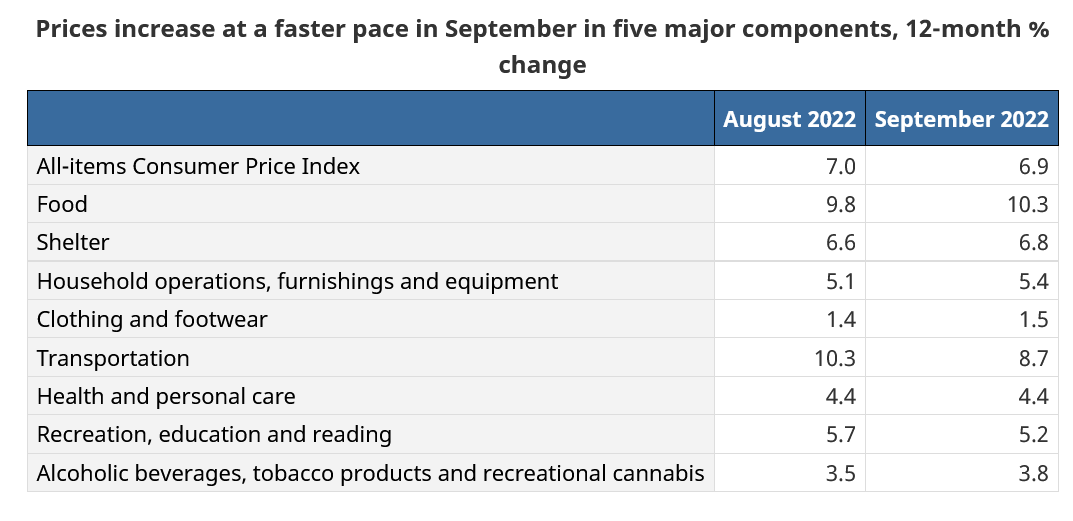
The annual rate of inflation has fallen to 6.9 per cent, a drop of 0.1% compared to August due to a reduction in gasoline prices, says Statistics Canada in the Consumer Price Index report for September 2022.
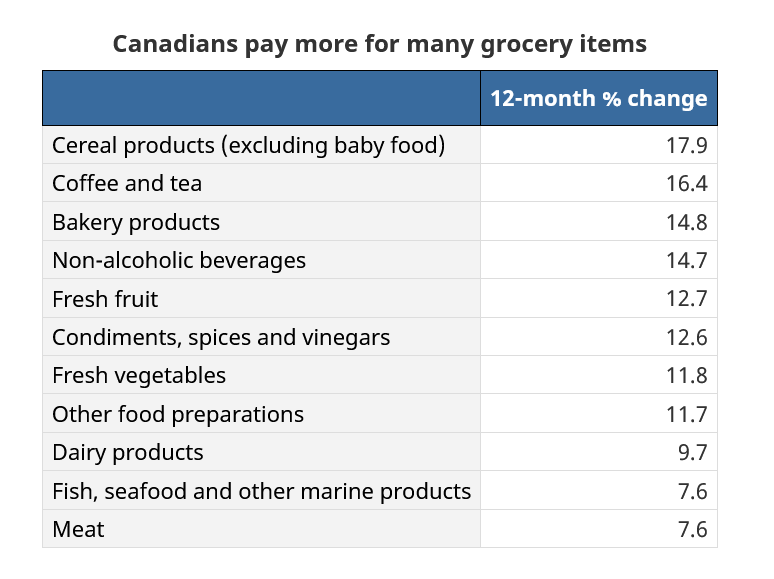
As per the report, while the overall inflation reduced, food purchased from stores increased to 11.4%, and this is the fastest pace year-over-year since August 1981 (+11.9%). The overall food inflation rose to 10.3%.
The prices for meat increased by +7.6%, dairy products by +9.7%, bakery products by +14.8%, and fresh vegetables by +11.8%. The food inflation is much higher than what 2022 Canada’s Food Price Report released in December 2021 predicted.
Statistics Canada
Statistics Canada says the price increase is due to unfavourable weather, higher prices for important inputs such as fertilizer and natural gas, as well as geopolitical instability stemming from Russia’s invasion of Ukraine.
Statistics Canada
Tuition fees (2.3%), furniture (13.3%) and passenger vehicles (8.4%) prices also increased in September 2022, compared to last year.
Tuition fees increase was highest in Alberta at +7.7%.
The homeowners’ replacement cost index, which measures the price of new homes, slowed to 7.7% in September compared to August (+8.4%).
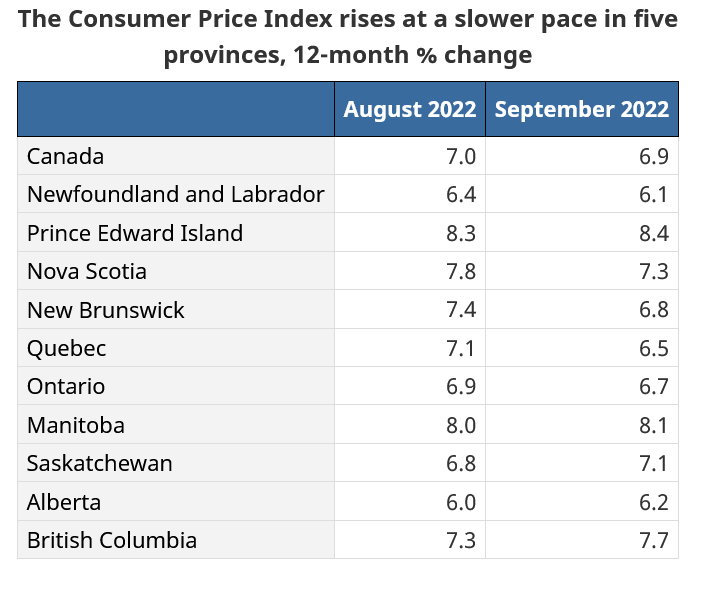
Among the provinces, inflation decreased in Newfoundland and Labrador, Nova Scotia, New Brunswick, Quebec, and Ontario.
Statistics Canada
Inflation increased to 7.7% in British Columbia mainly due to an increase of 27.0% rise in gasoline prices in September compared to an increase of 17.7% in August.
As per the report, excluding food and energy, prices rose 5.4% year over year in September compared to 5.3% in August.
Statistics Canada says though the average hourly wages rose 5.2% on a year-over-year basis in September, prices rose faster than wages and that the gap in September was larger compared with August.
A detailed report is available here.