 Toronto
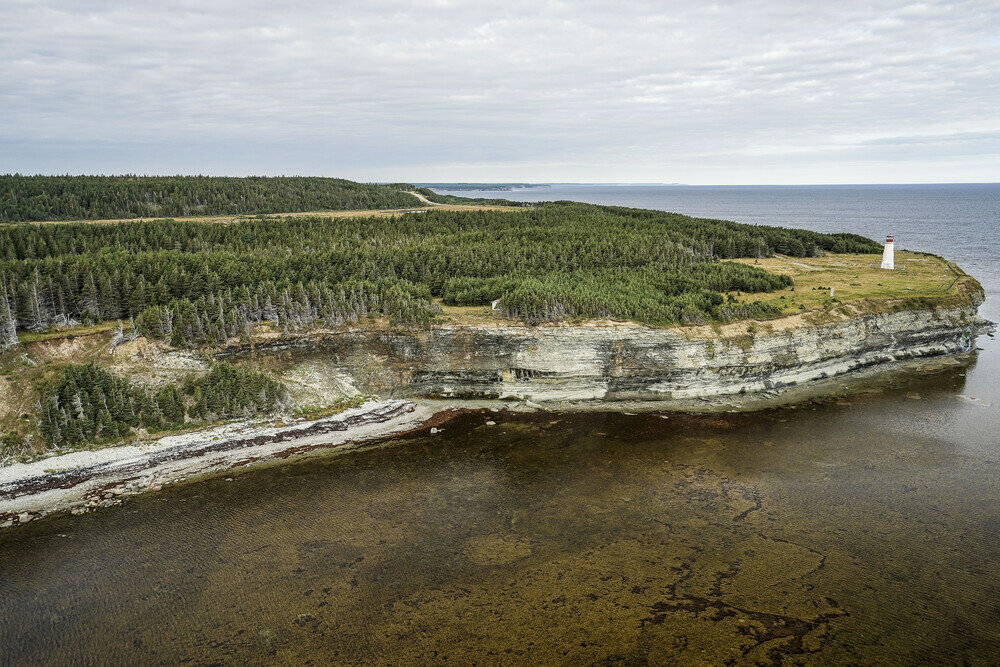
Anticosti Island has been formally recognized and inscribed on the UNESCO World Heritage List.
Credit: ©Pascal Bernatchez
This announcement was made during UNESCO’s World Heritage Committee’s 45th annual session held in Riyadh, Saudi Arabia.
Anticosti Island, located at the outlet of the St. Lawrence River into the Gulf of Saint Lawrence, is a captivating and wild island in the Minganie Regional County Municipality within the administrative region of Côte-Nord in Quebec, Canada.
The successful nomination is credited to the persistent efforts of the Quebec government, the MRC de Minganie, and the Municipality of L’Île-d’Anticosti, along with the substantial support and involvement from the Innu communities of Ekuanitshit and Nutashkuan.
Encompassing over 9,200 square kilometres with a coastline extending beyond 550 kilometres, Anticosti is home to one of the largest and most intact stratigraphic successions, offering an unrivalled glimpse into a critical ten-million-year span (447-437 million years ago) of Earth’s geological history. This period, previously unrepresented on the World Heritage List, witnessed substantial climatic and sea-level alterations culminating in the first mass extinction event, all documented through the over 1,440 fossil species discovered on the island.
Credit: ©René Bourque
Protected from industrial development, the site harbours potential for significant paleontological research, attracting scholars worldwide to its robust fossil records.
This addition to the World Heritage List underscores its universal value, aligning it with other notable Canadian sites such as the Gros Morne National Park and the Historic District of Old Québec.
UNESCO inscription reads, “Situated on the island of Anticosti, the largest island in Quebec, this property is the most complete and best preserved palaeontological record of the first mass extinction of animal life, 447-437 million years ago.”
“It contains the best-preserved fossil record of marine life, covering 10 million years of Earth history. The abundance, diversity, and exquisite preservation of the fossils are exceptional and allow for world-class scientific work. Thousands of large bedding surfaces allow the observation and study of shell and sometimes soft-bodied animals that lived on the shallow sea floor of an ancient tropical sea.”
Celebrating the inscription, Minister Steven Guilbeault said, “Anticosti Island, with its impressive assemblage of fossils, tells the story of what happened on our planet between 447 and 437 million years ago. It helps us better understand how climate change and rising sea levels at the time contributed to a decisive moment in history – the world’s first mass extinction of life on Earth.”
More About Anticosti Island
Credit: ©René Bourque
- Size: Anticosti Island is the 90th largest island globally and the 20th largest island in Canada.
- Geographic Location: The island is situated at the confluence of the St. Lawrence River and the Gulf of Saint Lawrence. It is separated from the Labrador Peninsula (Côte-Nord region) to the north by the Jacques Cartier Strait and from the Gaspé Peninsula to the south by the Honguedo Strait. The entire island constitutes one municipality known as L’Île-d’Anticosti.
- Population: Despite its size, Anticosti Island is sparsely populated. The majority of the permanent population resides in the village of Port-Menier, located on the western tip of the island. Most of the residents are involved in maintaining the lighthouses on the island.
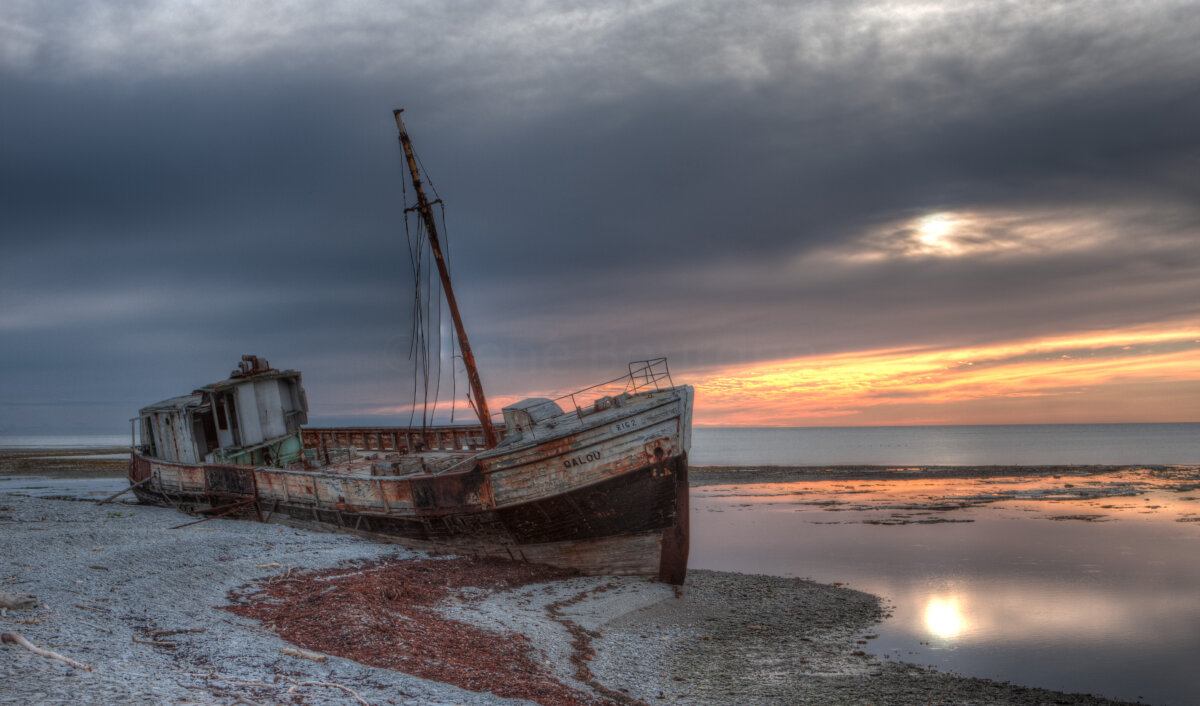
- Nickname: Anticosti Island is sometimes referred to as the “Cemetery of the Gulf” due to the more than 400 shipwrecks that have occurred off its coasts.
- Natural Beauty and Wildlife: Anticosti Island is renowned for its spectacular scenery and rich wildlife. It serves as an unofficial sanctuary for white-tailed deer and is a paradise for nature enthusiasts. Visitors can explore caves, admire canyons, and swim in crystal-clear waters.
- History: The island has a fascinating history, including the presence of a ghost castle in Port-Menier. Château Menier, a luxurious villa, once stood on the island during the ownership of French chocolate baron Henri Menier in the late 19th and early 20th centuries. Although the castle burned down in 1953, a reconstructed tower overlooks the castle’s foundations.
- Lighthouses and Shipwrecks: Anticosti Island is home to several lighthouses, including some with historical significance. It has also witnessed numerous shipwrecks over the years, contributing to its reputation as a treacherous maritime area.
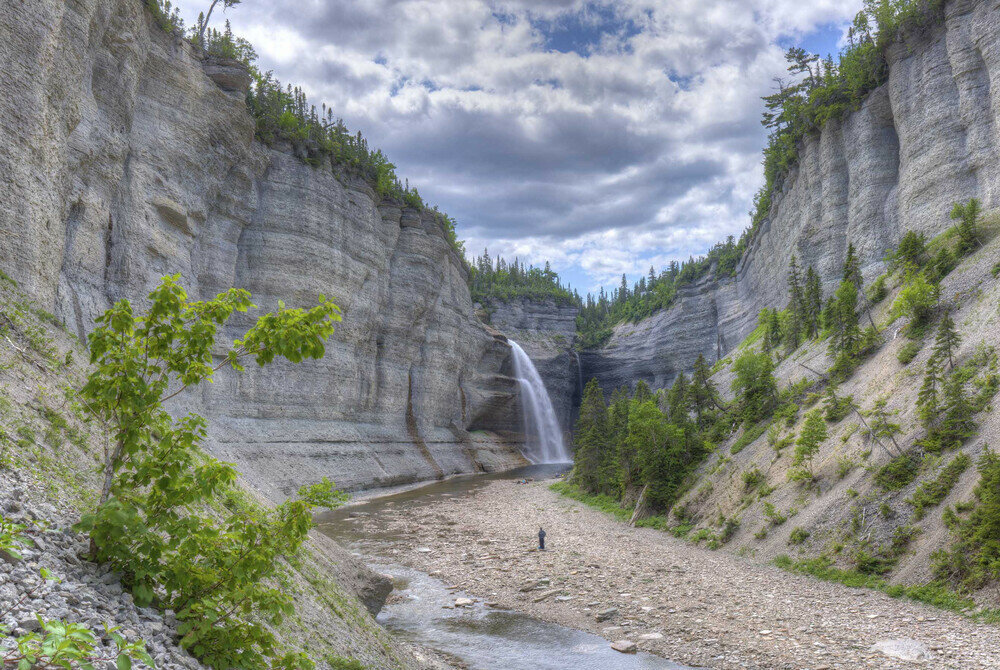
- Spectacular Sights: The island offers a range of spectacular natural attractions, including Vauréal Falls, breathtaking canyons, and cliffs along Baie de la Tour. Hiking trails and lookout points provide opportunities to explore these natural wonders.
- Cave Exploration: Anticosti Island features accessible caves, with Grotte à la Patate being the longest cave in Québec. Visitors can explore deep into the cave, including the Dernier-Repos room.
- Rivers and Scenic Beauty: The island is home to beautiful rivers, such as the Jupiter River, famous for salmon, and the Chicotte River, offering crystal-clear waters and picturesque surroundings.
Canadian Sites on the World Heritage List
- Writing-on-Stone / Áísínai’pi
- Pimachiowin Aki
- Nahanni National Park Reserve
- Dinosaur Provincial Park
- Kluane / Wrangell-St.Elias / Glacier Bay / Tatshenshini-Alsek
- Head-Smashed-In Buffalo Jump
- SG̱ang Gwaay
- Wood Buffalo National Park
- Canadian Rocky Mountain Parks
- Historic District of Old Québec
- Gros Morne National Park
- Old Town Lunenburg
- Waterton-Glacier International Peace Park
- Miguasha National Park
- Rideau Canal
- Joggins Fossil Cliffs
- Landscape of Grand Pré
- Red Bay Basque Whaling Station
- Mistaken Point
- L’Anse aux Meadows National Historic Site
- Anticosti Island


