 Toronto
Look up on the night of August 27 to catch a partial lunar eclipse visible across Canada.
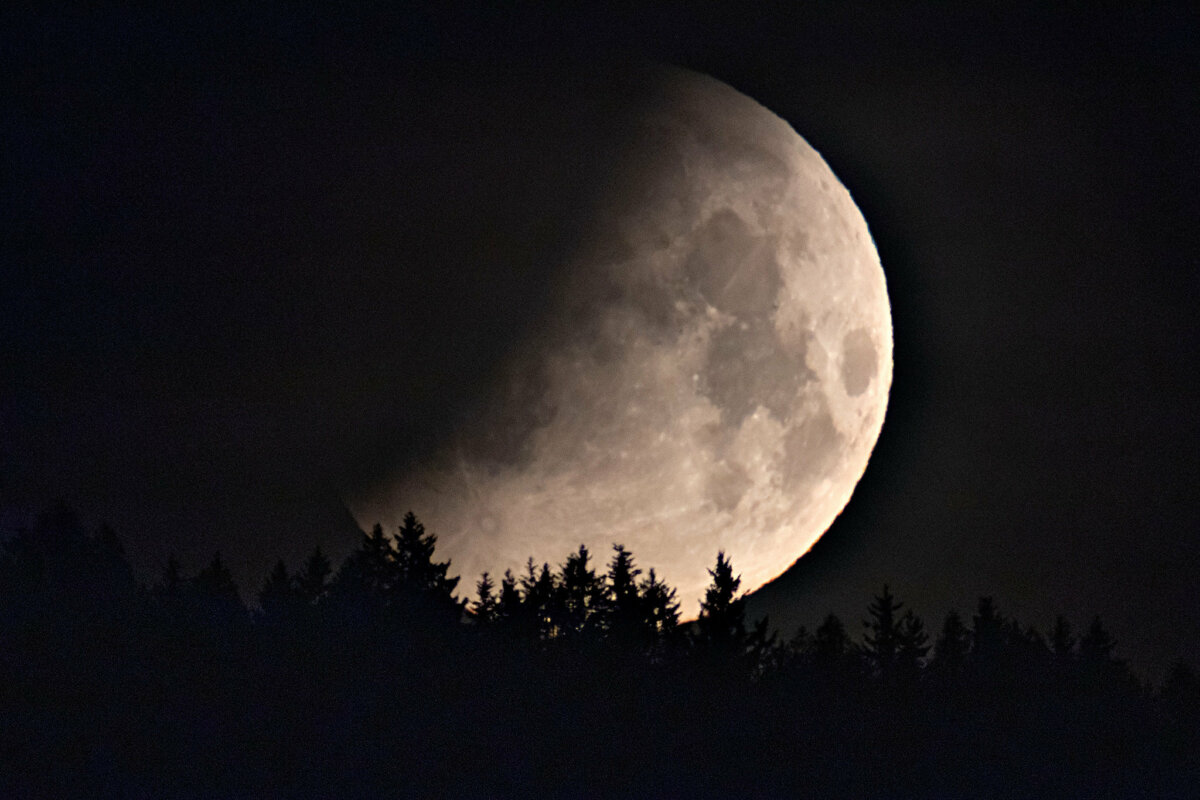
A partial lunar eclipse happens when Earth moves between the Sun and the full Moon, allowing part of Earth’s shadow to fall across the lunar surface.
Unlike a total lunar eclipse, the Moon does not pass completely through the darkest part of Earth’s shadow. Instead, you will see the shadow gradually spread across much of the Moon, making a large portion of it appear considerably darker.
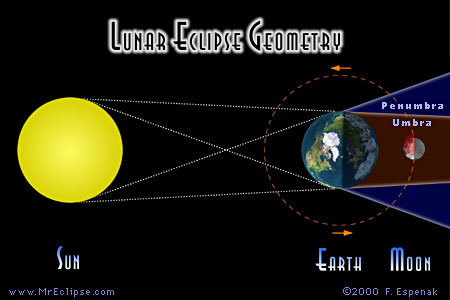
The eclipse (penumbral) begins at 9:24 p.m. EDT when Earth’s shadow starts shading the Moon. By 10:33 p.m., a small dark smudge or “bite” will appear on the Moon’s edge as it enters the umbra. The peak occurs at 12:12 a.m., with 96% of the moon in full shadow. The moon will exit the umbral eclipse by 1:52 a.m., and the penumbral eclipse will disappear by 3:02 a.m., marking the eclipse’s end after 5 hours, 38 minutes
Sturgeon Moon
August’s eclipse occurs during the month’s full moon, traditionally known as the Sturgeon Moon.
The name refers to lake sturgeon, North America’s largest fish, which were historically abundant in the Great Lakes around the time of the August full moon.
According to the Farmers’ Almanac, the August full moon also has several other traditional names, including Flying Up Moon among the Cree, Corn Moon among the Algonquin and Ojibwe, Harvest Moon among the Dakota, Black Cherries Moon among the Assiniboine, and Ricing Moon among the Anishinaabe.
When is the lunar eclipse:
During August’s partial lunar eclipse on the night of August 27, you can watch Earth’s shadow slowly move across the Moon, making part of its surface look noticeably dimmer than the rest. The entire eclipse lasts 5 hours and 38 minutes, while the partial phase continues for 3 hours and 18 minutes.
At maximum eclipse, 96% of the Moon will be inside Earth’s umbra, so almost the whole lunar disk will appear covered by a deep, curved shadow.
Date: Thursday, August 27 to Friday, August 28, 2026
- Newfoundland Time: Penumbral eclipse begins: 10:53 pm; Partial Eclipse Begins: 12:03 am; Maximum Eclipse: 1:42 am; Partial Eclipse Ends: 3:21 am; Penumbral Eclipse Ends: 4:31 am
- Atlantic Time: Penumbral eclipse begins: 10:23 pm; Partial Eclipse Begins: 11:33 pm; Maximum Eclipse: 1:12 am; Partial Eclipse Ends: 2:51 am; Penumbral Eclipse Ends: 4:01 am
- Eastern Time: Penumbral eclipse begins: 9:23 pm; Partial Eclipse Begins: 10:33 pm; Maximum Eclipse: 12:12 am; Partial Eclipse Ends: 1:51 am; Penumbral Eclipse Ends: 3:01 am
- Central Time: Penumbral eclipse begins: 8:23 pm; Partial Eclipse Begins:9:33 pm; Maximum Eclipse: 11:12 pm; Partial Eclipse Ends: 12:51 am; Penumbral Eclipse Ends: 2:01 am
- Mountain Time (Central Standard Time in SK): Penumbral eclipse Begins: 7:23 pm; Partial Eclipse Begins: 8:33 pm; Maximum Eclipse: 10:12 pm; Partial Eclipse Ends: 11:51 pm; Penumbral Eclipse Ends: 1:01 am
- Edmonton: Moonrise at 8:25 pm, Sunset at 8:34 p.m.
- Calgary: Moonrise at 8:23 pm, Sunset at 8:32 p.m.
- Regina: Moonrise at 7:44 pm, Sunset at 7:53 p.m.
- Saskatoon: Moonrise at 7:55 pm, Sunset at 8:04 p.m.
- Pacific Time/Yukon Time: Penumbral eclipse begins: 6:23 pm; Partial Eclipse Begins: 7:33 pm; Maximum Eclipse: 9:12 pm; Partial Eclipse Ends: 10:51 pm; Penumbral Eclipse Ends: 12:01 am
- Kelowna: Moonrise at 7:33 pm, Sunset at 8:04 p.m.
- Vancouver: Moonrise at 7:56 pm, Sunset at 8:05 p.m.
- Victoria: Moonrise at 7:56 pm, Sunset at 7:51 p.m.
- Whitehorse: Moonrise at 9:09 pm, Sunset at 9:19 p.m.
How to watch the lunar eclipse:
Watching the partial lunar eclipse requires no special eye protection. You can watch directly, while binoculars or a telescope reveal more detail. In Central and Eastern Canada, the Moon will be higher in the sky, while western viewers will see maximum eclipse closer to the horizon.
In Edmonton, it will be about 13 degrees high at maximum. In Yukon, choose a high, unobstructed spot with a clear east-southeast view, since horizon haze can make the dimmed Moon harder to see.
If you are in Edmonton, you can also join TELUS World of Science and the Royal Astronomical Society of Edmonton for eclipse viewing starting at 8:30 p.m. on Thursday, August 27. Observatory telescopes will be available, along with opportunities to learn more about the Moon during the event.


