 Charlottetown
The Consumer Price Index increased 3.4% year-over-year increase in May, marking the smallest rise since June 2021.
Statistics Canada says this slowdown can be attributed to lower gasoline prices, which saw a significant decrease of 18.3% compared to the previous year. When excluding gasoline, the CPI rose by 4.4% in May, following a 4.9% increase in April.
Highlights of the Consumer Price Index report for May 2023 are as follows:
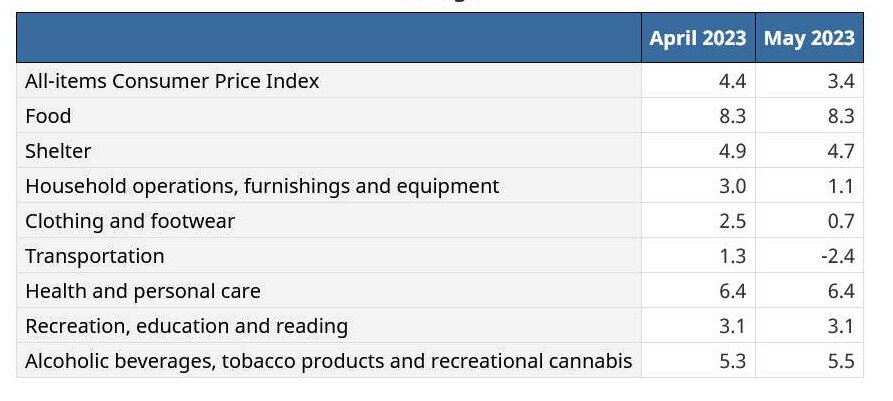
- The most substantial year-over-year contributor to the CPI rise was the mortgage interest cost index, soaring by 29.9%. Without it, the CPI rose by 2.5%.
- On a monthly basis, the CPI rose 0.4%, led by mortgage interest costs and travel services.
- Energy prices dipped by 12.4% due to supply uncertainty issues, mainly impacting gasoline and fuel oil prices, along with a 3.5% decrease in natural gas prices.
- Gasoline prices reduced by 18.3% from May 2022 to May 2023, while fuel oil and other fuels prices fell by 36.9%.
- Durable goods’ prices, such as furniture and passenger vehicles, increased at a slower pace, reflecting eased supply chain pressures.
- Cellular services prices dropped by 8.2% year over year, thanks to cheaper cellular data plans.
- In contrast, grocery prices rose by 9.0%, with edible fats and oils, bakery products, and cereal products seeing the highest increases.
- Food prices from restaurants escalated slightly faster due to labour shortages and elevated costs.
- The mortgage interest cost index witnessed a record 29.9% year-over-year increase, highlighting Canadians’ trend of taking up mortgages at higher interest rates.
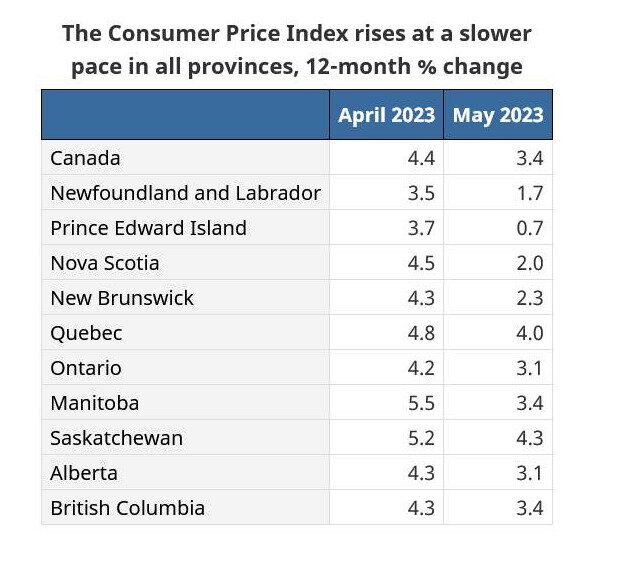
Statistics Canada says price growth decelerated across all provinces, particularly in the Atlantic provinces, aligning with lower prices for fuel oil and other fuels.


