Toronto
Remember Neowise or Comet C/2020 F3 that brightened summer skies in 2020? Another newly discovered non-periodic comet is now gracing the skies.
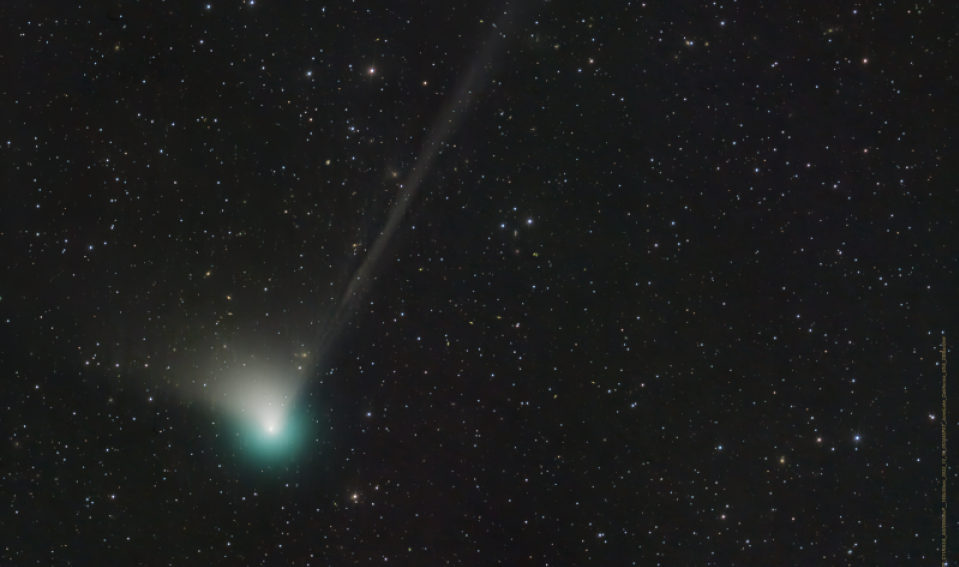
Comet C/2022 E3 (ZTF) was discovered last March by astronomers at the Zwicky Transient Facility (ZTF) in California.
The comet’s coma has a distinctive green colour due to diatomic carbon, a short broad dust tail and a long faint ion tail.
C/2022 E3 (ZTF) will be at its closest to the sun today .
Later, it will move towards the Earth and be at its closest approach to Earth, at a distance of 0.28 AU (42,468,848 km), on February 1, 2023.
WHEN TO SEE COMET C/2022 E3 (ZTF):
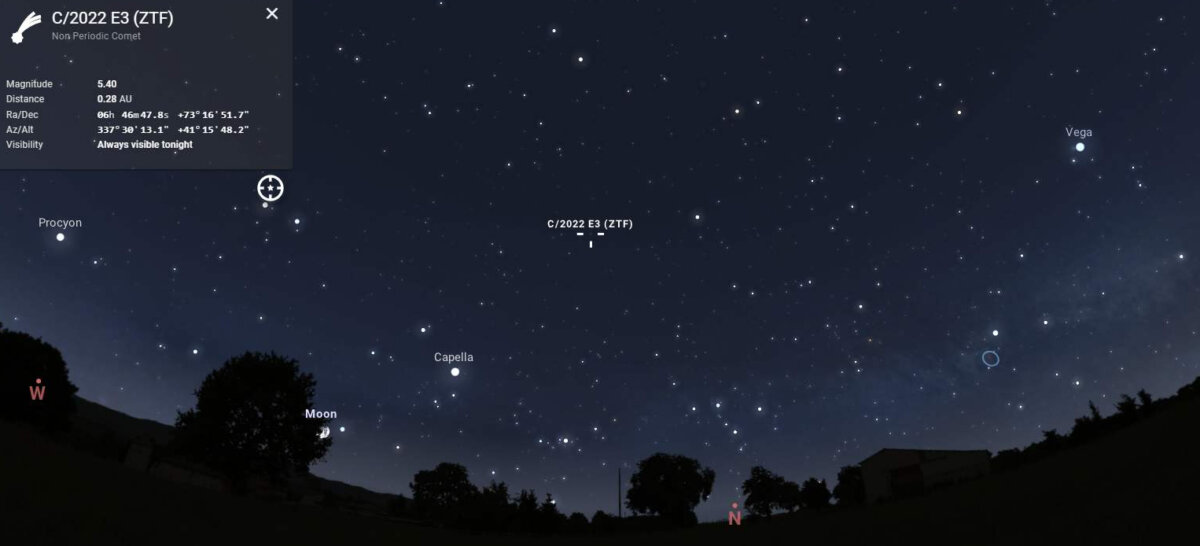
Screenshot of Feb 1st Toronto pre-dawn sky simulation on Stellarium software
The comet should be visible from Canada (Northern Hemisphere) during the predawn hours with binoculars or a small telescope for the rest of January and the first few days in February. It will continue to be visible through mid-February for those in the Southern hemisphere.
Since the full moon is on February 5th, comet viewing will be difficult during the perigee approach on February 1st.
It is better to plan to watch C/2022 E3 (ZTF) around the new moon (January 21st) provided you have clear skies in your area.
HOW TO SEE COMET C/2022 E3 (ZTF):
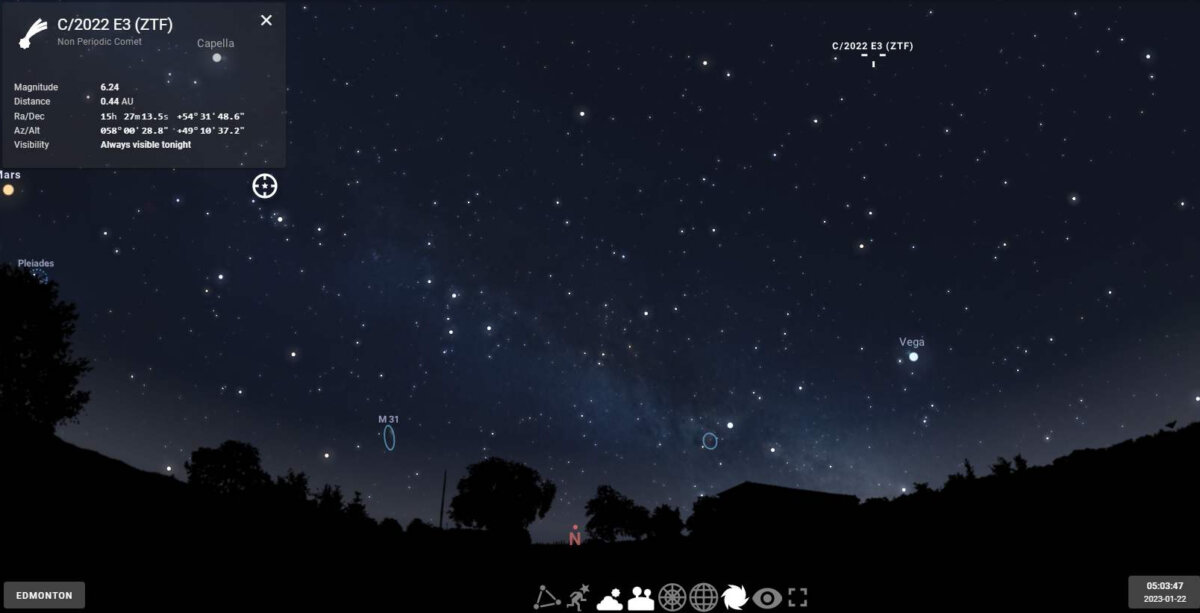
Screenshot of Jan 22nd Edmonton pre-dawn sky simulation on Stellarium software
Though the comet is considered a naked-eye comet as it travels closer to the Earth, it is better to have binoculars or a small telescope to aid your view.
For the best viewing conditions, go to a dark sky area or move away from city lights during clear sky days.
To find reasonably dark areas near your location, check the Darkskyfinder or a Light Pollution map and search for a park (or a safe place) with no streetlights away from roads/traffic.
Check clear sky (cloud) conditions in your area – here.
Download skywatching apps like Stellarium to help you locate the comet.
Once you are at the location, make sure you switch off the phone, and your eyes need ~ 30 minutes to adjust to the dark. If you are carrying a flashlight, cover it with red cellophane wrap or some kind of red filter, so that it doesn’t interfere with viewing.
If you do not want to head out on cold winter nights, then Virtual Telescope Project will host a free live stream of the comet on its website and YouTube channel. The live feed is scheduled for 13 Jan. 2023, at 04:00 UTC.
Once it passes through the inner solar system, the comet’s future path remains a mystery. It is speculated that it may not appear again for at least 50,000 years.