
Electric Vehicle Availability Standard: This Is How Canada Plans to Phase Out Gas-Powered Cars By 2035

The federal government is implementing measures to phase out gas-powered cars by 2035.
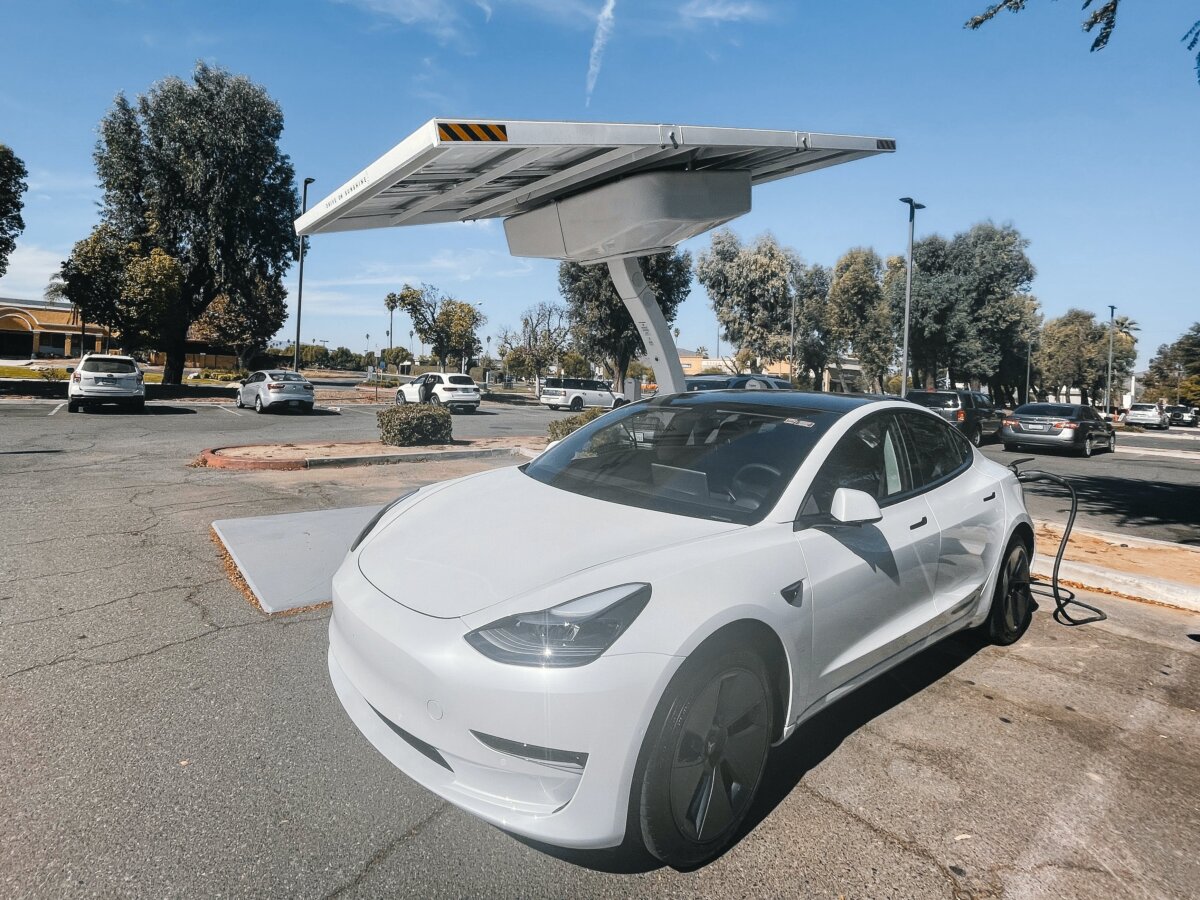
Environment and Climate Change Minister Steven Guilbeault announced the new Electric Vehicle Availability Standard today, aiming to bolster the supply of zero-emission vehicles (ZEVs) across Canada.

The Electric Vehicle Availability Standard applies to light-duty vehicles like passenger cars, SUVs, and light trucks. The regulation categorizes ZEVs as battery-electric vehicles, fuel-cell vehicles operating on hydrogen, and plug-in hybrid electric vehicles that can run exclusively on electricity for a certain distance.


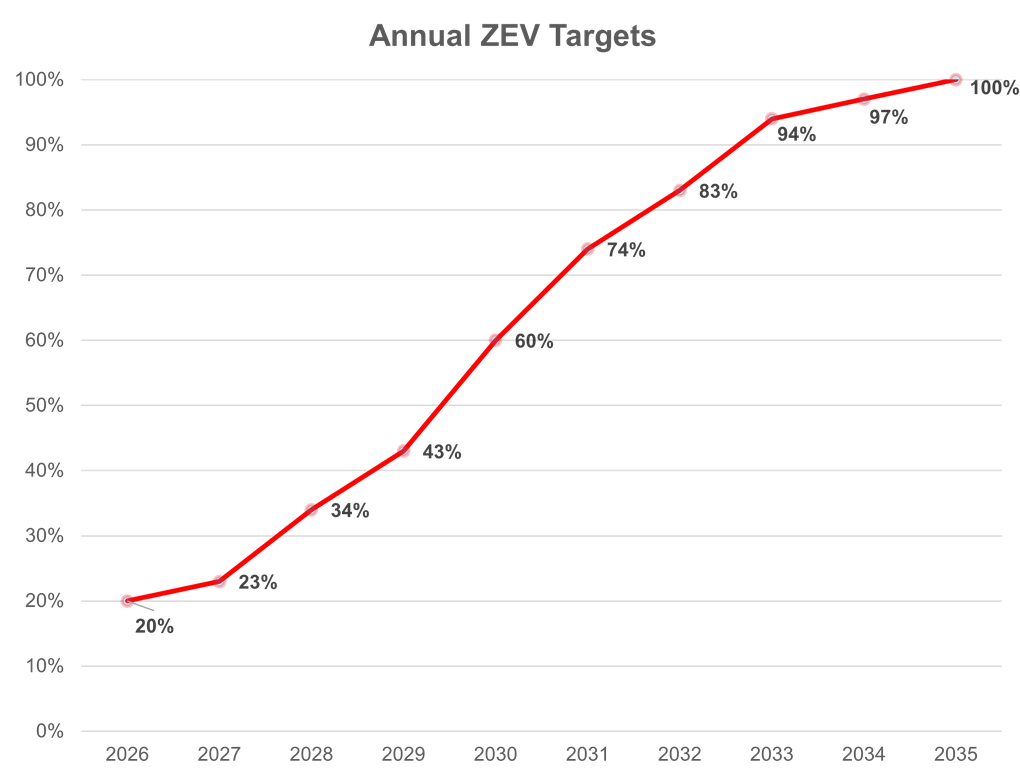
Per the news release, these vehicles represent about half of Canada’s transportation sector emissions. The Standard mandates that auto manufacturers and importers meet specific annual ZEV sales targets starting at 20% in 2026, with progressively increasing requirements each year.
image

Credit: Environment and Climate Change Canada/Canada.ca

By 2027, the target rises to 23%, followed by 34% in 2028, and 43% in 2029. A significant jump to 60% is planned for 2030. The targets continue to rise: 74% in 2031, 83% in 2032, 94% in 2033, and 97% in 2034. By 2035, Canada aims to achieve a full 100% of new vehicle sales as zero-emission, marking a commitment to complete the transition to ZEVs in the automotive market.

Per the news release, this move is in line with international efforts to lower emissions and increase the adoption of EVs.

The federal government says Canada’s ZEV market has been growing steadily. In 2021, ZEVs comprised 5.6% of light-duty vehicle sales, up from 3.1% in 2019. The government’s goal is to accelerate this trend, aiming for 100% ZEV sales in new light-duty vehicles by 2035. This includes interim targets of 20% by 2026 and 60% by 2030, translating to 395,000 new ZEV sales in 2026, 1.2 million in 2030, and 2.0 million in 2035. Consequently, the number of ZEVs on Canadian roads could reach 1.4 million by 2026, 4.6 million by 2030, and 12.4 million by 2035.

According to the federal government from 2024 to 2050, EV owners are projected to save $36.7 billion in energy costs. For instance, the cost to power a mid-sized EV for 400 kilometres is about $10, compared to $50 for gasoline.

Canada says transitioning to 100% EV sales by 2035 could reduce over 360 million tonnes of greenhouse gas emissions by 2050. As of the third quarter of 2023, ZEVs account for 13.3% of new light-duty vehicle registrations in Canada, a significant increase from the previous year. Per the news release, the government’s incentives for Zero-Emission Vehicles (iZEV) program have contributed to this growth, assisting over 300,000 drivers in making the switch with incentives of up to $5,000.

As of 2023, over 50 ZEV models are available in Canada, showing an 80% increase from 2019, with an additional 41 models expected in 2024. The variety of available ZEVs includes pickup trucks, SUVs, sedans, and hatchbacks, with both two- and four-wheel drive options.

Currently, Canada has about 25,000 public chargers, with over 10,000 funded by the government. The government plans to deploy 84,500 chargers by 2029, further supporting the widespread adoption of EVs.

Posts Information

  • : 22,21
  • Leave a Reply