 Toronto
A newly released report by the Durham Region Health Department has uncovered a troubling reality for some families in Durham Region – the inability to afford a healthy diet.
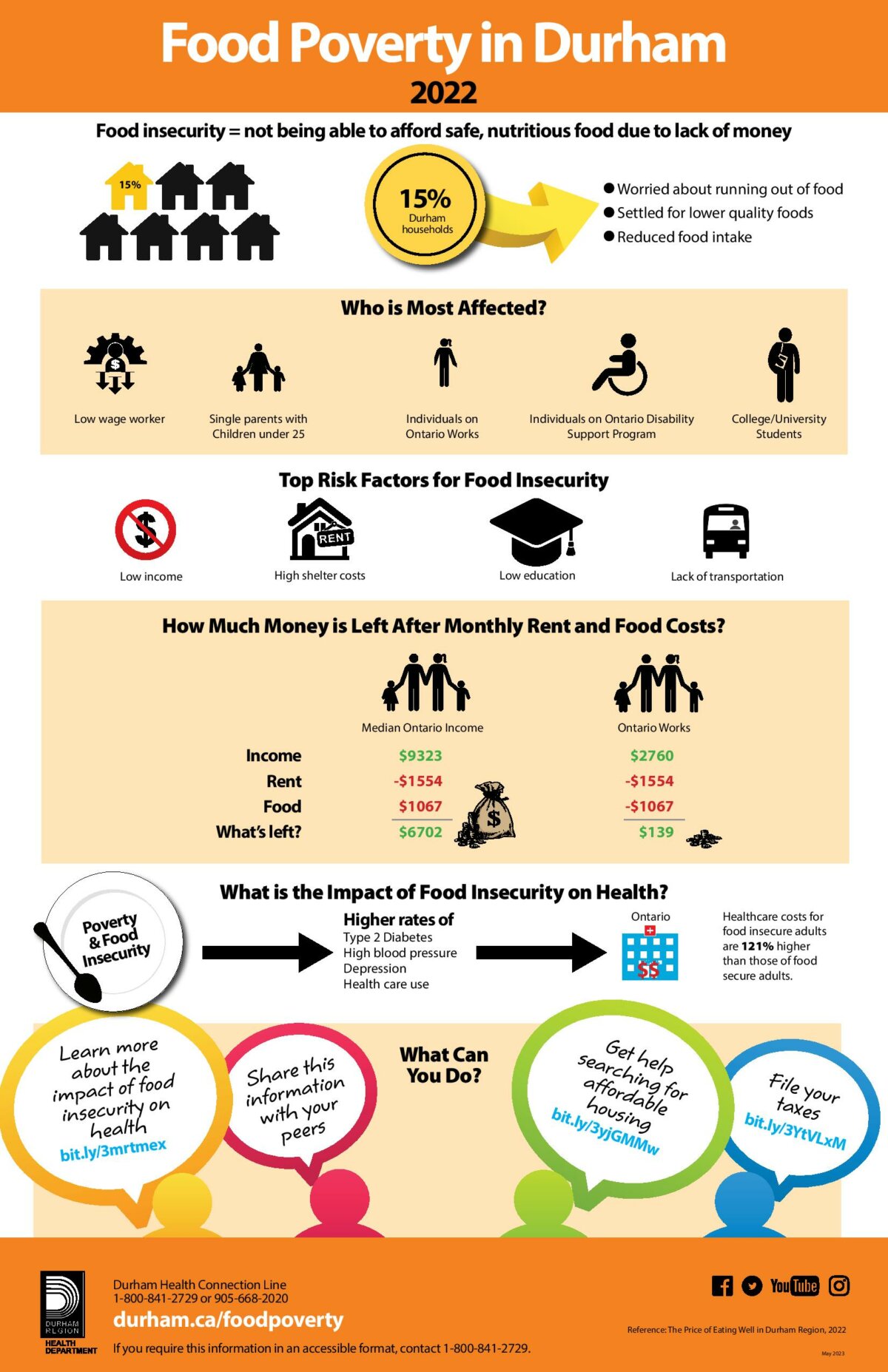
The 2022 Price of Eating Well in Durham Region report has revealed that over 15 percent of households in the area are experiencing food insecurity. This means these families either worry about running out of food, compromise on food quality, or even skip meals altogether.
The report indicates that a family of four in Durham Region required $246 per week or $1,067 per month to afford a basic healthy diet as of June 2022.
2022 Price of Eating Well in Durham Region Report
To gauge food affordability, the report utilized the National Nutritious Food Basket as a guide and surveyed the cost of 61 nutritious foods from local grocery stores. The basket consists of commonly consumed foods, such as fruits, vegetables, protein sources, and whole grains, in line with Canada’s new food guide. It is important to note that the Monitoring Food Affordability (MFA) process solely considers the cost of healthy food items, excluding processed foods and those lacking nutritional value, such as coffee, sodas, and potato chips. Moreover, the MFA does not account for foods specific to special diets, cultural preferences, or personal and household care items like toothpaste and cleaning supplies, which would entail additional costs.
Unfortunately, households with low incomes often struggle to allocate funds for housing and bills, forcing them to forego healthy food choices in favor of other expenses.
The report highlights a strong correlation between food insecurity and income levels. As household income decreases, the risk of food insecurity increases.
2022 Price of Eating Well in Durham Region report
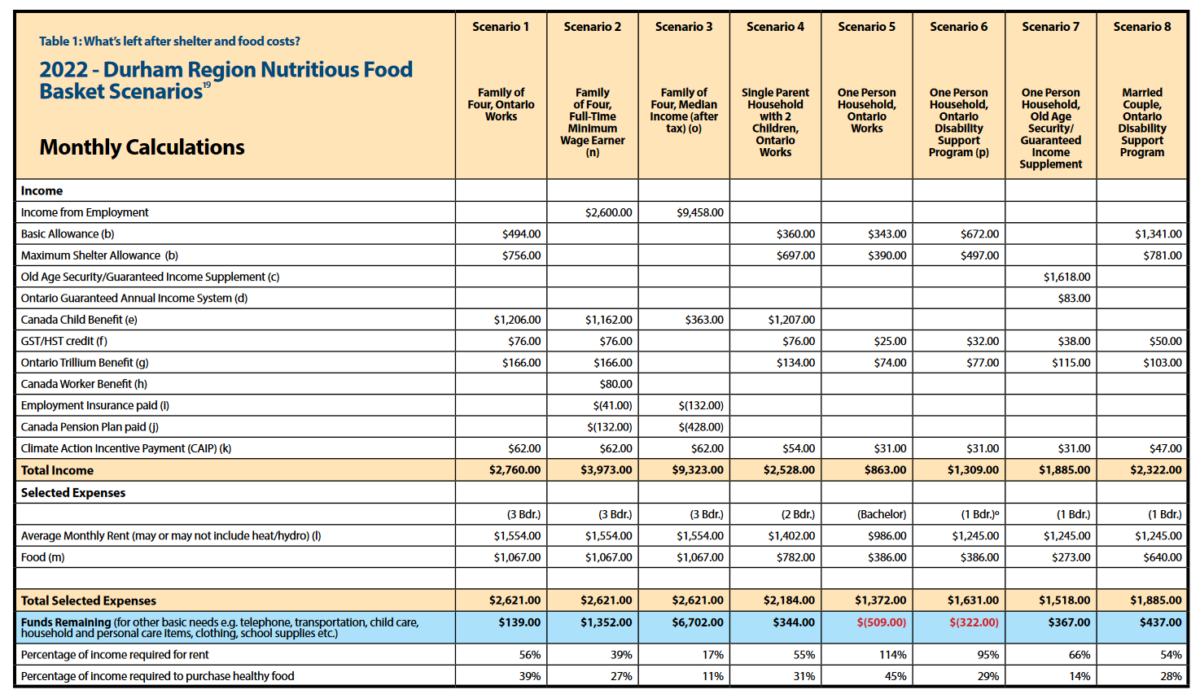
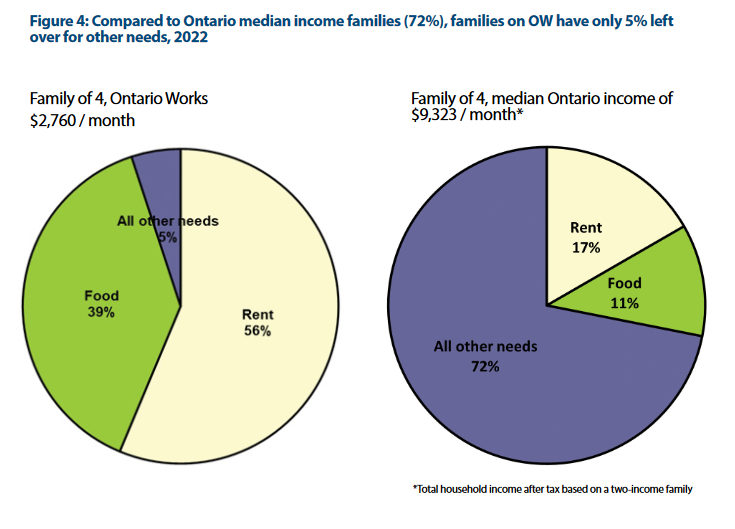
Of Ontario’s food-insecure households, 60 percent rely on employment as their main source of income, compared to 15 percent receiving social assistance. For instance, a family of four dependent on Ontario Works, the social assistance program, can anticipate spending 95 percent of their income on rent and food, leaving a mere $139 for all other monthly expenses. Notably, households at the lowest income level spend roughly four times more on food and shelter compared to those at the Ontario median income level ($9,323 / month).
Additionally, research demonstrates that food insecurity poses significant health risks, including higher rates of diabetes, depression, high blood pressure, and a greater reliance on healthcare services.
The report underscores the critical need for systemic interventions aimed at addressing the economic barriers that impede low-income households from accessing nutritious food.
2022 Price of Eating Well in Durham Region Report


