 Cape Breton Island
Canada’s bid to develop a homegrown space launch capability has taken another step forward with a recent suborbital test.
Credit: CNW Group/Maritime Launch Services Inc.
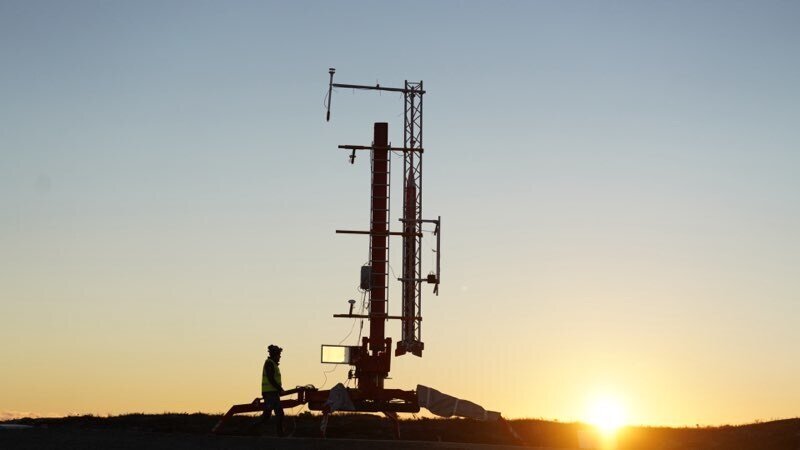
Maritime Launch Services Inc. has successfully conducted its second suborbital demonstration from Spaceport Nova Scotia in collaboration with T-Minus Engineering BV.
The launch occurred at 11:54 a.m. on Nov 20 and involved the Barracuda vehicle, a single-stage, solid-fuel hypersonic test platform built by the Netherlands-based T-Minus Engineering.
The rocket stands approximately four metres tall, has a 200-millimetre booster diameter, and can carry up to 40 kilograms to an altitude of around 120 kilometres. Though the vehicle did not reach the 100-kilometre mark often used to define the edge of space, the flight was declared a success.
Stephen Matier, President and CEO of Maritime Launch, stated that the mission provided valuable performance data and strengthened operational capabilities.
Suborbital rocket launch from Canadian soil – great to see, bodes well, well done the team @maritimelaunch! Looking forward to where this will lead. https://t.co/CW5hbMcQcn
— Chris Hadfield (@Cmdr_Hadfield) November 20, 2025
The flight also carried a payload from STORIES of Space, a non-profit initiative that collects original writings and artwork from contributors worldwide. This was the fifth mission for the organization and the first to include artwork. The program aims to connect the public with space exploration and promote science education.
This launch further contributes to the site’s development as Canada works toward restoring sovereign launch capacity.
The last Canadian company to conduct a space launch did so in 1998 at the Churchill Rocket Research Range in Manitoba, using a Black Brant IXB rocket. The flight was carried out by Akjuit Aerospace, which has since ceased operations, and remains the most recent mission from a Canadian commercial spaceport.


