Toronto
Today, Chief Medical Officer of Health, Dr. Kieran Moore announced new testing and isolation guidelines based on the latest evidence regarding Omicron variant fueled COVID-9 spread and Ontario’s high rate of vaccination.
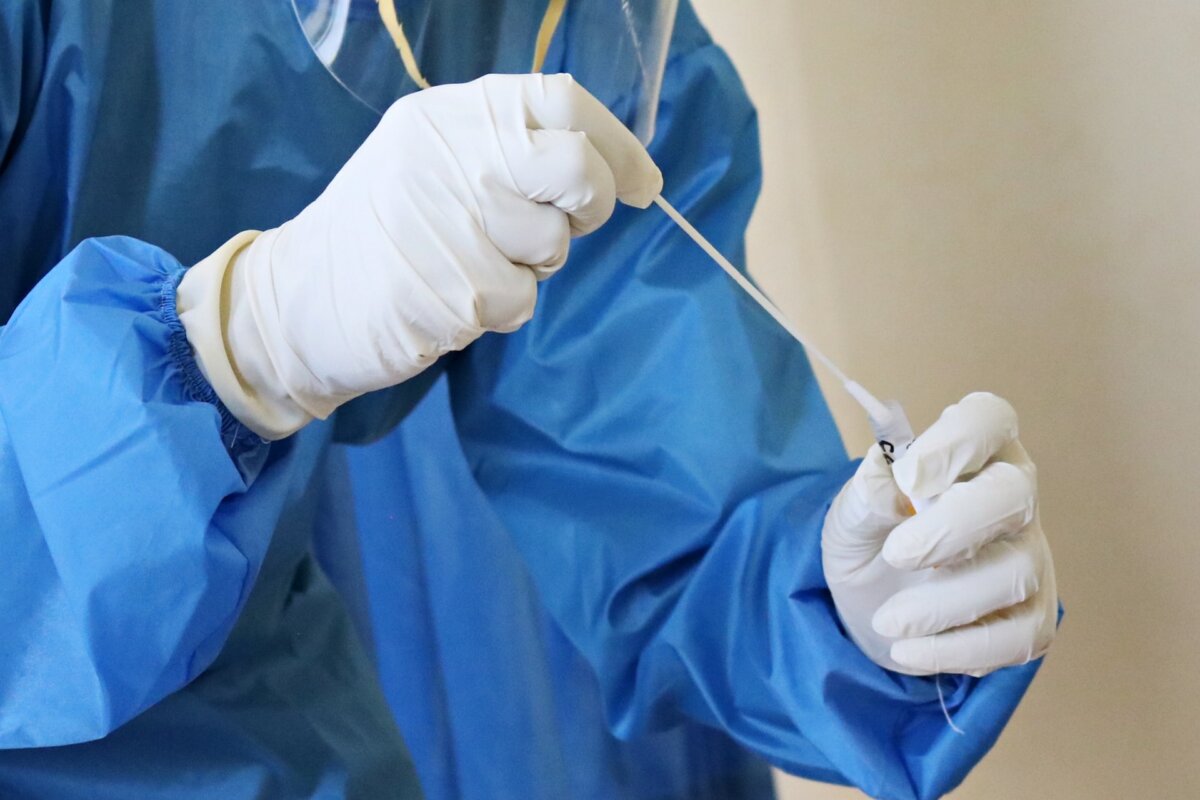
Credit: Mufid Majnun /Unsplash
According to the news release, the updates follow recent changes in other jurisdictions in Canada and the United Kingdom to ensure publicly funded testing and case and contact management resources are available for the highest-risk settings and to protect the most vulnerable and help keep critical services running.
The changes include:
- Symptomatic testing will be available for high-risk individuals, and individuals who work in high-risk settings.
- Individuals with symptoms consistent with COVID-19 are presumed positive and they should follow isolation and/or self-monitoring guidelines.
- Testing for asymptomatic contacts of cases is generally no longer recommended, except for high-risk contacts/individuals that are part of confirmed or suspected outbreaks in high-risk settings, as recommended by public health.
- Positive rapid antigen tests will no longer require PCR confirmation.
- Individuals with COVID-19 should isolate for five days if they are fully vaccinated or under the age of 12, and if their symptoms are improving for at least 24 hours.
List of People Eligible for PCR Testing:
The province is asking residents with mild symptoms not to seek testing.
In addition, most individuals with a positive result from a rapid antigen test will no longer be required or encouraged to get a confirmatory PCR or rapid molecular test.
Effective December 31, publicly-funded PCR testing will be available only for high-risk individuals who are symptomatic and/or are at risk of severe illness from COVID-19, including for the purposes of confirming a COVID-19 diagnosis to begin treatment, and workers and residents in the highest risk settings, as well as vulnerable populations:
- Symptomatic people who fall into one of the following groups:
- Hospitalized patients
- Patients in Emergency Departments, at the discretion of the treating clinician
- Patient-facing health care workers
- Staff, residents, essential care providers, and visitors in hospitals and congregate living settings, including long-term care, retirement homes, First Nation elder care lodges, group homes, shelters, hospices, temporary foreign worker settings, and correctional institutions
- Outpatients for whom COVID-19 treatment is being considered
- Underhoused or homeless
- People who are from First Nation, Inuit, and Métis communities and individuals travelling into these communities for work
- Symptomatic elementary and secondary students and education staff who have received a PCR self-collection kit through their school
- People on admission/transfer to or from hospital or congregate living setting
- High-risk contacts and asymptomatic/symptomatic people in the context of confirmed or suspected outbreaks in high-risk settings, including hospitals, long-term care, retirement homes, other congregate living settings and institutions, and other settings as directed by the local public health unit
- Individuals, and one accompanying caregiver, with written prior approval for out-of-country medical services from the General Manager, OHIP
- Asymptomatic testing in hospital, long-term care, retirement homes and other congregate living settings and Institutions as per provincial guidance and/or Directives
New Isolation Guidelines:
Ontario is also changing the required isolation period based on growing evidence that generally healthy people with COVID-19 are most infectious in the two days before and three days after symptoms develop.
If you have COVID-19 based on a positive test result:
If you test positive from a PCR, rapid molecular or a rapid antigen test and you are fully vaccinated or under 12 years of age, you must isolate for five days from the positive test result if you have no symptoms or from symptom onset and until their symptoms are improving for 24 hours (or 48 hours if gastrointestinal symptoms).
If you are partially vaccinated, unvaccinated or immunocompromised, you should self-isolate for 10 days from the onset of symptoms, or from the date of your test (whichever came sooner).
In addition, household contacts of individuals who have tested positive must also self-isolate during this time. Individuals must isolate regardless of their vaccination status.
You should also notify your close contacts. A close contact is anyone you were less than two metres away from for at least 15 minutes, or multiple shorter lengths of time, without personal protective equipment in the 48 hours before your symptoms began or your positive test result, whichever came first.
New Isolation Guidelines for those who are vaccinated if they have symptoms:
- Individuals with COVID-19 who are vaccinated, as well as children under 12, will be required to isolate for five days following the onset of symptoms.
- Their household contacts are also required to isolate with them.
- These individuals can end isolation after five days if their symptoms are improved for at least 24 hours and all public health and safety measures, such as masking and physical distancing, are followed.
- Non-household contacts are required to self-monitor for ten days.
New Isolation Guidelines for those who are unvaccinated if they have symptoms:
- Individuals who are unvaccinated, partially vaccinated or immunocompromised will be required to isolate for 10 days.
- While individuals who work or live in high-risk health care settings are recommended to return to work after 10 days from their last exposure or symptom onset or from their date of diagnosis, to ensure sufficient staffing levels workers will have the opportunity to return to work after isolating for seven days with negative PCR or rapid antigen test results, which will be provided by the province through the health care setting.
New Isolation Guidelines for those exposed to someone who has tested positive for COVID-19:
If you are fully vaccinated and you have no symptoms, and do not live with the positive case, you are advised to:
- Self-monitor for symptoms for 10 days since you last interacted with the positive case
- Maintain masking, physical distancing and adherence to all other public health measures if leaving home
- Do not visit any high-risk settings or individuals who may be at higher risk of illness (e.g., seniors) for 10 days from your last exposure.
If you are not fully vaccinated or are immunocompromised, you must isolate immediately for 10 days following your last contact. If you live with the positive case, you must isolate for the length of their isolation period.
Those who live, work, attend, volunteer, or have been admitted in a high-risk health care setting, must notify their employer and should not visit the high-risk setting for 10 days since their last exposure or symptom onset, or from the date of diagnosis.
Ontario says workers in these settings will have the opportunity to return to work early on day seven of their isolation with a negative PCR test, or two negative rapid antigen tests on days six and seven to ensure sufficient staffing levels.
“As cases continue to rise at a rapid rate and evidence on the Omicron variant evolves, our response needs to evolve alongside other jurisdictions to ensure those living and working in our highest-risk settings are protected,” said Dr. Kieran Moore announcing the changes. “Ontario’s cautious approach and high vaccination rates have helped keep hospital and intensive care unit capacity stable to date. Focusing our testing and case and contact management on high-risk settings will help limit transmission, maintain critical workforces, and ensure timely access to PCR testing where it is needed the most. Anyone who is sick should protect their community by staying home.”
Other measures announced today include capacity reduction of large venues like arenas, concert venues and theatres and delaying in-person classes to January 5th.