Calgary
Weather permitting, you can experience a full moon and total lunar eclipse on the night of May 15th or the early morning of May 16th.
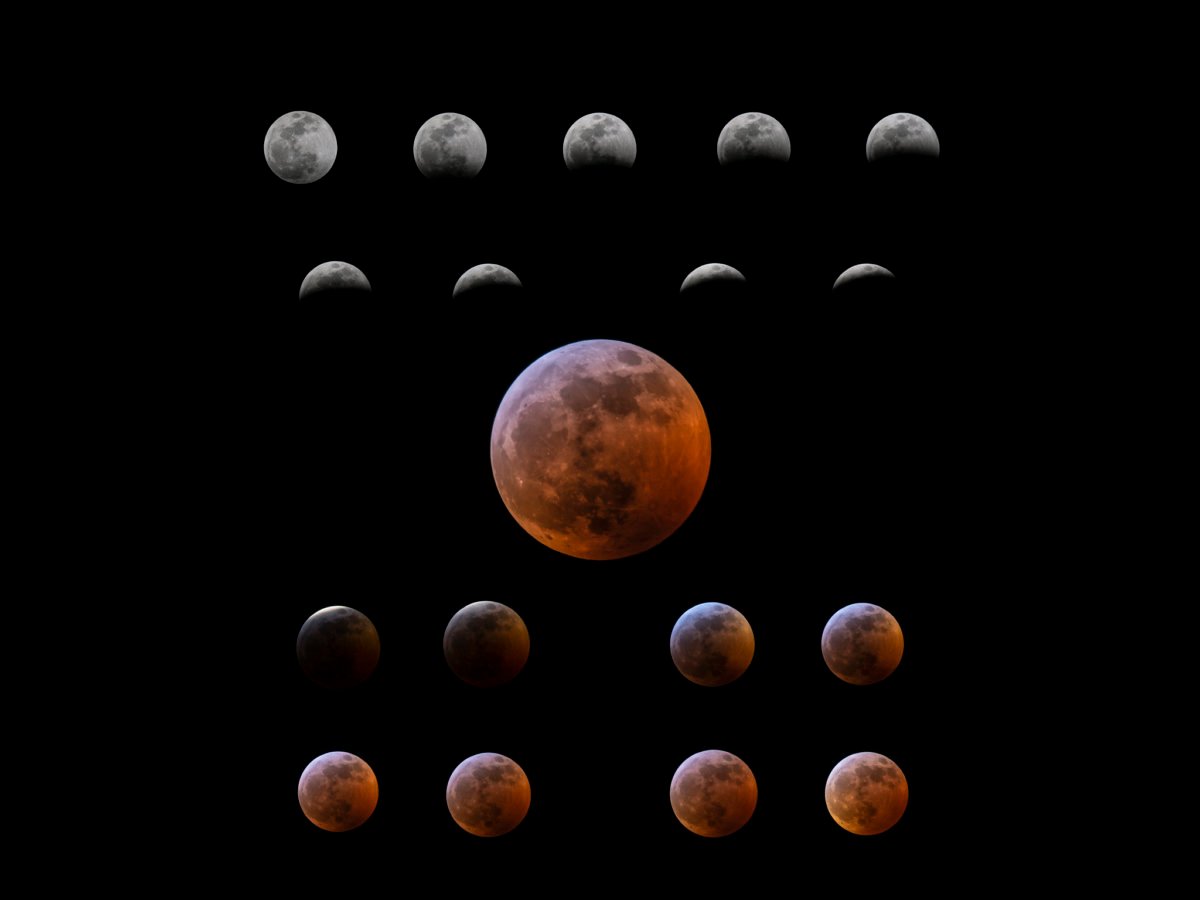
This is the first lunar eclipse of this year as another total lunar eclipse will take place in November which is also visible from most of North America.
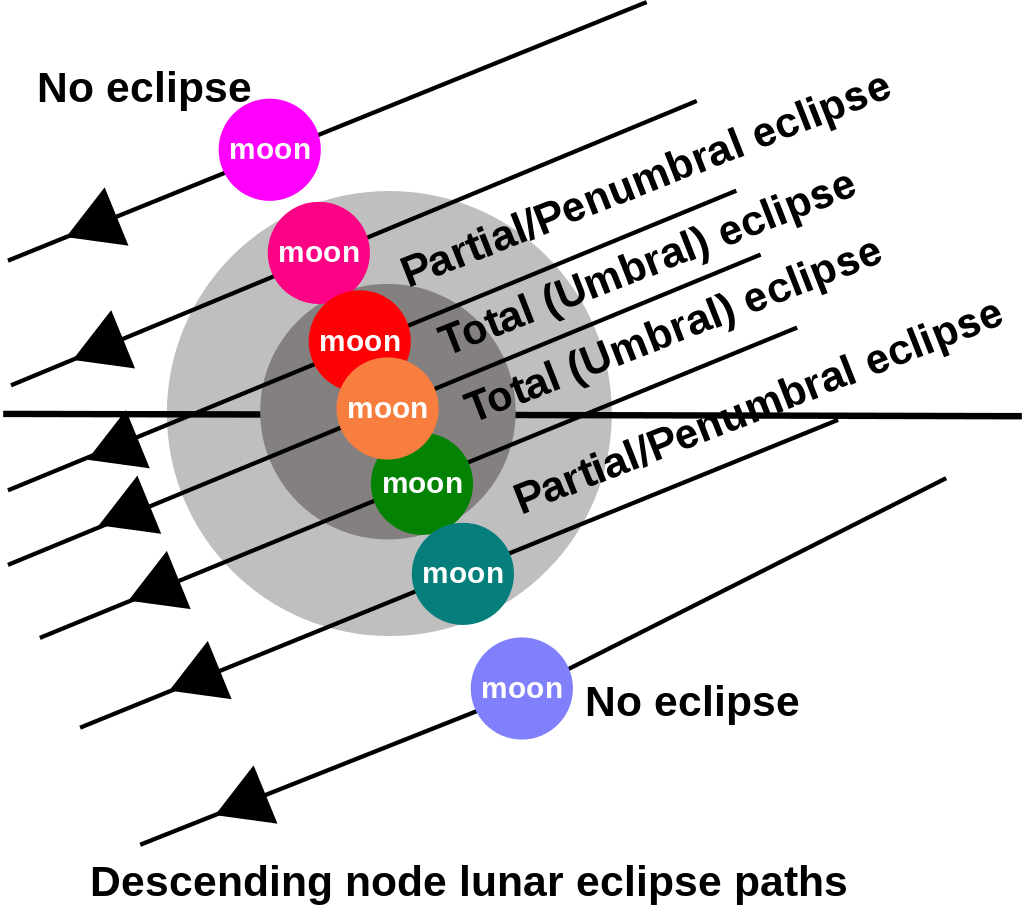
A lunar eclipse occurs when the sun, earth, and moon line up with Earth in the middle, and Earth’s shadow passes over the moon. For a long lunar eclipse, the centre of the full moon should align with the centre of the Earth’s shadow. A partial umbral eclipse will precede and follow the total eclipse which means the moon will take over three hours to cross the Earth’s shadow.
Why is the May 15th Full Moon Called a Flower Moon and a Blood Moon:
The May full moon is called a Flower moon to indicate spring blossoms and the name is used by many indigenous peoples across North America.
When the moon is in the Earth’s shadow, light refracted through Earth’s atmosphere tints the moon red causing a “blood moon”. During a total lunar eclipse, some sunlight still reaches the moon after it goes through Earth’s atmosphere. The blue portion of the sun’s white light reaching the Earth gets absorbed and then scattered. The leftover orange and red-coloured light passes get refracted and projected onto the moon, causing the reddish-orange-coloured moon.
Lunar Eclipse Times:
- Penumbral eclipse begins: 11:02 p.m. NDT/ 10:32 p.m.ADT/ 9:32 p.m. EDT / 8:32 p.m. CDT / 7:32 p.m. CT / 7:32 p.m. MDT /6:32 p.m. PDT
- Partial umbral eclipse begins: 11:57 p.m. NDT/ 11:27 p.m. ADT/ 10:27 p.m EDT / 9:27 p.m.CDT / 8:27 p.m CT / 8:27 p.m MDT /7:27 p.m. PDT
- Total eclipse begins: 12:59 am NDT/ 12:29 a.m. ADT/ 11:29 p.m. EDT /10:29 p.m. CDT/ 9:29 p.m. CT / 9:29 p.m. MDT/ 8:29 p.m. PDT
- Greatest (maximum) eclipse: 1:41 a.m. NDT/ 1:11 am ADT/ 12:11 a.m EDT / 11:11 p.m. CDT / 10:11 p.m . CT / 10:11 p.m.MDT / 9:11 p.m. PDT
- Total eclipse ends: 2:23 am NDT/1:53 a.m. ADT/ 12:53 a.m EDT / 11:53 p.m CDT /10:53 p.m . CT / 10:53 p.m. MDT /9:53 p.m.PDT
- Partial umbral eclipse ends: 3:25 a.m. NDT/ 2:55 a.m. ADT/ 1:55 am EDT/ 12:55 a.m. CDT / 11:55 pm CT / 11:55 p.m. MDT /10:55 p.m. PDT
- Penumbral eclipse ends: 4:20 a.m.NDT/ 3:50 a.m. ADT/ 2:50 am EDT (May 16) / 1:50 am CDT / 12:50 am CT / 12:50 a.m. MDT / 11:50 p.m. PDT
Maximum Eclipse Times in Canada’s Capital Cities (visible weather permitting)
This year the total eclipse will last for approximately an hour and a half. Most Canadians can see the full eclipse, but those in western Canada will only be able to see the total eclipse at or near the maximum eclipse phase as the moon rises at the horizon only after the total eclipse phase begins. This makes it difficult to enjoy the full phase until the moon climbs to a higher elevation.
- St. John’s — 1:41 a.m. on Mon, May 16, 2022
- Charlottetown — 1:11 a.m. on Mon, May 16, 2022
- Fredericton — 1:11 a.m. on Mon, May 16, 2022
- Halifax — 1:11 a.m. on Mon, May 16, 2022
- Quebec City — 12:11 am on Mon, May 16, 2022
- Ottawa — 12:11 am on Mon, May 16, 2022
- Toronto — 12:11 a.m. on Mon, May 16, 2022
- Winnipeg — 11:11 pm on Sun, May 15, 2022 (Moon rises at 8:56 p.m.)
- Regina — 10:11 pm on Sun, May 15, 2022 (Moon rises at 8:30 p.m.)
- Edmonton — 10:11 pm on Sun, May 15, 2022 (Moon rises at 9:21 p.m.)
- Victoria — 9:11 pm on Sun, May 15, 2022 (Moon rises at 8:42 p.m. )
- Whitehorse — Not visible as below the horizon
- Yellowknife –The moon is below the horizon at the true maximum eclipse — Moon rises at 10:25 p.m., Total eclipse can be observed for a few minutes at or near the horizon.
- Iqaluit — 12:11 am Mon, May 16
How to See a Lunar Eclipse:
Unlike a solar eclipse, you can watch the lunar eclipse with the naked eye – just look up at the moon.
If you live in western Canada, the moon is only a little above the horizon when the total eclipse begins.
The duration of the full eclipse is a little more than an hour and a half starting at 12:59 am NDT/12:29 a.m. ADT/ 11:29 p.m. EDT /10:29 p.m. CDT/ 9:29 p.m. CT / 9:29 p.m. MDT/ 8:29 p.m. PDT. During this time the moon will turn an orange-red, called BLOOD MOON.