 Toronto
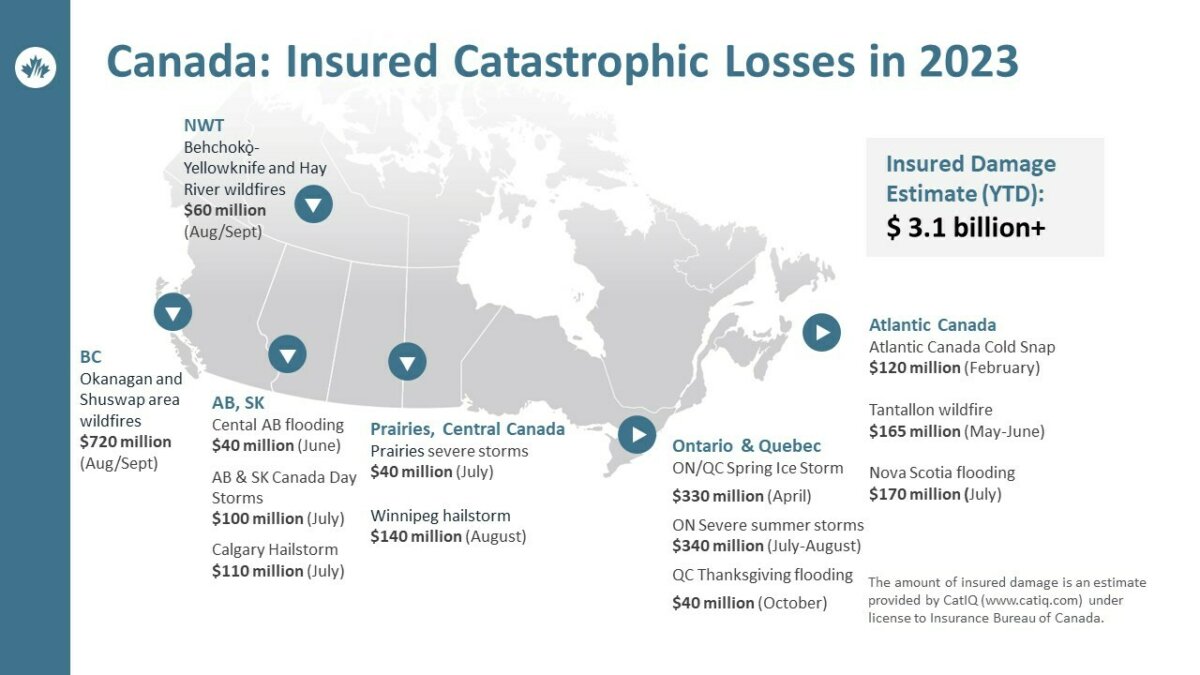
Canada has once again faced a staggering financial impact from natural disasters and severe weather, with insured damages for 2023 surpassing $3.1 billion.
This marks the second consecutive year that the country’s insured damage from such events has exceeded $3 billion, placing 2023 as the fourth highest year for insured losses in Canadian history, as reported by Catastrophe Indices and Quantification Inc. (CatIQ).
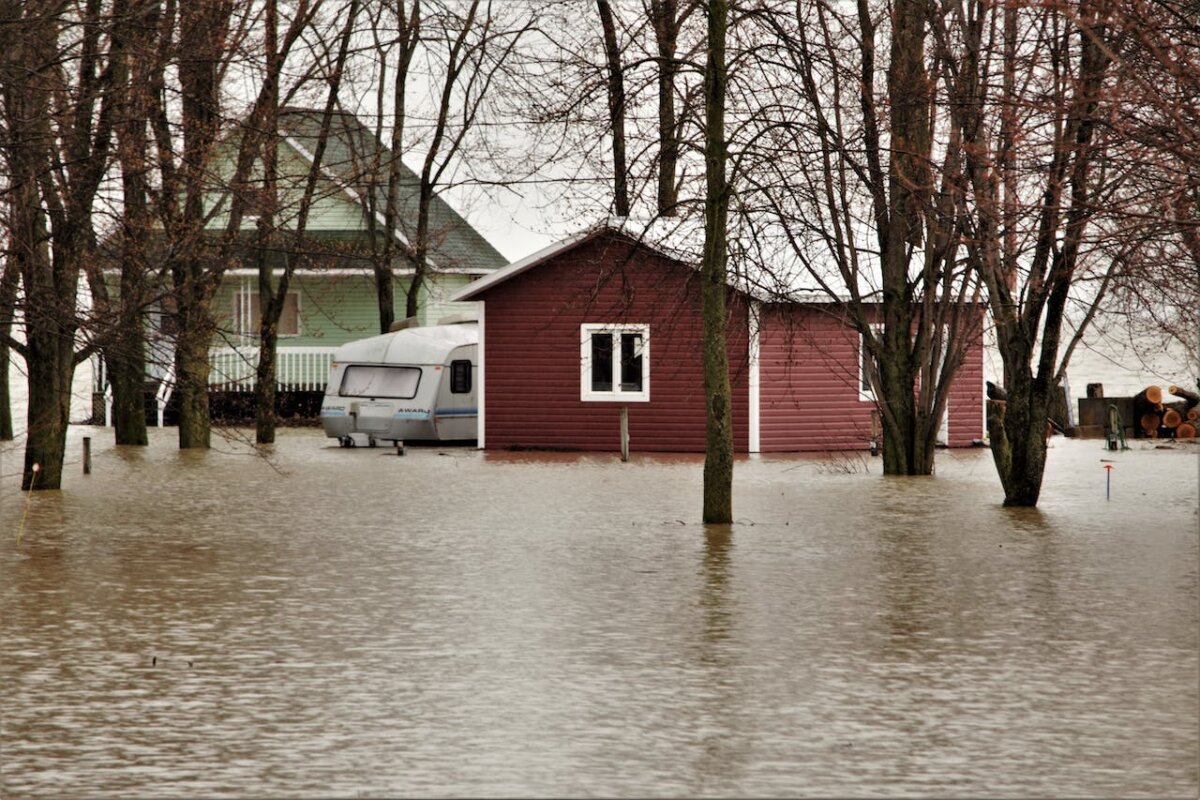
The year was particularly notable for devastating wildfires and extensive flooding, affecting almost every region in Canada.
Per the news release, the Insurance Bureau of Canada (IBC) found no significant changes in the availability or affordability of wildfire insurance despite the increasing frequency and severity of these events. However, the rising losses and updated risk models have labelled Canada a higher-risk area for insurance, leading to many Canadians’ difficulties in accessing flood insurance. Moreover, obtaining earthquake and related hazard insurance is becoming more challenging for some households.
Insured Damage for Severe Weather Events in 2023
CNW Group/Insurance Bureau of Canada
Several severe weather events in 2023 contributed to the high insured losses. These include the Atlantic Canada cold snap ($120 million), Ontario and Quebec spring ice storm ($330 million), Tantallon, Nova Scotia, wildfire ($165 million), Prairies summer storms ($300 million), Ontario severe summer storms ($340 million), Nova Scotia flooding ($170 million), Behchokǫ̀-Yellowknife and Hay River, NWT, wildfires ($60 million), Okanagan and Shuswap area wildfires ($720 million), and the Winnipeg hailstorm ($140 million).
| February 3–5 | Atlantic Canada cold snap | $120 million |
| April 5–6 | Ontario and Quebec spring ice storm | $330 million |
| May 28–June 4 | Tantallon, Nova Scotia, wildfire | $165 million |
| June 18–July 26 | Prairies summer storms | $300 million |
| July 20–August 25 | Ontario severe summer storms | $340 million |
| July 23 | Nova Scotia flooding | $170 million |
| August 13–September 16 | Behchokǫ̀-Yellowknife and Hay River, NWT, wildfires | $60 million |
| August 15–September 25 | Okanagan and Shuswap area wildfires | $720 million |
| August 24 | Winnipeg hailstorm | $140 million |
Canada’s history of insured severe-weather losses reveals significant events.
The increasing trend of severe weather events has led to catastrophic insured losses in Canada routinely exceeding $2 billion annually, primarily due to water-related damages. Over the last decade, Canada has experienced more than 35 catastrophic flooding events, with insured losses averaging close to $800 million annually. This upward trend in weather-related damages underscores the growing financial impact of climate change on the nation.
In 2016, the Fort McMurray fire led with $5.96 billion in losses. The 2013 Alberta floods and GTA floods, including a December ice storm, followed with $3.87 billion. The year 2022 saw multiple events amounting to $3.4 billion. In 2023, losses were $3.13 billion, primarily due to wildfires in Okanagan and Shuswap, BC, and Nova Scotia flooding.
The 1998 Quebec ice storm resulted in $2.83 billion. The 2021 Calgary hailstorm and BC floods totaled $2.48 billion. In 2020, the Fort McMurray flood and Calgary hailstorm caused $2.46 billion in damages. The year 2018 had $2.4 billion from various Ontario and Quebec events.
In 2011, the Slave Lake fire and windstorm resulted in $1.97 billion, and the 2012 Calgary rainstorm incurred $1.65 billion in losses.
Canada’s Top 10 Highest Insured Severe-Weather Loss Years on Record (loss and adjusted expenses in 2022 dollars)
| Rank | Year | Total loss ($ billion) | Notable severe weather events |
| 1 | 2016 | 5.96 | Fort McMurray, Alberta, fire |
| 2 | 2013 | 3.87 |
Alberta floods; Greater Toronto Area (GTA) |
| 3 | 2022 | 3.4 |
Multiple events
|
| 4 | 2023 | 3.13 | Okanagan and Shuswap, BC, area wildfires; |
| 5 | 1998 | 2.83 |
Quebec ice storm
|
| 6 | 2021 | 2.48 | Calgary hailstorm; British Columbia floods |
| 7 | 2020 | 2.46 |
Fort McMurray flood; Calgary hailstorm |
| 8 | 2018 | 2.40 |
Multiple events: Ontario and Quebec |
| 9 | 2011 | 1.97 | Slave Lake, Alberta, fire and windstorm |
| 10 | 2012 | 1.65 | Calgary rainstorm |
IBC says the federal government’s commitment to a national flood insurance program, as announced in the previous year’s Federal Budget, has seen little advancement.
In a news release, Craig Stewart, Vice-President of Climate Change and Federal Issues at IBC, stressed the urgency of operationalizing this program to protect Canadians in high-risk areas.
“Canada’s property and casualty insurance industry has offered to support a comprehensive and cost-neutral flood insurance program that will replace costly Disaster Financial Assistance and save governments and taxpayers money. After seven years of study, government officials and home insurance professionals agree on this solution,” said Craig Stewart.
“Canadians now need the federal government to move forward with this program and announce details in the 2024 Federal Budget. The homes and financial health of over 1.5 million Canadians are at high and growing risk.”


