Toronto
Canadian health officials say three people in Canada are being monitored after an outbreak of Andes hantavirus was linked to the cruise ship MV Hondius.
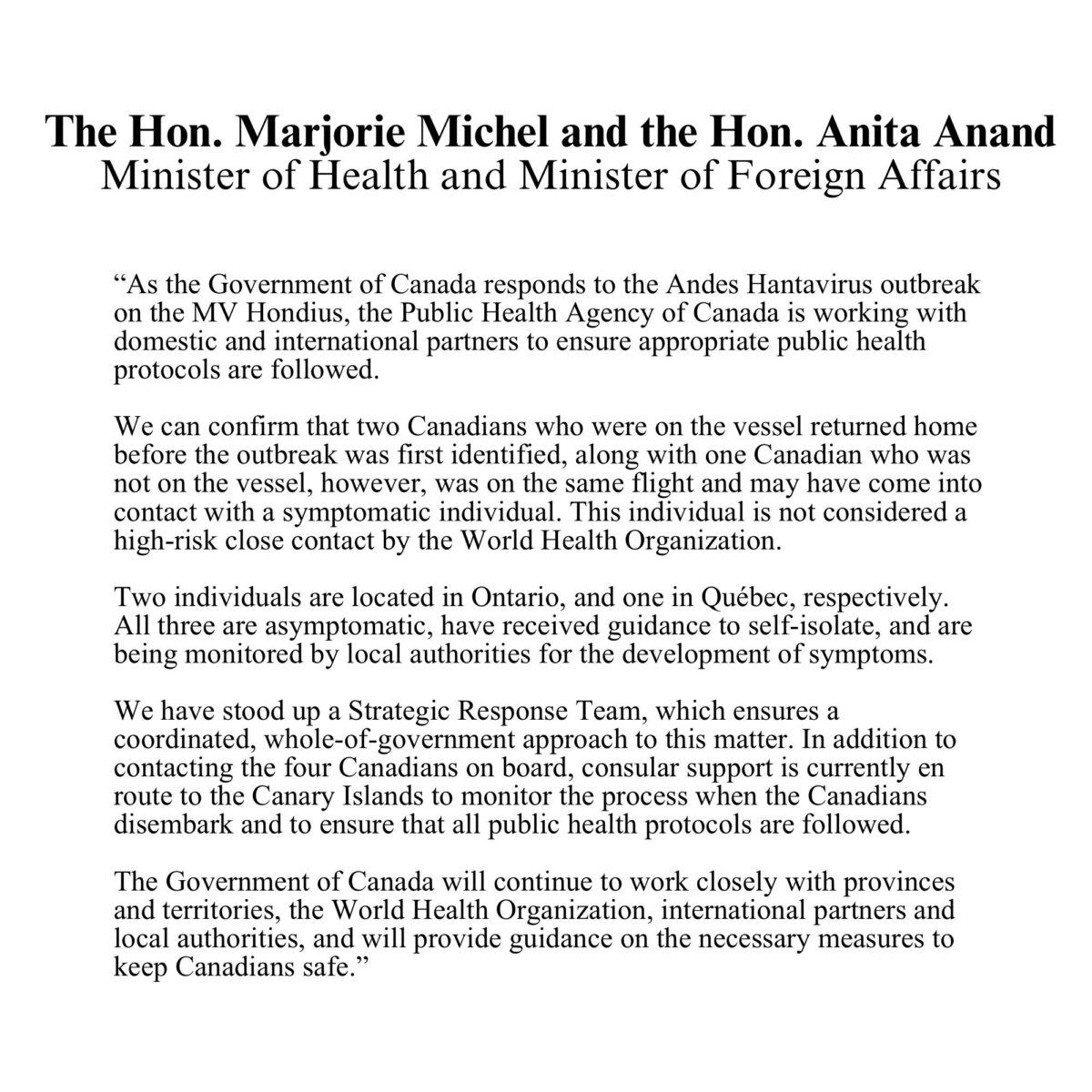
In a joint statement, Marjorie Michel, Minister of Health and Anita Anand, Minister of Foreign Affairs, said two Canadians who had been aboard the vessel returned home before the outbreak was identified. A third Canadian, who was not on the ship but travelled on the same flight as a symptomatic passenger, is also being monitored.
Officials said two of the individuals are in Ontario and one is in Québec. All three are asymptomatic and have been instructed to self-isolate while local health authorities monitor them for symptoms. The government also said the third person is not considered a high-risk close contact by the World Health Organization.
Canada has also created a Strategic Response Team as part of what ministers described as a “whole-of-government approach.” Consular staff are travelling to the Canary Islands, where the remaining four Canadians aboard the ship are expected to disembark.
The outbreak aboard the Dutch-flagged expedition cruise ship has drawn international attention after seven cases were identified among passengers and crew, including two laboratory-confirmed hantavirus infections and three deaths. The ship, carrying 147 people from 23 nationalities, departed Argentina on April 1 and travelled through Antarctica and several South Atlantic islands before mooring near Cabo Verde.
The World Health Organization currently considers the global risk from the outbreak to be low.
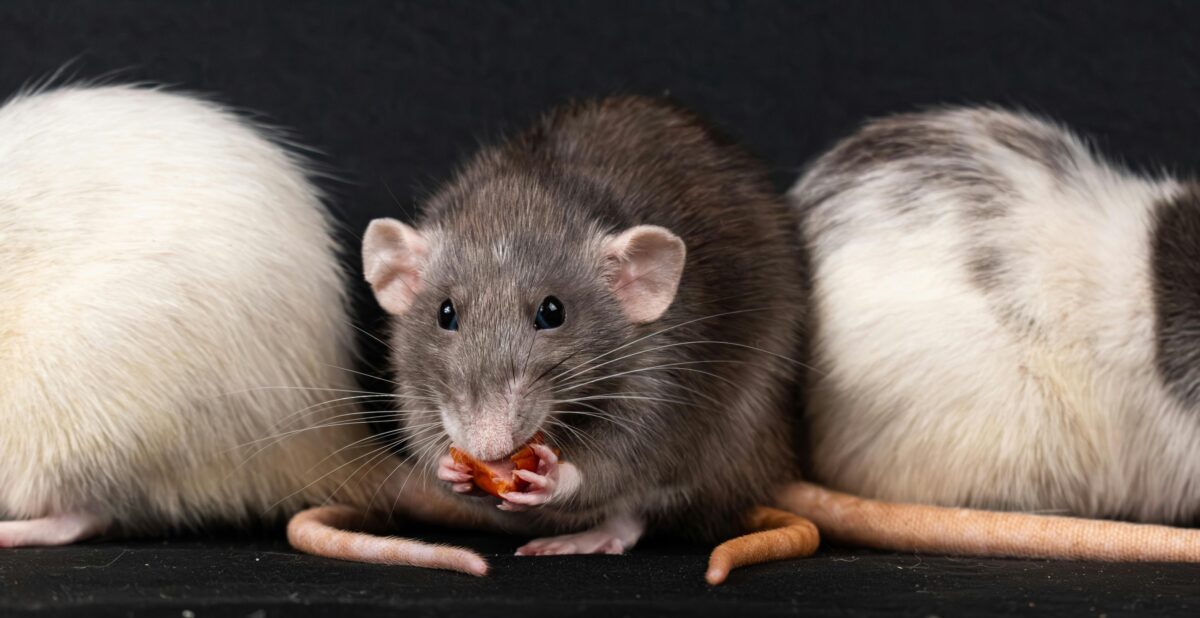
Hantaviruses are a group of viruses typically spread through contact with infected rodents or their urine, saliva and droppings. In the Americas, the virus can cause hantavirus cardiopulmonary syndrome, or HCPS, a severe respiratory illness that can progress quickly from fever and gastrointestinal symptoms to pneumonia, respiratory failure and shock. WHO says fatality rates in the Americas can reach 50 per cent.
There is currently no approved antiviral treatment or vaccine for hantavirus infections. Treatment focuses on supportive care, including oxygen therapy, fluid management and intensive care monitoring for severe cases. WHO says early admission to intensive care units can improve survival rates significantly.