 Toronto
Canada’s population saw minimal growth in the first quarter of 2025, increasing by only 20,107 people, or 0.0%, reaching a total of 41,548,787, says Statistics Canada.
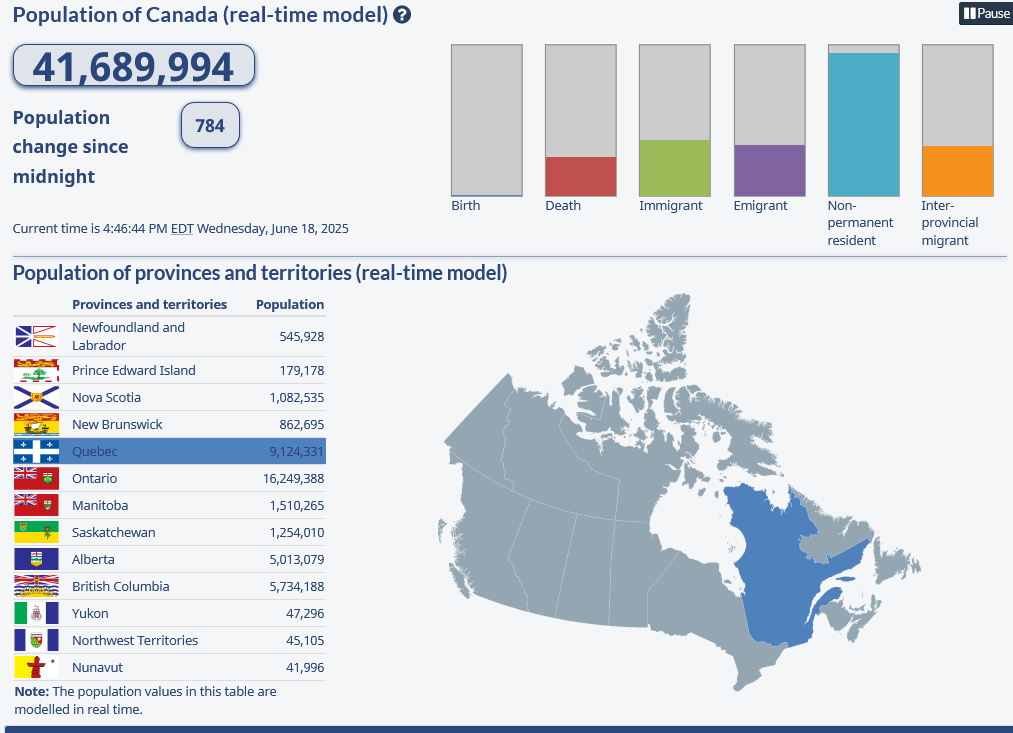
The report attributes the slowdown to reduced levels of both temporary and permanent immigration, as announced by the federal government in 2024. Additionally, a continued trend of natural population decline—characterized by more deaths than births—contributed to the stagnation in overall demographic growth.
Here are the highlights of the report:
Lowest growth since pandemic onset:
- The first quarter marked the smallest increase since Q3 2020, when the population fell by 1,232 due to COVID-19 restrictions.
- It was the second-slowest quarterly growth rate since 1946.
Effects of Immigration:
- Per Statistics Canada, this period marks the sixth straight quarter of slowing growth, following federal government decisions in 2024 to reduce both permanent and temporary immigration levels.
- The first quarter of 2025 showed the second-lowest growth rate on record since 1946.
- From 2001 to 2024, Q1 growth averaged 0.3%; in 2024 it was 0.6%, contrasting with 2025’s flat rate.
Population changes and Interprovincial migration:
Ontario and B.C. experienced their most considerable quarterly population losses since records began in 1951.
Overall Population Declines:
- Ontario: -5,664
- British Columbia: -2,357
- Quebec: -1,013
- Newfoundland and Labrador: -115
- Yukon: -15
Overall Population Gains:
- Alberta: +20,562
- Prince Edward Island: +749
- Northwest Territories: +168
- Nunavut: +158
Interprovincial migration:
Interprovincial migration slowed, with 81,231 moves recorded—the lowest since 2021.
- Alberta led with a net gain of 7,176, marking its 11th straight quarter of interprovincial growth.
- Manitoba (+106) posted its first net gain since 2004.
- Saskatchewan’s loss (-152) was its smallest since 2013.
Natural population:
- Natural population change was negative in the quarter, with 5,628 more deaths than births.
- This trend, driven by an aging population and winter mortality rates, has occurred in every first quarter since 2022.
Immigration:
International migration accounted for all of the population growth.
- Canada admitted 104,256 immigrants, the lowest first-quarter figure in four years, but still historically high compared to pre-2022 levels.
- The number of non-permanent residents declined significantly, dropping by 61,111 to 2,959,825, 7.1% of the population. This was the largest drop since the third quarter of 2020.
- The largest reduction was among study permit holders (-53,669), primarily in Ontario (-30,160) and British Columbia (-11,742).
- The number of asylum claimants and protected persons rose to a record 470,029.


