 Calgary
Canada experienced its most expensive year for weather-related insured losses in 2024, reaching $8.5 billion, as reported by Catastrophe Indices and Quantification Inc. (CatIQ).
This marks a significant increase from the previous record of $6 billion in 2016, largely attributed to the Fort McMurray wildfires.
The 2024 figure is nearly triple the insured losses of 2023 and far exceeds the annual average of $701 million from 2001 to 2010.
Per the news release, the summer of 2024 emerged as the most destructive period, with wildfires, floods, and hailstorms accounting for more than $7 billion in insured losses in July and August alone. This surge in damage generated over 250,000 insurance claims—50% more than the usual annual claim volume for Canadian insurers.
Among the year’s notable events was the Calgary hailstorm in August, which caused $3 billion in damages in just over an hour, making it the single most destructive weather event of 2024.
Flooding also continued to wreak havoc across nearly all regions of the country.
In addition to the Calgary hailstorm, other significant events in 2024 included the Jasper Wildfire ($1.1 billion in losses), Hurricane Debby’s remnants in Quebec ($2.7 billion), and flooding in the Greater Toronto Area ($990 million). Smaller but impactful incidents included a deep freeze in Western Canada in January and severe storms in southern British Columbia in October.
Largest Severe Weather Events in 2024
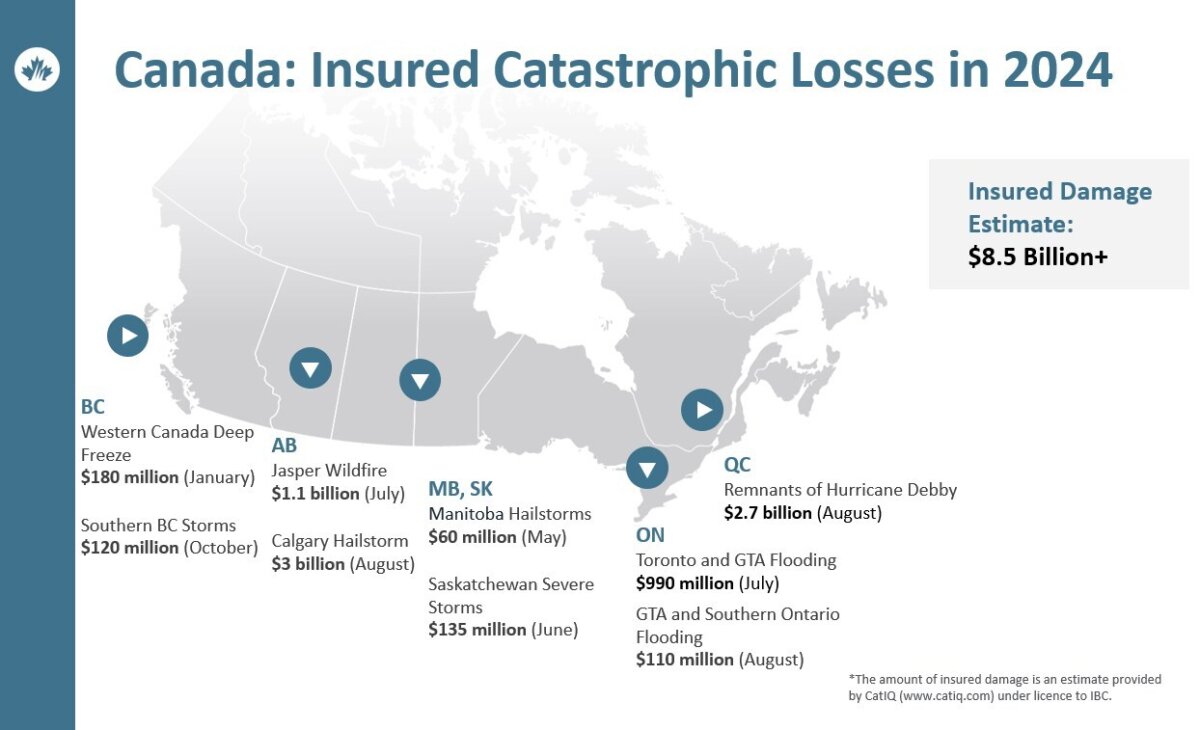
CNW Group/Insurance Bureau of Canada
- January 12–15: Deep freeze in Western Canada ($180 million)
- May 16: Manitoba hailstorms ($60 million)
- June 23: Severe storms in Saskatchewan ($135 million)
- July 15–16: Flash floods in Toronto and GTA ($990 million)
- July 22–August 17: Jasper Wildfire ($1.1 billion)
- August 5: Calgary hailstorm ($3 billion)
- August 9–10: Hurricane Debby remnants in Quebec ($2.7 billion)
- August 13–September 16: GTA and southern Ontario flooding ($110 million)
- October 18–20: Southern BC storms ($120 million)
The escalating frequency and severity of such disasters are raising alarms about the future affordability and availability of home insurance.
The Insurance Bureau of Canada (IBC) highlighted that since 2019, personal property damage claims have risen by 115%, while repair and replacement costs have surged by 485%.
“Sadly, beyond the staggering financial losses are hundreds of thousands of Canadians whose lives and livelihoods have been upended,” said Celyeste Power, President and CEO, IBC, in a news release.
He called for investments in flood defenses, land-use planning to prevent construction on floodplains, wildfire protection programs, and updated building codes to reduce damage from extreme weather.
Canada’s Top 10 Highest Insured Severe-Weather Loss Years on Record
(loss and adjusted expenses in 2023 dollars)
- 2024: $8.55 billion – Calgary hailstorm, Jasper wildfire, remnants of Hurricane Debby, GTA floods.
- 2016: $6.2 billion – Fort McMurray, Alberta, fire.
- 2013: $4.03 billion – Alberta floods, GTA floods, GTA ice storm.
- 2022: $3.61 billion – Multiple events.
- 2023: $3.61 billion – Nova Scotia floods, Okanagan and Shuswap, BC, area wildfires.
- 1998: $2.94 billion – Quebec ice storm.
- 2021: $2.56 billion – Calgary hailstorm, British Columbia floods.
- 2020: $2.52 billion – Fort McMurray flood, Calgary hailstorm.
- 2018: $2.49 billion – Multiple events: Ontario and Quebec rainstorms and windstorms.
- 2011: $2.05 billion – Slave Lake, Alberta, fire and windstorm.
Sources 1983–2007: IBC, PCS Canada, Swiss Re, Deloitte. 2008–2024: CatIQ


