 St. John's
No matter where you go on Newfoundland’s coast, there will be dozens of flocks of hundreds of seabirds. The birds vary depending on where you are along the coast.
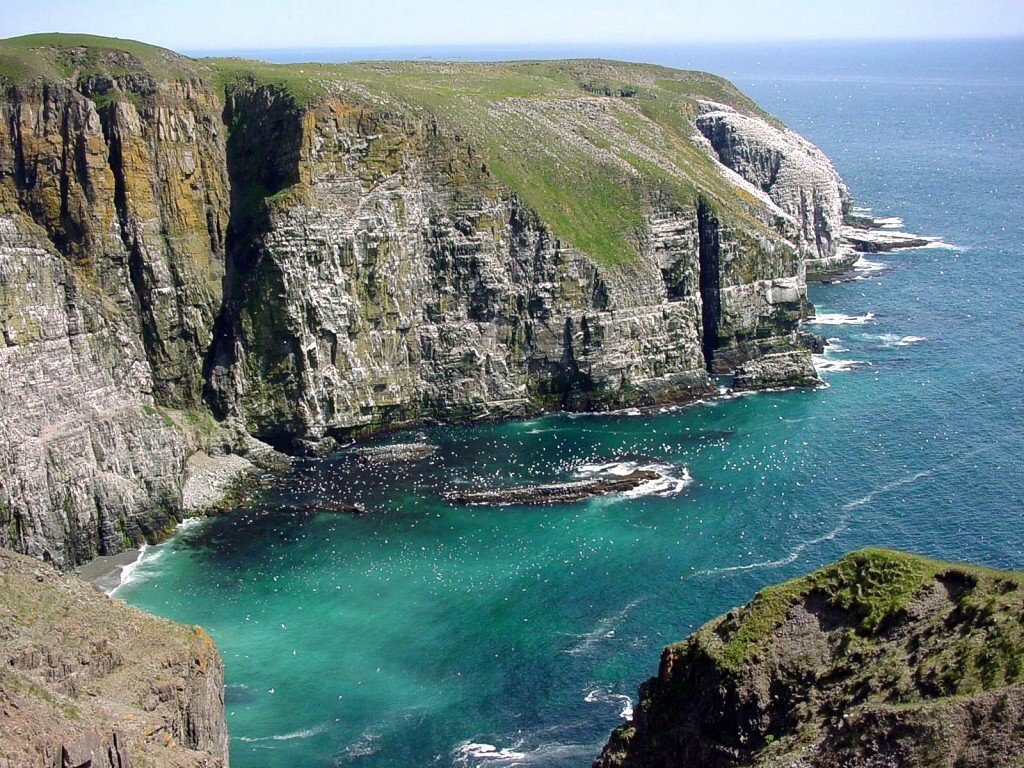
Credit: Douglas Sprott/Flickr/CC BY-NC 2.0 Deed
One of the best places to see the biggest variety of Newfoundland’s seabirds is the Seabird Capital of North America, which is on the southern tip of the Avalon Peninsula at Cape St. Mary’s Ecological Reserve.
The southern coastal region is protected to help ensure these various seabirds continue to thrive. It is also simple and convenient to visit from anywhere north of Cape St. Mary’s. Along the way, as you travel south, there are many other natural attractions and gems of Newfoundland to see.
The Birds of Cape St. Mary’s
Part of Cape St. Mary’s claim to fame as a seabird capital is thanks to the huge flocks of northern gannets which gather around the cliffs, and the aptly named Bird Rock. Beyond the nesting gannets are dozens more birds to see.
- The birds of Cape St. Mary’s in spring, summer, or fall include razorbills, common murres, black-legged kittiwakes, northern gannets, gulls, double-crested and great cormorants, scoters, long-tailed ducks, harlequins, dovekies, thick-billed murres, eiders and kittiwakes
- The walk from the parking lot to the views of Bird Rock is about 1.3km one-way. Along the way are stunning coastal views. Bird Rock is a highlight of the Ecological Reserve as it is the third-largest nesting site and southernmost colony of northern gannets in North America.
- Bird the Rock Nature Tours offer summer small-group tours through the Cape St. Mary’s Ecological Reserve and other locations in Newfoundland.
Cape St. Mary’s Performance Series
Head to the Cape on Saturday evenings during the summer. The Ecological Reserve plays host to the Cape St. Mary’s Summer Concert Series. Local bands and performers are featured in a scenic seaside spot. It is one of the essential summer activities in the area and is a perfect way to watch the sun set after a day of birding or photography.
Stops on the Way to Cape St. Mary’s Ecological Reserve
Make the journey to Cape St. Mary’s as much about the journey as it is the destination. From the Trans-Canada Highway to the southern coast of Newfoundland are more points of interest.
- Cataracts Provincial Park is off Highway 92, with beautiful places to stop for a roadside picnic. The park offers unique architecture among the waterfall, gorge, and river views.
- Stop in Placentia for dining opportunities, a walk through the Castle Hill National Historic Site
- Closer to St. John’s and still on the way to Cape St. Mary’s is Butter Pot Provincial Park. This scenic picnic and roadside stopping location also offers opportunities for a swim, more birdwatching, or peaceful hikes.
- Salmonier Nature Park is about 12km south of the Trans Canada Highway and on the way to Cape St. Mary’s. The park offers 3km of accessible boardwalk trail through protected wildlife habitats.
Planning your Trip – Cape St. Mary’s Ecological Reserve
What: Cape St. Mary’s Ecological Reserve, also known as the “Seabird Capital of North America,” gets its name from being the most accessible seabird rookery in North America. More specifically, the reserve is home to large nesting colonies of northern gannets, among dozens of other seabird types. The wildlife area is provincially protected and located at the far south end of the Avalon Peninsula. The scenic trail to the famous Bird Rock will offer coastal views and views of the furthest south arctic tundra landscapes in Canada.
Location and how to get there: 175km southwest of St. John’s; from the Trans-Canada Highway use Highway 90 south and continue south on Highway 92. Or use Highway 100 south from the Trans Canada.
Best time to go: early summer to late fall
Cost: free
For more information:
Cape St. Mary’s Ecological Reserve


