 Regina
The federal government has designated the Saskatchewan Doctors’ Strike of 1962 as an event of national historic significance. Environment and Climate Change Minister Steven Guilbeault, who is also responsible for Parks Canada, announced the designation under the National Program of Historical Commemoration.
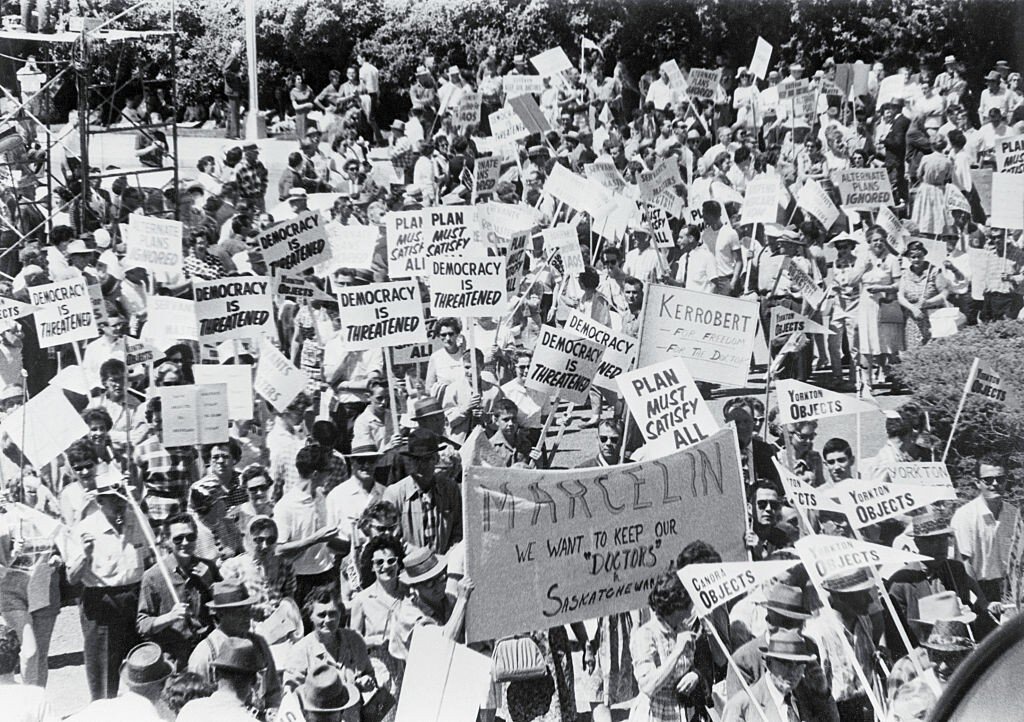
Thousands of people protesting the government’s stand on the Medicare crisis at the Legislative Buildings in Regina, Saskatchewan, 1962. Credit: Photographer Bettmann / Bettman Collection / 515030322
The strike, which lasted 23 days, was triggered by the introduction of the Saskatchewan Medical Care Insurance Act, 1961. The legislation, enacted on July 1, 1962, aimed to establish a publicly funded health care system, a move opposed by the Saskatchewan College of Physicians and Surgeons (SCPS).
In protest, most doctors in the province withdrew their services, citing concerns over government control of medical practice and the potential impact on their professional autonomy.
Although many physicians supported the strike, others continued working, either because they backed the government’s policy or opposed withholding care from patients. In response to the disruption, the government brought in doctors from outside Saskatchewan, while the SCPS maintained limited emergency services. Communities also took action by setting up new clinics, but overall, patient care suffered during the strike.
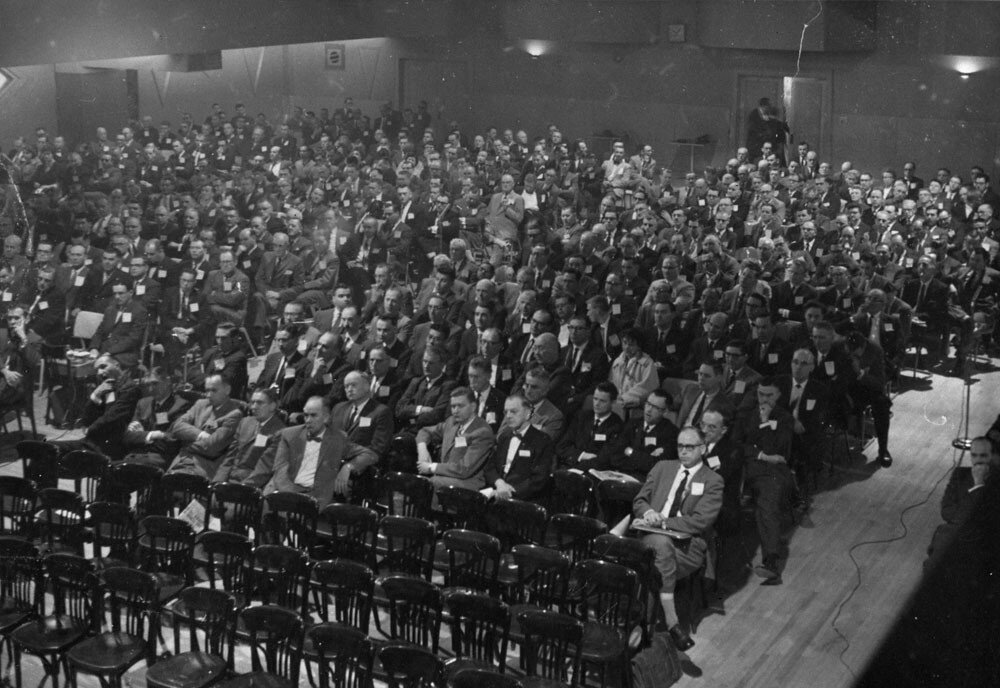
Saskatchewan Medical Association meeting in Regina, Saskatchewan, during the Medicare Crisis (Doctors’ Strike), July 1962 Credit: George E. Dragan / Library and Archives Canada / PA-088485 / Copyright: Expired
The dispute ended on July 23, 1962, with the signing of the Saskatoon Agreement. The compromise allowed doctors to retain control over patient care and choose their method of compensation, incorporating fee-for-service and extra-billing options. The agreement laid the foundation for the expansion of medicare across Canada in subsequent years.
The strike was a pivotal moment in the country’s healthcare history, drawing national and international attention. It underscored tensions between government-led healthcare reforms and professional independence in the medical field. Public reaction was divided, with groups such as the “Keep Our Doctors” committees organizing protests against the new system due to fears that it would limit access to care.
In 1947, Saskatchewan introduced Canada’s first hospital insurance plan, later inspiring federal policy. Premier Tommy Douglas, now known as the father of Medicare, expanded health care reforms, passing the Saskatchewan Medical Care Insurance Act in 1961. His push for universal Medicare led to the 1962 Saskatchewan doctors’ strike, marking a pivotal moment in healthcare history. The program was implemented by his successor, Woodrow Lloyd.
The Parks Canada designation highlights the lasting impact of the Saskatchewan Doctors’ Strike on Canadian health care policy. The event remains a crucial part of the broader history of medicare, shaping the national conversation around publicly funded health care and professional medical practice in Canada.


