 Toronto
Prime Minister Mark Carney announced on Monday that Canada will invest more than $9 billion in defence spending for the 2025–26 fiscal year, allowing the country to reach NATO’s 2% GDP military spending target ahead of the 2030 deadline.
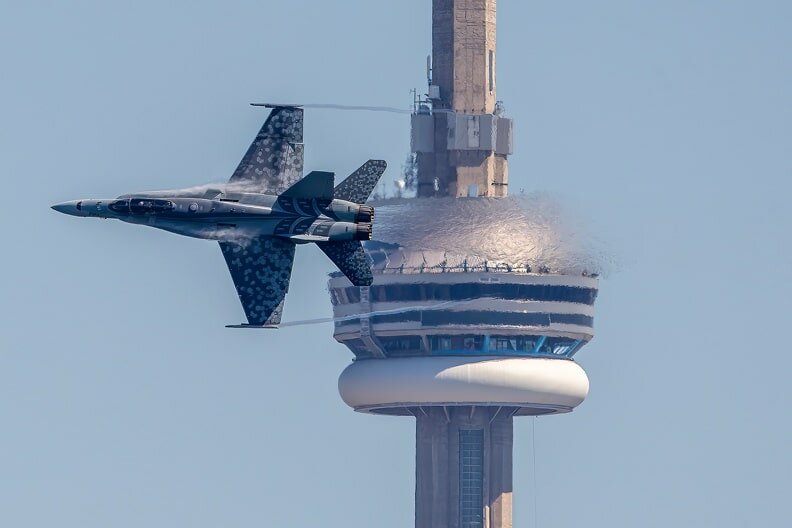
Credit: Canadian International Air Show
The funding is part of a broader plan to reinforce Canada’s military capabilities in response to growing global instability. It includes initiatives to improve the operational readiness of the Canadian Armed Forces (CAF), strengthen recruitment and retention, and modernize key defence infrastructure and technologies.
Recruitment remains a key focus of the initiative. The government aims to bring the CAF to 71,500 Regular Force members and 30,000 Primary Reserve members by 2030. Investments will also support the civilian workforce essential for maintaining operations, logistics, and internal services across the Department of National Defence (DND).
The plan includes new equipment procurement, such as aircraft, armed vehicles, and ammunition. In parallel, ongoing repair and maintenance of current fleets and infrastructure will continue, including upgrades to ships and aircraft.
A portion of the funding will be used to advance technological capabilities, with emphasis on Arctic and seafloor surveillance through drones and sensor development. The Arctic Over-the-Horizon Radar and Joint Counter-Drone Program are among the major projects identified.
The government also plans to expand Canada’s digital and cyber infrastructure, with investments directed at strengthening cybersecurity and enhancing the use of data for operational decision-making.
The Canadian Coast Guard will become part of the Defence department, with expanded responsibilities and a closer integration into NATO operations, focusing on maritime surveillance and northern sovereignty.
Efforts to increase domestic production of military supplies, including ammunition and utility vehicles, are included. The plan also supports the development of advanced capabilities in artificial intelligence, quantum technology, and space systems.
In addition to bolstering national defence, the plan includes new initiatives for veterans. These include modernizing the benefits delivery system, simplifying the process for transitioning military credentials to civilian professions, and improving health services, particularly for women veterans.
The planned investments for the Department of National Defence (DND) and the Canadian Armed Forces (CAF), as well as the Communications Security Establishment (CSE), in 2025-26, include:
-
$2.6 billion for recruitment and retention, aiming to grow CAF to 71,500 Regular and 30,000 Reserve personnel by 2030. This includes investing in civilian defence staff to support operational functions and maintenance.
-
$844 million for repairing and maintaining CAF equipment and infrastructure, with additional support through Phase 2 of the National Procurement Program.
-
$560 million to improve digital capabilities, modernize infrastructure, and increase cybersecurity, including funds for the CSE.
-
$1 billion to expand military capabilities, including Arctic defence, drones, sensors, and advanced surveillance technologies.
-
$2.1 billion to boost Canada’s defence industrial capacity and support the development of a national Defence Industrial Strategy. This includes plans to remove barriers facing Canadian defence manufacturers and to deepen collaboration with NATO allies.
-
$2 billion to broaden international defence partnerships beyond the United States, though existing strategic ties with the U.S. will be maintained where beneficial.
An additional $135 million will support defence-related activities in other federal departments and agencies.
Per the news release, the funding builds on commitments made in the 2023 defence policy Our North, Strong and Free, and includes specific plans to support veterans through benefits reform, credential recognition, and health services improvements.


