 Calgary
A recent study by the Fraser Institute reveals that Canada ranks among the highest spenders on healthcare within a group of 31 high-income countries with universal healthcare systems. Despite this, the country lags in the availability of medical resources and has some of the longest wait times for patients.

Credit: Pixabay/Pexels
According to the study, Canada is fourth in health care spending as a percentage of GDP at 11.5%, and ninth in spending per person when adjusted for age.
“There is a clear imbalance between the high cost of Canada’s health-care system and the value Canadians receive—particularly in terms of availability of medical resources and timely access to care,” said Bacchus Barua, director of health policy studies at the Fraser Institute and co-author of the report.
The availability of medical professionals and facilities is notably low. Canada ranks 28th out of 30 countries for the number of doctors and 25th for hospital beds dedicated to physical care.
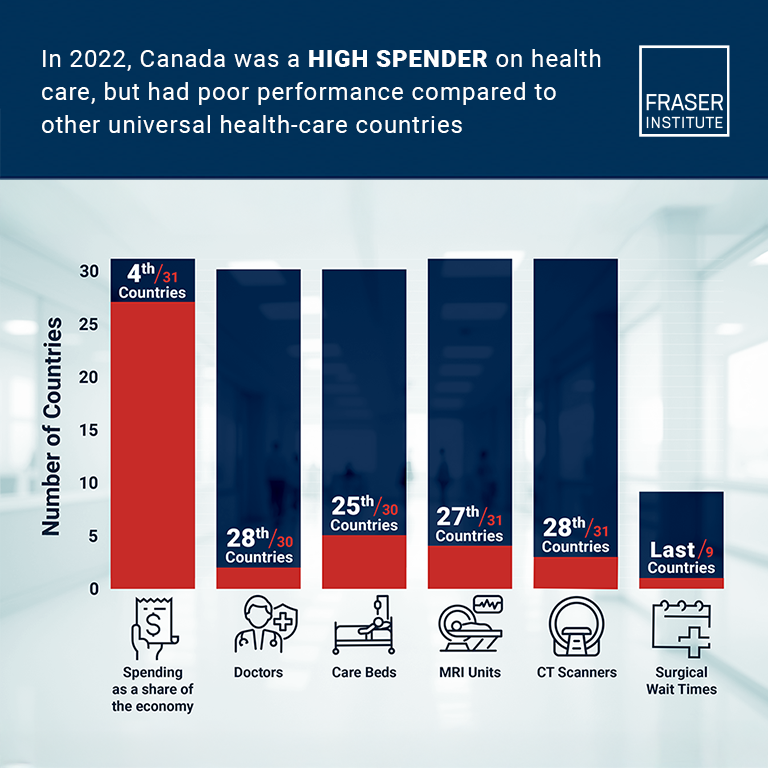
In diagnostic technology, it stands at 27th out of 31 for MRI machines and 28th for CT scanners per million people.
Wait times are also a significant concern. Among nine comparable countries that measure wait times, Canada ranks second-worst for patients waiting more than a month to see a specialist, with 65.2% reporting delays. It is the worst for non-emergency surgery wait times, with 58.3% of patients waiting two months or more.
“Canadians are increasingly aware of the shortcomings of their health-care system,” noted Mackenzie Moir, policy analyst and co-author of the study. “To improve health care for Canadians, policymakers should learn from other countries around the world that do universal health care better.”
The study evaluated over 40 indicators to compare the performance of universal healthcare systems. It highlights a mismatch between high financial investment and average poor returns in terms of resource availability and patient access in Canada.


