Banff
Banff 
Steven Guilbeault, Minister of Environment and Climate Change and Minister responsible for Parks Canada and Whitney Issik, Alberta Minister of Environment and Parks today announced the official endorsement of the nomination of North Saskatchewan River as a Canadian Heritage River.
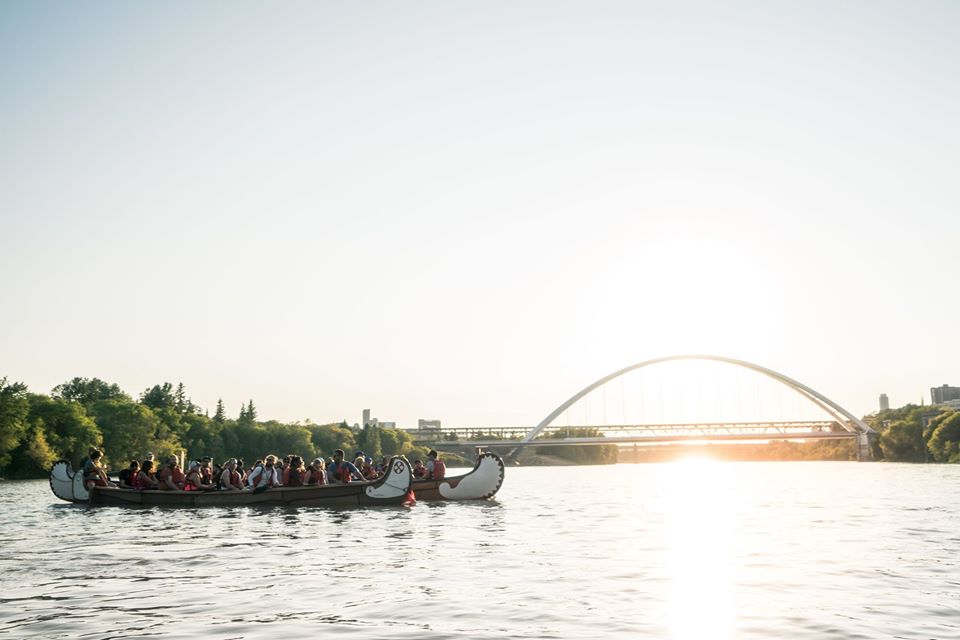
Credit: Edmonton Tourism
The Canadian Heritage Rivers System is Canada’s national river conservation program established in 1984. The designation gives national recognition to Canada’s outstanding rivers and encourages their long-term management to conserve their natural, cultural and recreational values for the benefit and enjoyment of Canadians.
The 49 km section of the North Saskatchewan River within Banff National Park was previously designated as a Canadian Heritage River in 1989.
The section endorsed today was nominated by Smoky Lake County and includes the entire 718 km of the North Saskatchewan River in Alberta from the Banff National Park boundary to the Alberta/Saskatchewan provincial border.
The North Saskatchewan River flows within the North Saskatchewan watershed across central Alberta and into Saskatchewan. The river travels 1,287 km from its origin in the Columbia Icefields in Jasper National Park to the ‘Forks’ within the province of Saskatchewan. This route transects four of Alberta’s six natural regions — Rocky Mountains, Foothills, Boreal Forest, and Parkland.
The North Saskatchewan River played a pivotal role as the main transportation and communication route from eastern Canada to the Rocky Mountains, from the middle of the 17th century to the middle of the 20th century.
The River is also a traditional gathering place, travel route and home for Indigenous peoples including the Cree, Blackfoot, Ktunaxa, Métis, Nakota Sioux, Iroquois, Dene, Ojibwe, Saulteaux, Anishinaabe, Inuit, and Assiniboine. The North Saskatchewan River’s name originates from the Cree, ‘kisiskâciwani-sîpiy’, (meaning “swift-flowing river”) or in Blackfoot, ‘omaka‑ty’ (meaning ‘Big River’).
As per the new release, for the North Saskatchewan River to receive full designation under the Canadian Heritage Rivers System (CHRS), a management plan that describes how the river will be managed must be prepared. The document is then reviewed by the Technical Planning Committee and tabled with the CHRS Board for its recommendation to the appropriate provincial or territorial Minister and Minister of Environment and Climate Change and Minister responsible for Parks Canada to formally designate the river.
The CHRS Board is made up of federal representatives from the Parks Canada Agency and Crown-Indigenous Relations and Northern Affairs Canada, and one representative from each of the participating provinces and territories.
There are currently 41 Canadian Heritage Rivers, totalling just over 11,000 kilometers, across the country.