 Kelowna
In a recent survey by the Angus Reid Institute, Canadians have expressed growing dissatisfaction with government services, particularly since the onset of the COVID-19 pandemic in 2020.
The survey, conducted online between November 24 and December 1, 2023, with 3,749 Canadian adults, highlights a declining sense of contentment across various sectors including healthcare, education, housing affordability, and drug and addiction policy:
- Healthcare Dissatisfaction: Satisfaction with healthcare services has dramatically dropped nationwide, from 49% in early 2020 to 24% in 2023. British Columbia and Ontario have seen the most significant decreases, with satisfaction levels falling by 27 and 19 percentage points, respectively. Even with over $46 billion in federal health accords and restructuring efforts, satisfaction remains low. According to the survey, 36 per cent of Albertans are satisfied with the recent restructuring of Alberta Health Services. Only 11 per cent of New Brunswick residents were satisfied with the state of healthcare in 2023.
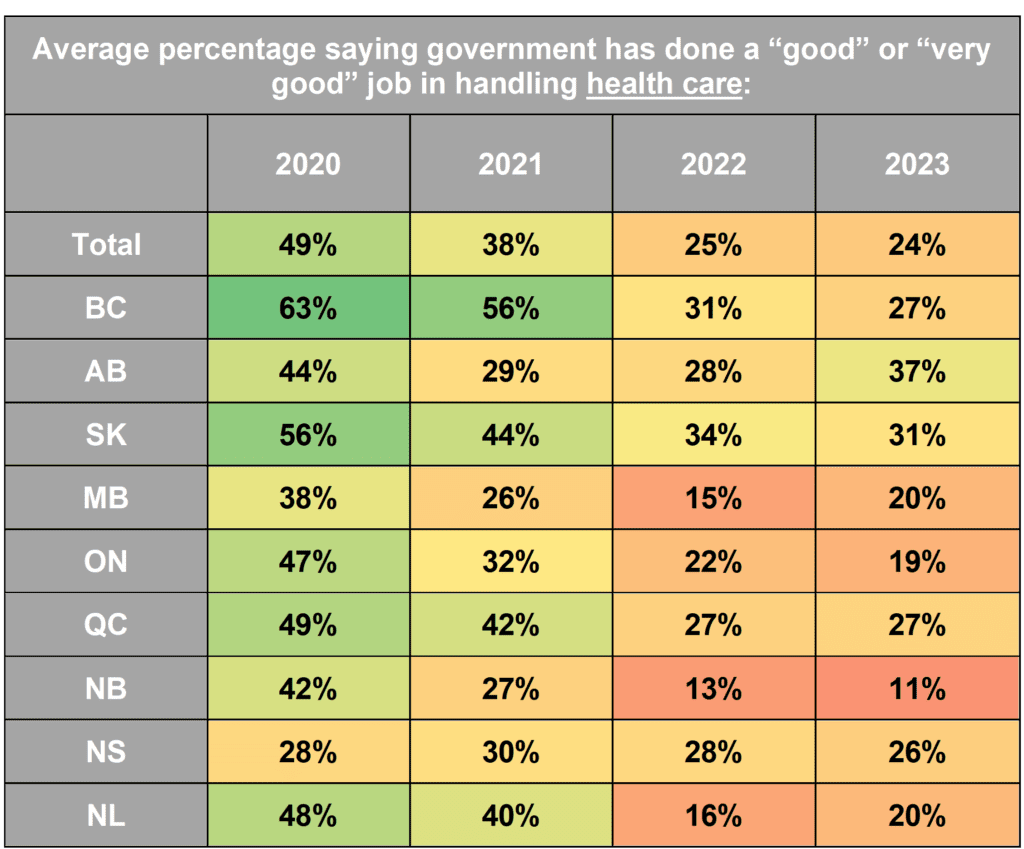
Credit: Angus Reid Institute
- Housing Affordability Issues: Housing affordability is increasingly a concern, with national satisfaction plummeting from 27% in 2020 to 15% in 2023. Rising rents and interest rates exacerbate the issue, with Saskatchewan showing slightly higher satisfaction levels (35%), though still not impressive.
- Economic Management: Some provinces have fared better in economic issues. Saskatchewan and New Brunswick have more than half of their residents approving their government’s economic handling. Alberta, Saskatchewan, and Quebec have managed to maintain majority or near-majority satisfaction in economic stewardship.
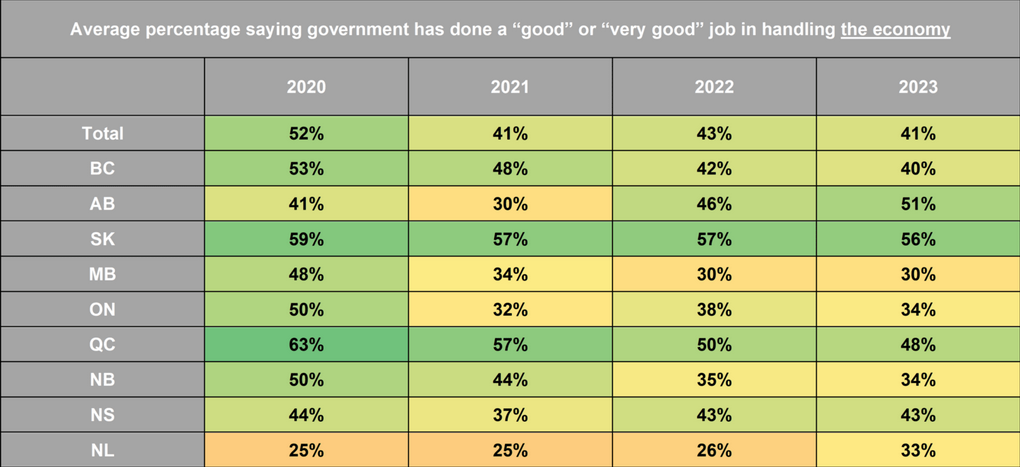
Credit: Angus Reid Institute
- Education Sector Challenges: Satisfaction in the education sector has also seen a significant decline. Quebec and New Brunswick have experienced the largest drops, with satisfaction falling to 26% and 24%, respectively.
- Drug Use and Addiction Policy: The handling of drug use and addiction policy, especially in the context of the opioid epidemic, has been critically viewed. Overdose deaths have continued to rise, and there is a widespread dissatisfaction with provincial approaches to this issue.
Looking ahead to 2024, the top provincial issues identified are the cost of living and healthcare. Two-thirds of respondents prioritize the cost of living, while 59% consider healthcare a top issue. This comes despite new health funding agreements signed by the federal government with provinces in early 2023.
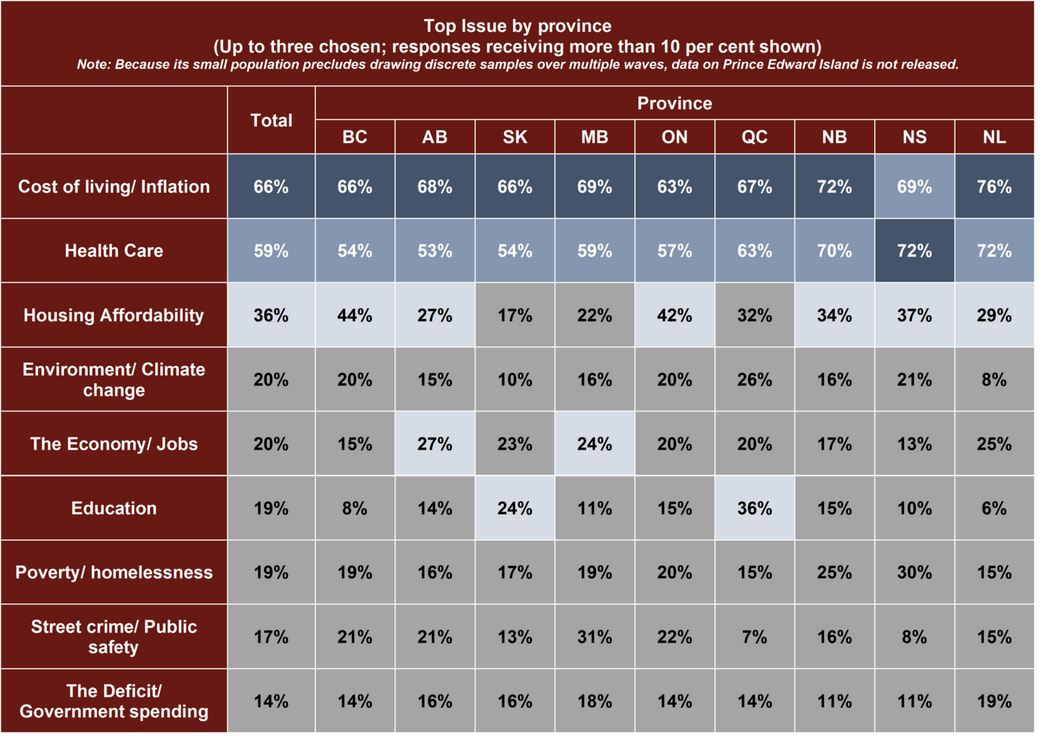
Credit: Angus Reid Institute
The survey, self-commissioned and paid for by ARI, reveals a challenging landscape for provincial governments, particularly with upcoming elections in British Columbia, Saskatchewan, and New Brunswick. Whether any government can reverse the trend of declining approval ratings remains uncertain. The survey’s methodology involved a representative randomized sample of Canadian adults, with provincial margin of error estimates included in the full report. Data on Prince Edward Island was not released due to its small population.


