St. John's
February 15th is the National Flag of Canada Day.
Credit: Igor Kyryliuk/Flickr
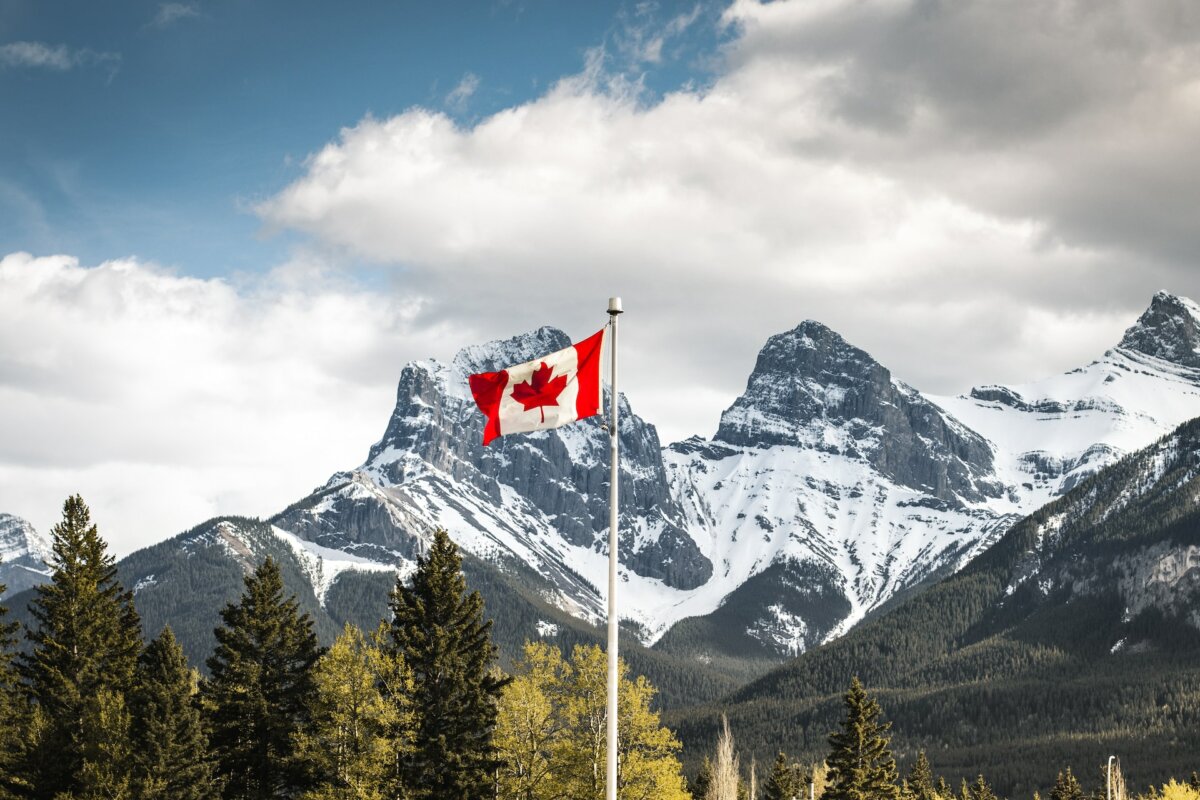
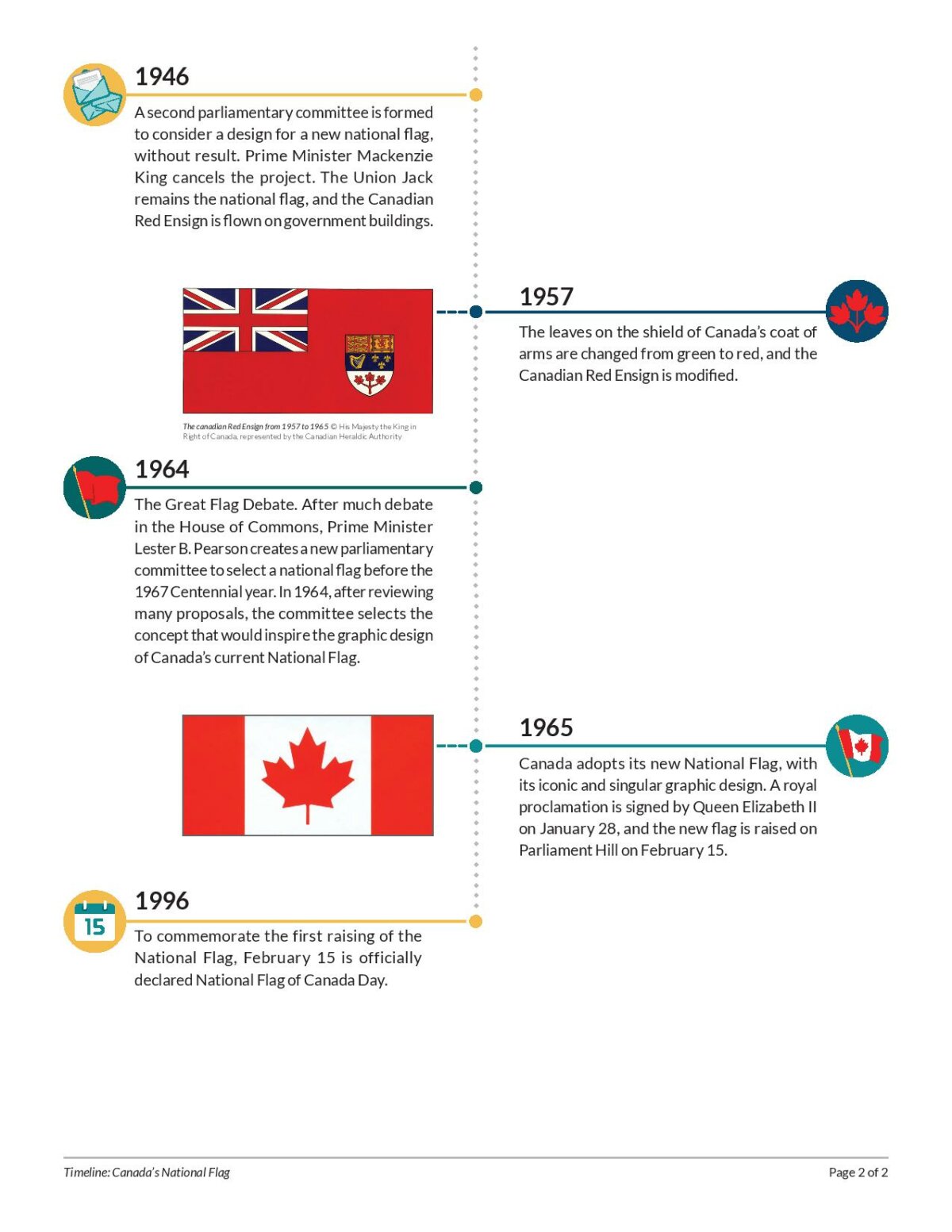
The red and white flag with its eleven-pointed maple leaf was adopted in 1965 when Lester B. Pearson was the prime minister. It was officially flown on Parliament Hill in Ottawa on February 15, 1965.
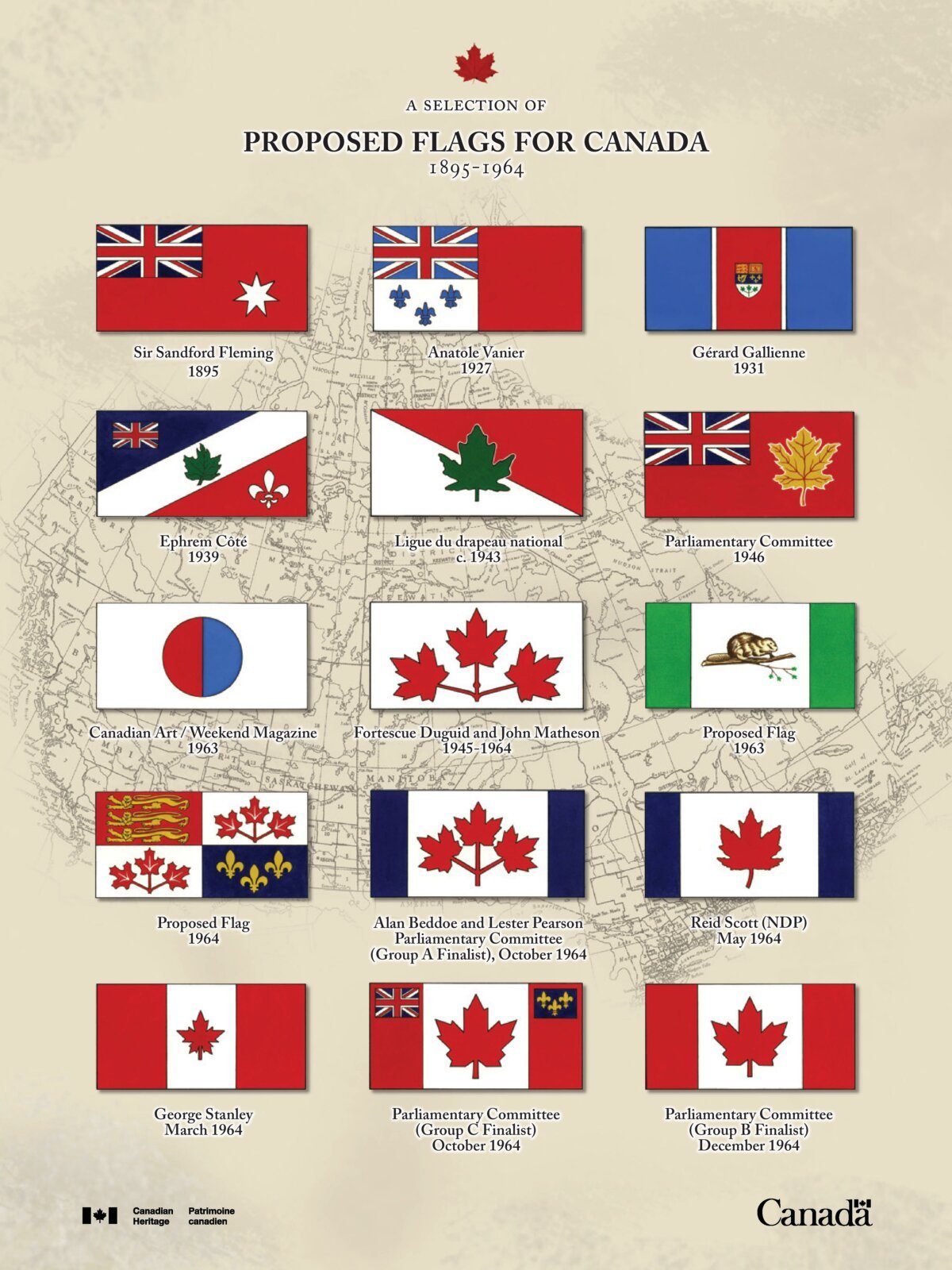
Since the first attempt of creating a new Canadian Flag in 1925, the public submitted various designs which featured beavers, Royal Union Flags, fleurs-de-lys, crowns and crosses.
Credit: Canada
While the path to adopting the new flag to replace the Canadian Red Ensign was not smooth (watch the videos below), the simple, easily recognizable flag design concept by George Stanley, then dean of arts at the Royal Military College of Canada with minor changes is now the proud symbol of Canada.
National Flag of Canada Day was officially proclaimed on February 15, 1996 to commemorate the raising of the new flag on Parliament Hill in 1965.
Did you know:
- The Canadian flag’s length is double its width, and the white square featuring a maple leaf represents half of the flag’s area, which is the same size as both red bars together.
- Laurie Skreslet, the first Canadian to summit Mount Everest, carried the national flag with him to Mount Everest’s highest point in 1982 and the Canadian flag was taken into space on the NASA space shuttle Challenger by the first Canadian astronaut in 1984
- When the National Flag is flown with the flags of the ten provinces and three territories, the flags of the provinces and territories are arranged according to the order in which they joined the Confederation. In instances where multiple provinces joined the Confederation in the same year, their flags are arranged by their population size at the time of entry. Therefore, the order of precedence is as follows: Ontario (1867), Quebec (1867), Nova Scotia (1867), New Brunswick (1867), Manitoba (1870), British Columbia (1871), Prince Edward Island (1873), Saskatchewan (1905), Alberta (1905), Newfoundland and Labrador (1949), Northwest Territories (1870), Yukon (1898), and Nunavut (1999).

Credit: Canadian Heritage
For more information: Canadian Encyclopedia & Canada.ca