 St. John's
Newfoundland’s Northern Peninsula includes two long coastlines of incredible scenery. A large part of the western coastline on the peninsula is covered by Gros Morne National Park, a must-visit destination for anyone in the area during the warmer months.
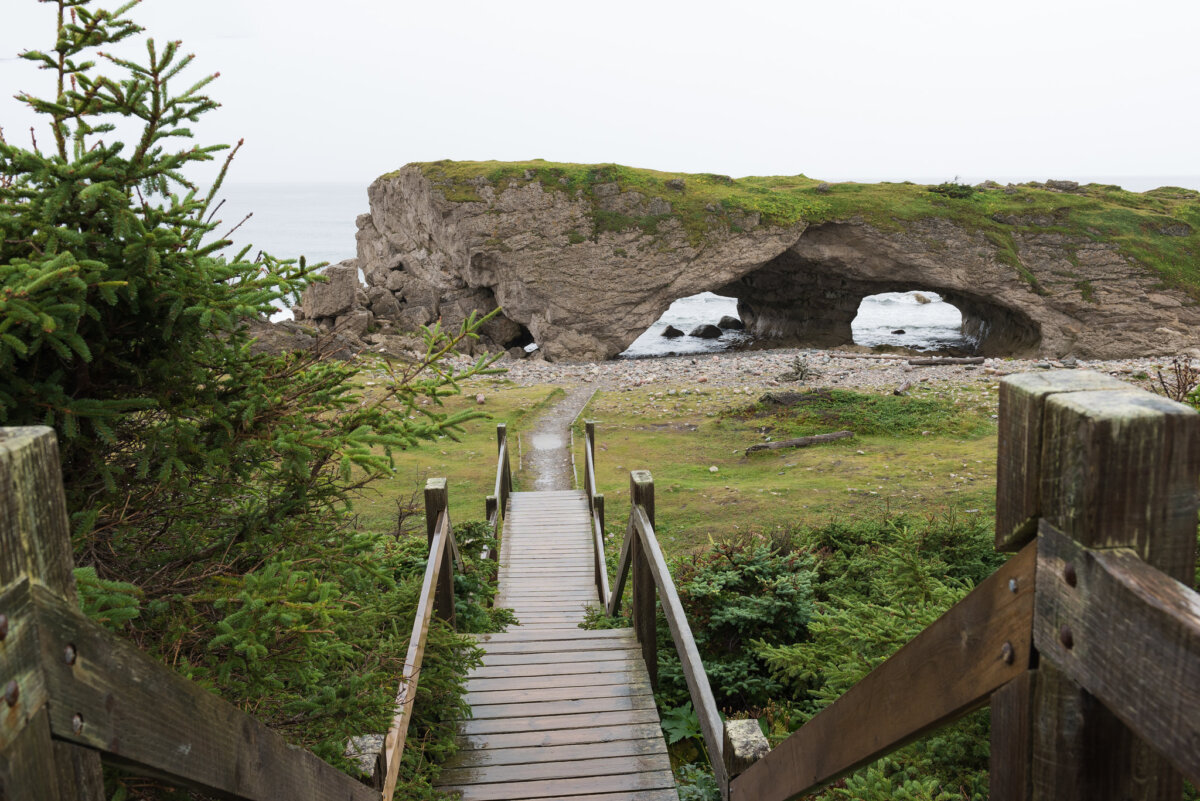
The incredible coastal scenery extends north of the National Park, as Highway 430 runs up to the tip of the peninsula. One of the best features along this highway is also one of the closest to Gros Morne: head about 20 minutes north out of the park gates to uncover Arches Provincial Park and the three arch formations that lend the park its name.
See The Arches While They Stand
Originally, Arches Provincial Park was home to four arch formations over the shoreline. But, given the nature of how these arches are formed, it is no wonder that at least one arch has collapsed and fully succumbed to the ocean waves. Today, three large arches remain as a showcase of how powerful those ocean waves are, especially over time.
These arches are rocky in appearance, made of Ordovician-aged dolomitic conglomerate, but are topped with greenery and shrubs to add more colour to the already awe-inspiring scenery. The arch formations under these large rocks are simply a result of thousands of years of ocean wave erosion. And while the Provincial Park is home to three coastal arch formations, erosion may reduce it to two arches or one.
The Best Views of the Arches
Views of the park’s ocean and rock arches will be in sight as soon as you pull up in the day use parking lot. The parking lot and grassy surrounding picnic areas are a bit elevated above the beach and shoreline, and are areas that offer the next set of views of the arches from a distance. Follow the boardwalk and staircase down to the beach for much closer views of one of coastal Newfoundland’s most interesting natural features.
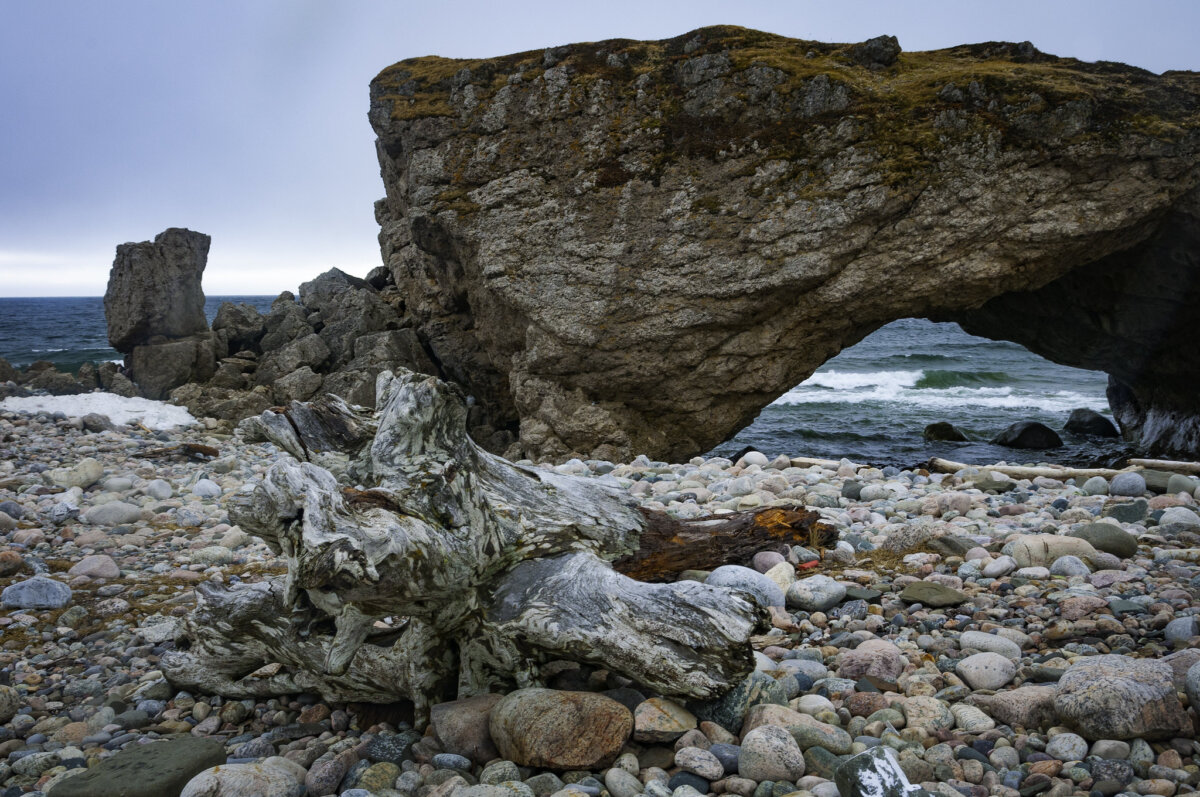
The pebbled beach extends for a hundred metres or so before the water’s edge at low tide behind the arches. As the tide moves in, the interior of the arches slowly fills with crashing waves. So, plan for a visit during low tide to get 360-degree views of the arches from inside and out. As the tide lowers, a vast array of colourful rocks, boulders, and pebbles surrounding the arches is revealed.
A Beach Day at Arches Provincial Park
The coastal waterfront setting, as well as the large rock arches next to the beach, create a wonderful place for a roadside picnic. The park has many picnic tables scattered around the entrance to the beach, as well as outhouses.
- Roadside eateries on the way to Arches Provincial Park that offer takeout to help cater the picnic include Sunrise Bakery & Café, Greco Pizza Xpress, or Whale’s Back Grub Hub, all south of the park.
- To the north of the Arches Provincial Park, the stops along 430 include several options around Hawke’s Bay and Port au Choix.
- Bring sturdy footwear for exploring the beach. The shores are lined with pebbles and cobblestone to make for more rugged terrain.
Birds, Other Wildlife, & Nature Photography around the Arches
It is obvious that the arches themselves are the highlight of any nature and landscape photography one wants to do in the park. There are an especially great number of photo ops during lower tides when it is easier to get close to or under the arches. This beach faces west as well, which means that come time for sunset, the arches and surrounding scenery are all the more enhanced by the colourful skies.
- The shores around the arches are covered in Tuckamore forests, as well, making the area a hotspot for seabirds and land birds. The birds will be easy to hear, too, as the park is home to woodpeckers or songbirds like warblers.
- The Coastal Plains and Forest regions of Newfoundland’s northern Peninsula are also home to larger, but more elusive, wildlife, like moose or lynx.
- Keep the cameras, phones, or binoculars out for nightfall: with Gros Morne National Park to the south being an official Canadian Dark Sky Preserve, and the more rural surroundings of the arches, these skies light up on a clear night with stars, satellites, and planets.
This Side of Gros Morne National Park
There are vast and expansive wilderness areas which help to make Gros Morne National Park so large. So, while you drive to see Arches Provincial Park, the northern parts of the National Park are only about 20km to the south on the main highway. This means there is plenty of time to see the arches, hold a picnic, explore the beach, and see this side of Gros Morne National Park (the north side). Conversely, Arches Provincial Park is a great day trip for anyone with a long-term or weekend stay at Gros Morne.
- The trails on Gros Morne’s north end include three separate and easier nature trails with two shorter routes and one longer route. The first trailhead along 430 if you head south into Gros Morne, is the 2km Old Mail Road in Shallow Bay that’s open to both hikers and cyclists.
- The Western Brook Pond trail is next up when you continue south on 430 and is the longer of the three trails at 6km total. The route offers a great deal of varying scenery from towering cliffs to bogs and marshes, and much of the coastal lowlands.
- Steve’s Trail, the shortest among the three, offers some of the park’s best coastline views.
- Take in more of the coast, and an additional beach day, with one of the many nearby beach areas of the National Park which offer showers and washrooms. Among the National Park’s north end beaches are the two ocean/saltwater beaches of Lomond and Shallow Bay, and the freshwater beach at Trout River Pond.
Planning Your Trip – Arches Provincial Park
What: Arches Provincial Park surrounds a day use area on the west coast of Newfoundland’s Northern Peninsula, and a short drive north of Gros Morne National Park. The park receives its name from the stunning geological feature that stands on the park’s shoreline: the large rocky cliffs with three separate arches carved out by thousands of years of wave erosion. It is possible to stand near and under the arches during low tide, but climbing the rocks in any way is strictly prohibited (and dangerous). The park also offers outhouses and picnic tables, making it an inviting place for an afternoon.
Location & how to get there: 137km north of Deer Lake via NL-430; 18km north of the Gros Morne National Park gates on NL-430
Best time to go: open year-round
Cost: Vehicle entry for day use, $10.
For More Information:


