 Toronto
A female wood bison calf was recently born at the Toronto Zoo, marking a significant advancement in conservation efforts using artificial reproductive technologies. The birth resulted from a single artificial insemination performed in October 2024 using sex-sorted sperm stored at Canada’s Wildlife Cryobank.
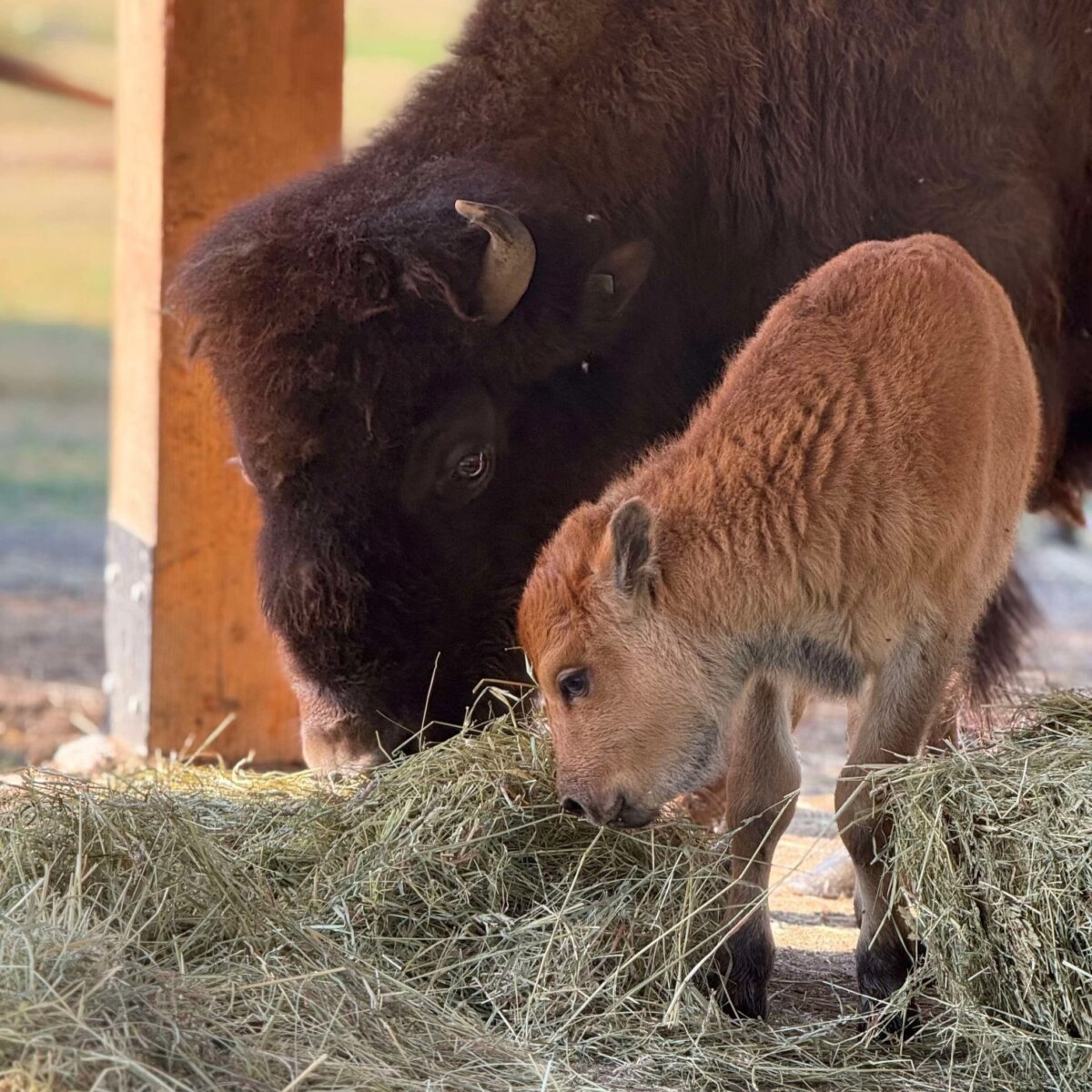
Credit: Toronto Zoo
This development is part of a long-standing conservation initiative that began at the Toronto Zoo in 1977. Since 2007, the Zoo has worked in collaboration with the University of Saskatchewan and Parks Canada to apply reproductive science to support the threatened wood bison population.
Once widespread across northwestern Canada and Alaska, wild wood bison are now limited to fragmented herds in parts of British Columbia, Alberta, the Northwest Territories, and the Yukon. Although the species was reclassified from endangered to threatened in 1988, disease outbreaks—such as tuberculosis and brucellosis—continue to pose risks to their survival.
Key breakthroughs and significance of the birth:
- First successful wood bison birth at Toronto Zoo via sex-sorted artificial insemination
- Use of x-bearing sperm from Canada’s Wildlife Cryobank to increase genetic diversity
- Supports efforts to counteract threats from diseases like tuberculosis and brucellosis in wild herds
- Contributes to preserving endangered genetic lines through wildlife biobanking
Per the news release, the Zoo’s reproductive program focuses on methods like artificial insemination and in vitro fertilization to improve genetic diversity and population health. These technologies aim to create disease-free, genetically robust herds that can eventually be restored to the wild.
The Toronto Zoo hosts one of the few reproductive physiology laboratories in North America engaged in wildlife biobanking, preserving sperm and embryos for future conservation use.
The newborn calf, delivered on June 30, is in good health. Staff noted a minor outward angling of its front left leg, which is not uncommon in large animals and is expected to correct itself naturally. The calf is nursing and bonding normally with its mother.
This birth underscores the Zoo’s role in wood bison conservation and its broader mission to safeguard biodiversity through science-based wildlife management.


