Toronto
U.S. President Donald Trump says he may block the opening of the Gordie Howe International Bridge, the long-awaited border crossing between Windsor, Ontario, and Detroit, Michigan, unless the United States is compensated and treated more fairly by Canada.
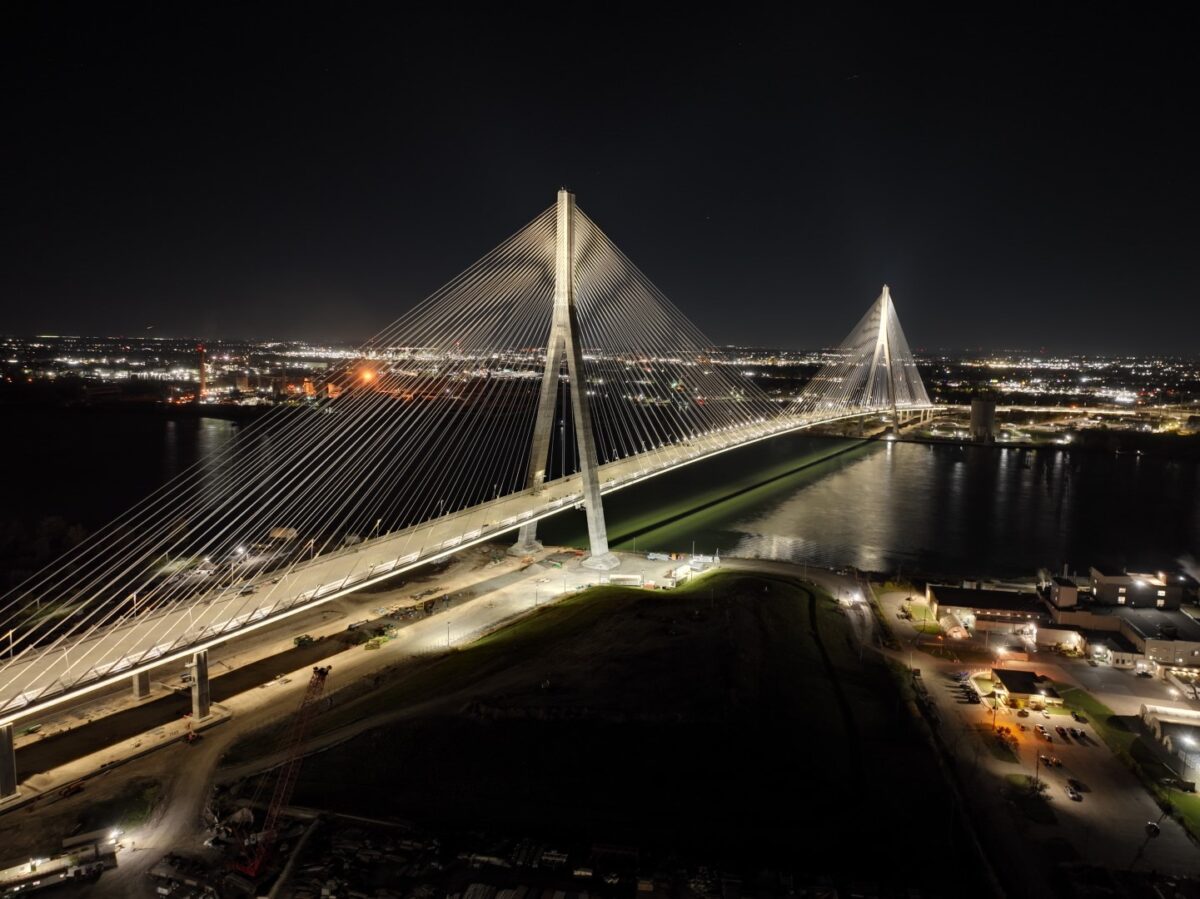
Credit: Gordie Howe International Bridge
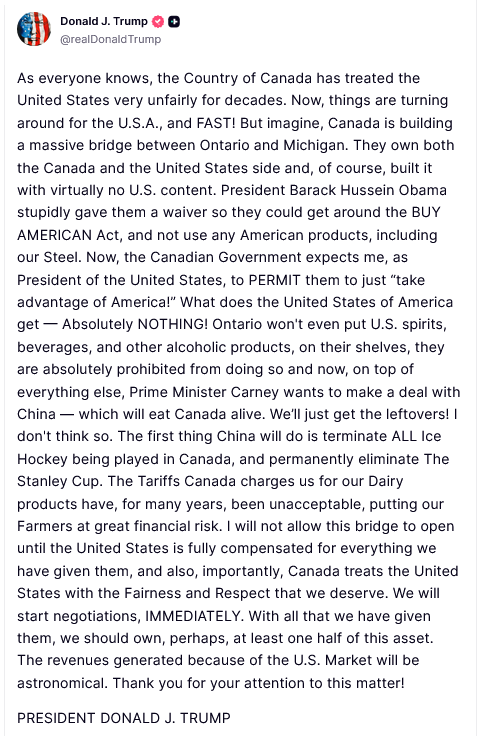
In a post on Truth Social Monday, Trump wrote, “I will not allow this bridge to open until the United States is fully compensated for everything we have given them, and also, importantly, Canada treats the United States with the Fairness and Respect that we deserve.” He argued the bridge was built with “virtually no U.S. content” after a waiver from the Buy American Act during the Obama administration, and questioned what the U.S. gains from the project.
Trump also criticized Canada’s dairy tariffs, Ontario’s restrictions on U.S. alcohol products, and raised concerns about Prime Minister Carney seeking closer ties with China. He added that negotiations should begin “IMMEDIATELY,” suggesting the U.S. should own “perhaps, at least one half of this asset.”
The Gordie Howe Bridge spans 2.5 kilometres, carries six lanes of traffic, and features an 853-metre main span, making it the longest cable-stayed bridge in North America. It connects Interstate 75 in Michigan to Highway 401 in Ontario and is designed to allow uninterrupted freeway traffic, unlike the nearby Ambassador Bridge.
The CA$3.8-billion project is funded by the Canadian federal government and managed by the Windsor–Detroit Bridge Authority, with costs to be recovered through tolls.
In fiscal 2023, Detroit ranked as the second-largest freight port in the United States by trade value and the busiest along the U.S.–Canada border. Commercial trucks moving through the region carried $126 billion in goods, with 1,548,406 trucks entering the United States, second nationally for volume and first on the northern border.
Construction was expected to finish in Fall 2025. Early this month, the U.S. Department of Homeland Security officially designated the bridge as a port of entry, effective March 2.