Toronto
The flyby of Comet C/2021 A1 (Leonard) has been much-anticipated as bright comets visible with unaided eyes are extremely rare.
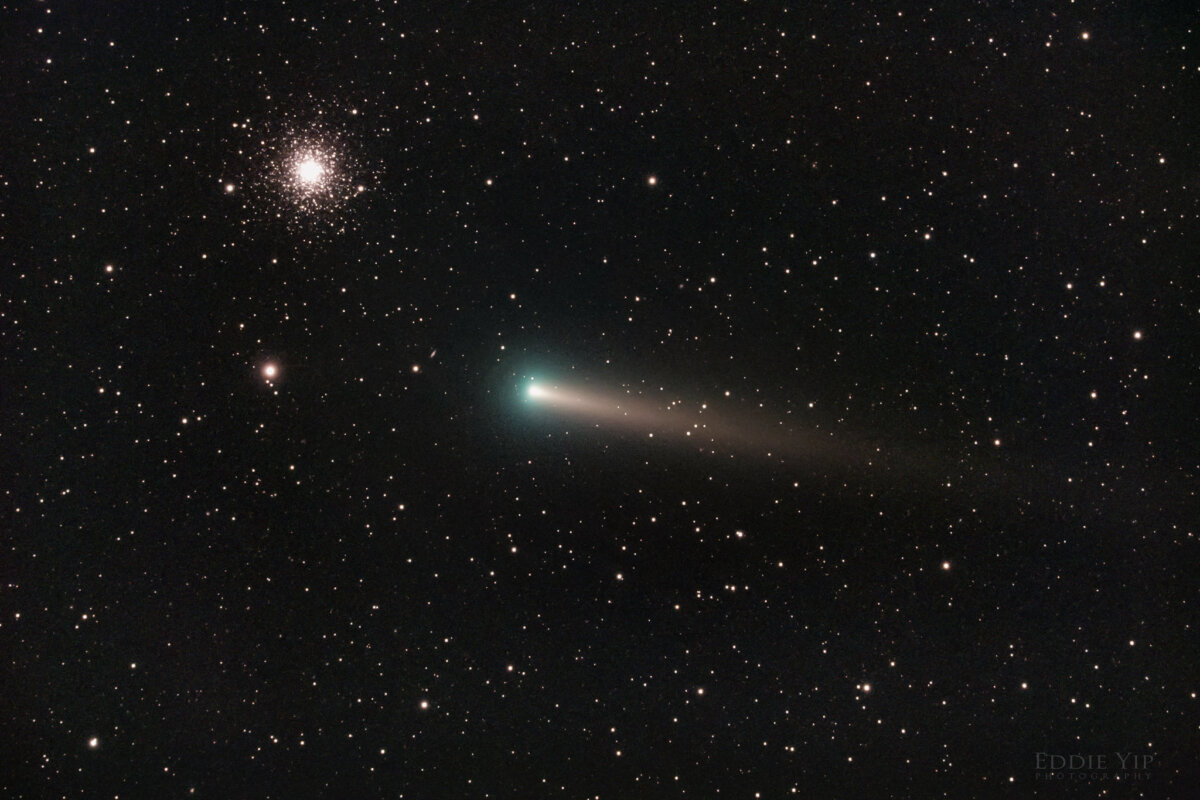
The comet was discovered by G. J. Leonard at the Mount Lemmon Observatory near Tuscon, AZ in early January this year. The comet was at that time, 750 million km from the sun, near the handle of the Big Dipper.
Comet Leonard, like other comets, is a collection of rock and dust bound by frozen ice and gases. As it nears the sun, the heat and radiation of the sun release the trapped gas and the dust, producing the characteristic coma and the tail. The ionization of the coma by the sun’s radiation makes it glow and makes it visible as the comet approaches the Earth.
When & How to watch for the Comet:
The comet is currently visible in the Northern Hemisphere, so Canadians can see this bright comet in the early morning sky using a binocular. The Comet will be brighter and approach closer to the horizon every morning until December 11.
December 10 and 11 would give the best views as the comet should be high enough on the horizon not to be obstructed by trees. By Sunday, December 12th, the comet will be at its closest to the Earth for Canadians, but may not be as visible in the sky. The comet won’t be visible on Monday.
It will sit low in the southwestern sky after sunset from Tuesday, December 14 as it moves away from the Earth towards the sun, and will get fainter and fainter. So try to catch them sooner, rather than later.
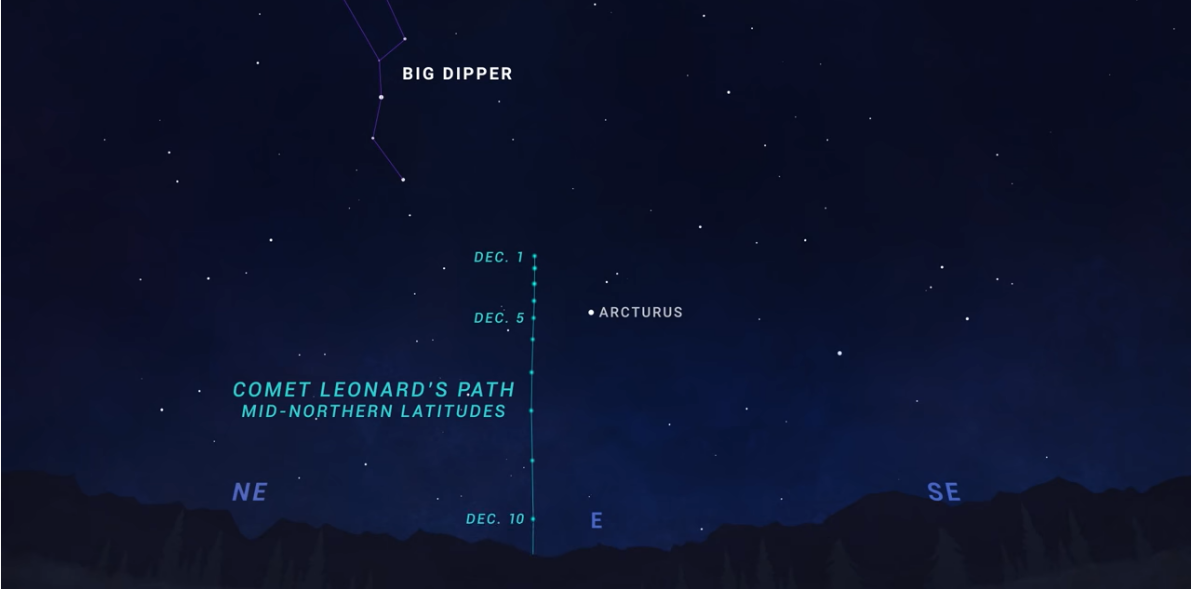
Credit: NASA Jet Propulsion Laboratory
For a good view, try a place away from city lights and with a clear view of the eastern horizon. Any hour after 5 a.m. and before sunrise will be suitable to watch as the sky will still be dark and the comet high enough to be viewed.
Time to watch will vary according to your location.
Stellarium Web is a great application to find the time when Comet is visible in your location.
How to find time and location visible in Stellarium:
- Open Stellarium on your computer or mobile (or download the app)
- Choose your location at the bottom left or give permission to the website to check your location.
- From the bottom right, fast forward time to early morning (5 am to 8 am)
- keep due East as your orientation and search for Leonard.
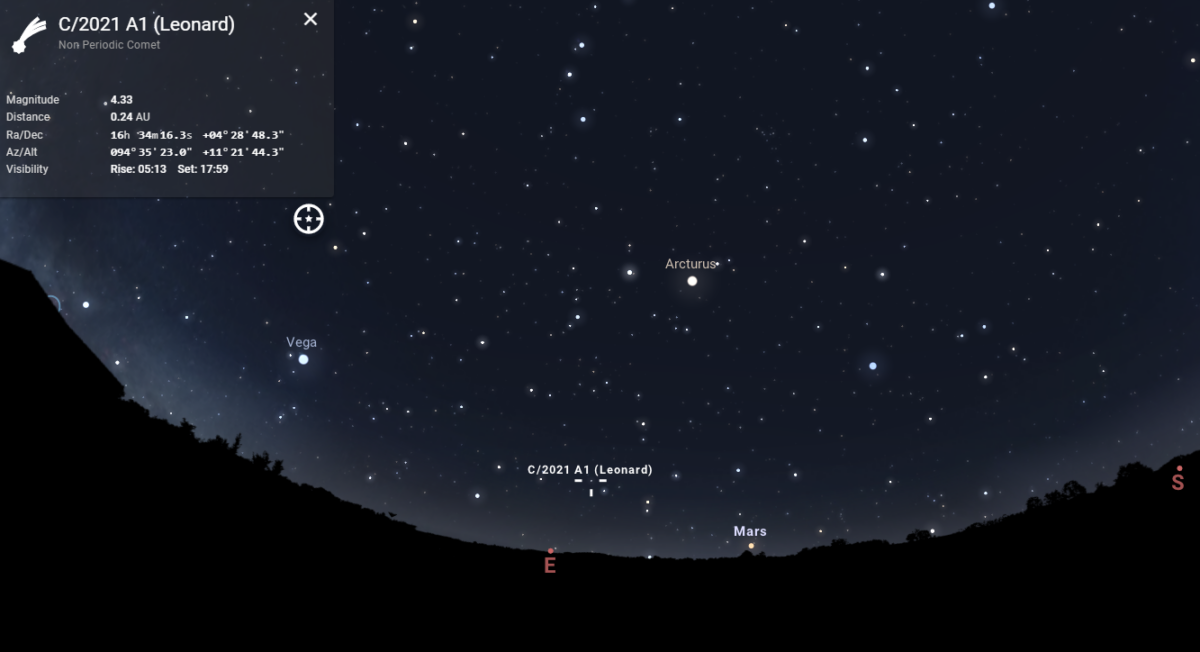
Stellarium Desktop Screenshot
On Wednesday morning, Comet Leonard was on the right of Corona Borealis’ brightest star Alphecca, and will be near Serpens Cauda (the Serpent’s Head) on Thursday and Friday.
It is predicted to be at the left of the snake’s brightest star, magnitude 2.6 Unukalhai (or Alpha Serpentis) on Friday.
The comet may become visible from Southern Hemisphere after December 14th.
Don’t miss this opportunity as comet Leonard, a one-time visitor to our solar system (during our lifetime), is accelerating towards the perihelion or closest approach to the sun (early January). It is set to be out of the solar system after its Earth flyby.
It is expected that another newly discovered comet, Comet C/2021 O3 (PanSTARRS), may become visible from the Earth in Late April 2022.
The Geminid meteor showers are also visible during these nights.