 Toronto
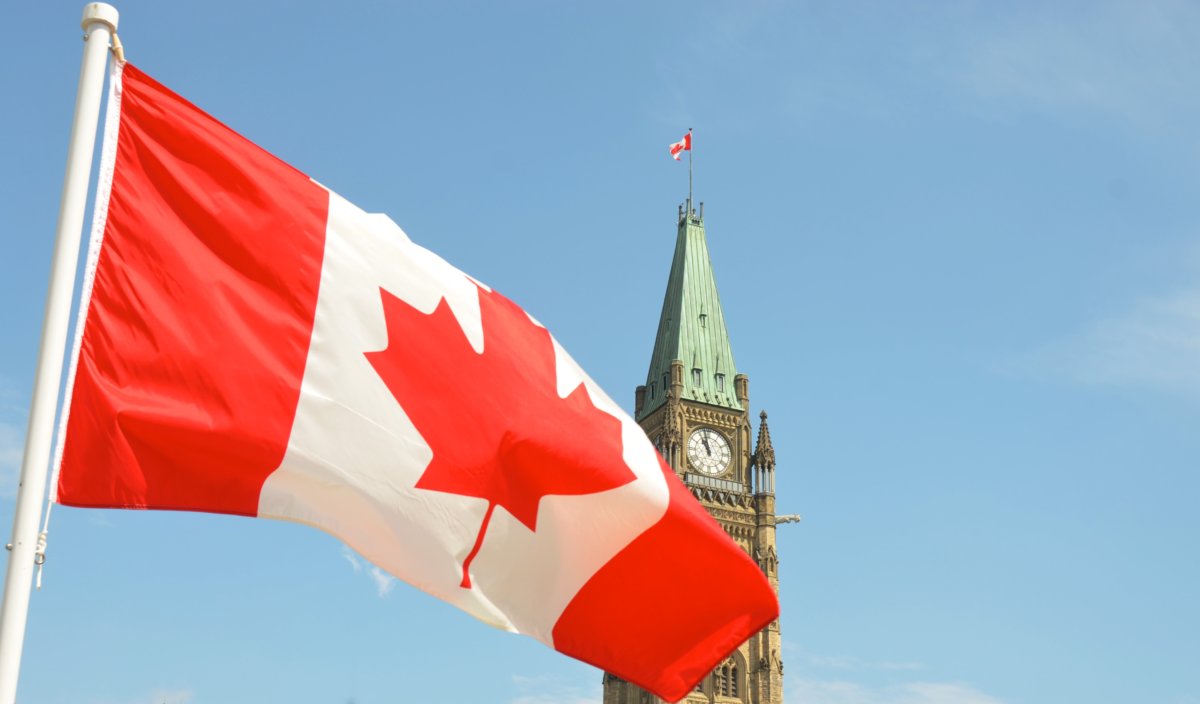
Canada’s population has hit a significant milestone, reaching 40 million people on June 16, according to Statistics Canada’s Population Clock.
Credit: Jason Hafso/ Unsplash
The country’s population growth is at a record-setting pace, with a growth rate of 2.7%, the highest level since 1957. This growth is driven primarily by permanent and temporary migration, accounting for 96% of the population increase in 2022.
If the current trend continues, Statistics Canada’s projections indicate that Canada’s population could reach 50 million by 2043.
Statistics Canada’s news release reads, “We may not know who the 40 millionth Canadian is, but they clearly inherit a country that is diverse and vibrant.”
Statistics Canada’s Population Clock relies on real-time models based on quarterly demographic estimates. Per the news release, these estimates are continually updated using the latest births, deaths, and migration data. The census of population, conducted every five years, provides a snapshot of Canada’s population and characteristics, while ongoing population estimates track demographic shifts between censuses.
In 2022, Canada experienced the highest annual population growth rate on record since 1957, with over one million Canadians added to the population. International migration played a significant role in this growth, accounting for 96% of the increase. Every province and territory, except for the Northwest Territories, recorded a growing population in 2022.
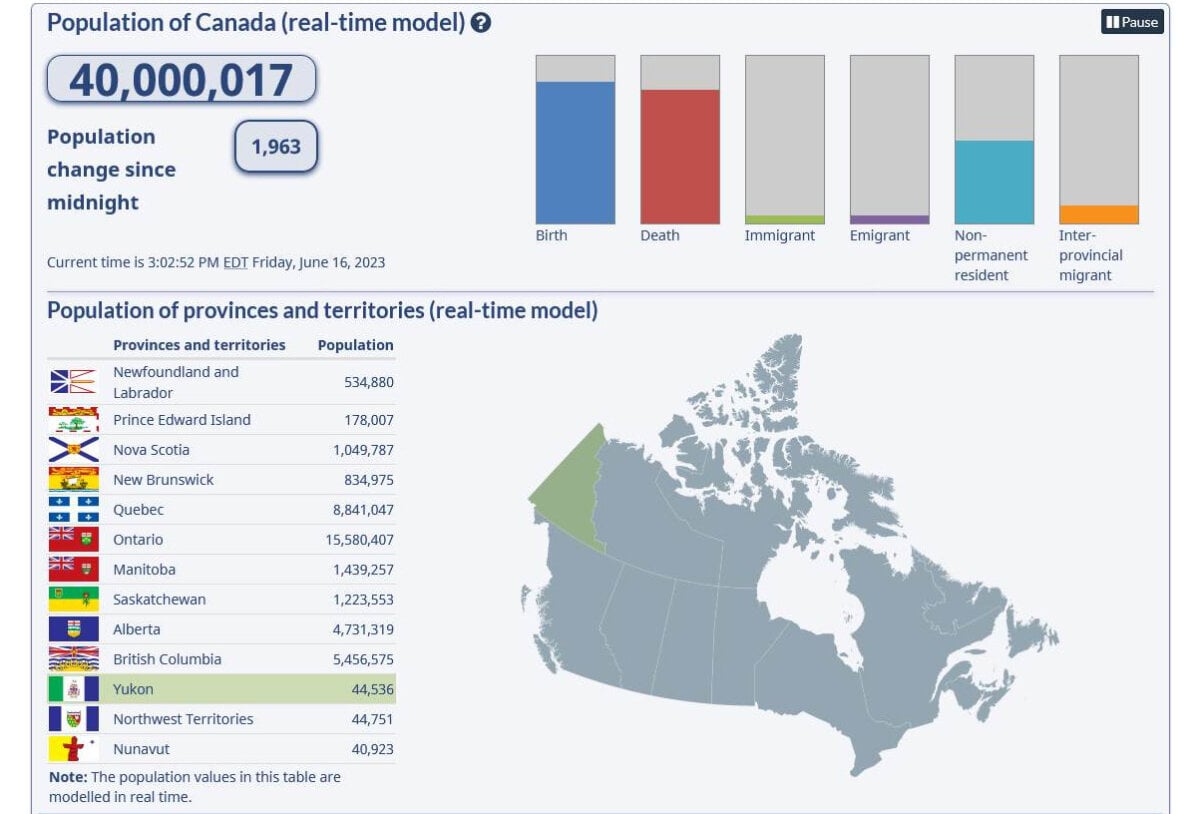
Canada’s population clock (real-time model)/Credit: Statistics Canada
Canada’s population growth surpasses that of other G7 nations, a trend observed over the past two decades. If the current growth rate remains constant, Canada’s population could double in approximately 26 years.
Immigration has been a crucial driver of population growth, with over 8.3 million people, or 23% of the population, being landed immigrants or permanent residents.
Canada processed approximately 4.8 million visa applications in 2022, including citizenship and temporary and permanent residence visas. The federal government has set an ambitious target of granting permanent residency to 1.5 million people from 2023 to 2025.
The Indigenous population in Canada is growing at a faster rate than the national average, increasing by 9.4% from 2016 to 2021. The 2021 Census counted 1.8 million Indigenous people, comprising 5% of the total population.
Canada’s population growth has seen various historical waves, such as the early 20th-century immigration boom and the post-World War II baby boom. However, the fertility rate has declined since the 1960s, and immigration has become the primary source of population growth since 1995.
Despite a temporary slowdown in population growth due to COVID-19 border restrictions in 2020-2021, recent numbers indicate a quick rebound. The growth of Canada’s population reflects its efforts to address labour shortages and an aging population through increased immigration targets since 2016.
Statistics Canada is set to release its quarterly population estimates for the first quarter of 2023 on June 28. These estimates, based on data as of April 1, 2023, are anticipated to show that Canada’s population count is still below the 40 million mark considering the timing of the estimates.


