Toronto
A major aircraft order involving AirAsia and Airbus is putting Canada’s aerospace sector in focus.
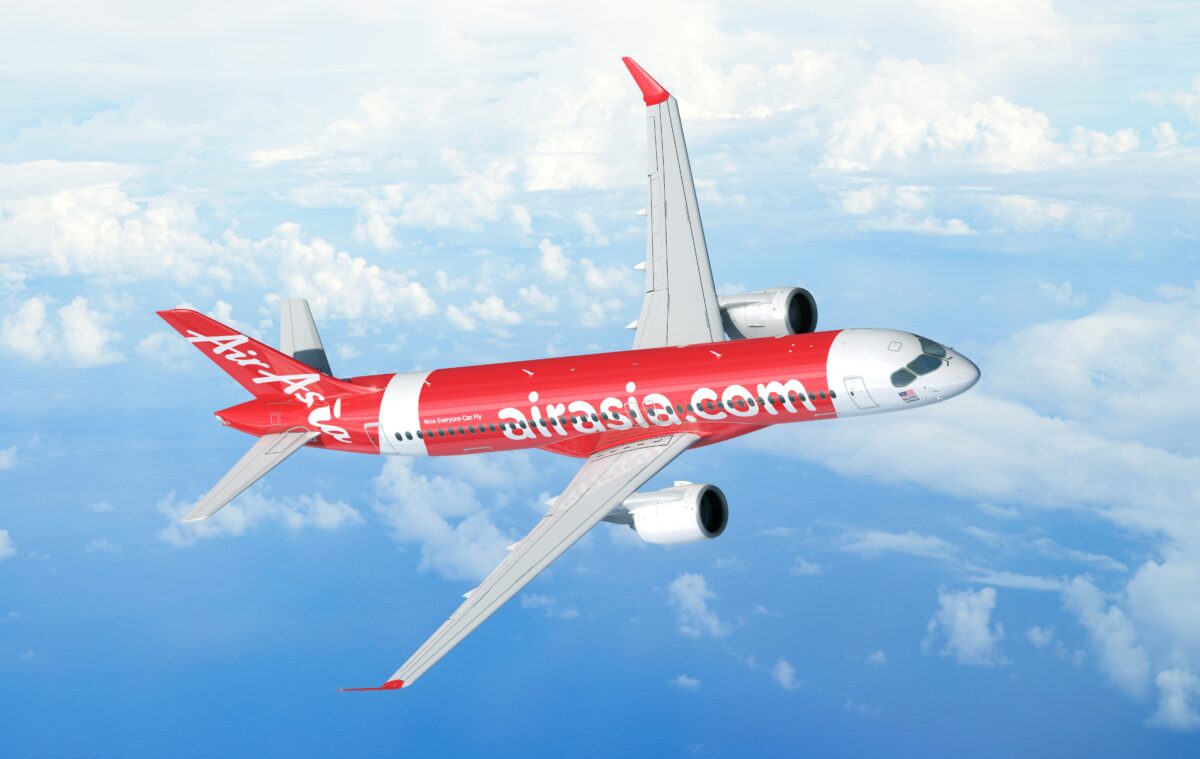
Credit: AirAsia
Malaysia-based AirAsia has committed to a major fleet expansion, placing an order for 150 Airbus A220-300 aircraft in what marks the largest single firm order for the model to date. The deal pushes the A220 programme past 1,000 total orders, reflecting growing demand for the aircraft globally.
The agreement was formalized at Airbus’s Mirabel facility in Québec, with Capital A CEO Tan Sri Tony Fernandes and Airbus Commercial Aircraft CEO Lars Wagner present. Canadian Prime Minister Mark Carney and Québec Premier Christine Fréchette also attended the ceremony.
This purchase brings AirAsia into the A220 customer base for the first time. The airline will also introduce a new 160-seat cabin layout, becoming the launch customer for this higher-capacity configuration. The increase comes from an additional overwing exit on each side, allowing 10 more seats than the standard setup.
Per the news release, the A220 is expected to support AirAsia’s regional growth strategy, particularly across ASEAN and into Central Asia. By deploying the smaller aircraft on shorter routes, the airline can free up larger jets for longer-haul operations. Fernandes described the move as a strategic step aligned with long-term expansion goals and network flexibility.
For Airbus, the deal reinforces the A220’s role in the single-aisle segment. The aircraft, designed to carry 100 to 160 passengers over distances up to 3,600 nautical miles (6,700 km), is positioned as a fuel-efficient option with lower emissions and operating costs. As of March 2026, 501 units had been delivered to 25 operators worldwide.
Carney described it as the largest order for Canadian-designed commercial aircraft, noting that the jets “will be built by Canadian workers on Canadian factory floors,” supporting thousands of jobs across engineering, manufacturing, and skilled trades. The Mirabel facility alone employs more than 4,600 workers and anchors a broader aerospace ecosystem.
Federal government says the the deal strengthens Canada’s aerospace sector, which contributed $34.2 billion to GDP and supported 225,000 jobs in 2024. It also highlights deepening economic ties with Malaysia, where trade grew nearly 20% in 2025.