 Calgary
Vibrant Communities Calgary says residents need to make $24.45 per hour to maintain a modest standard of living in the city.
Vibrant Communities Calgary
This is $10 per hour higher than Alberta’s minimum wage.
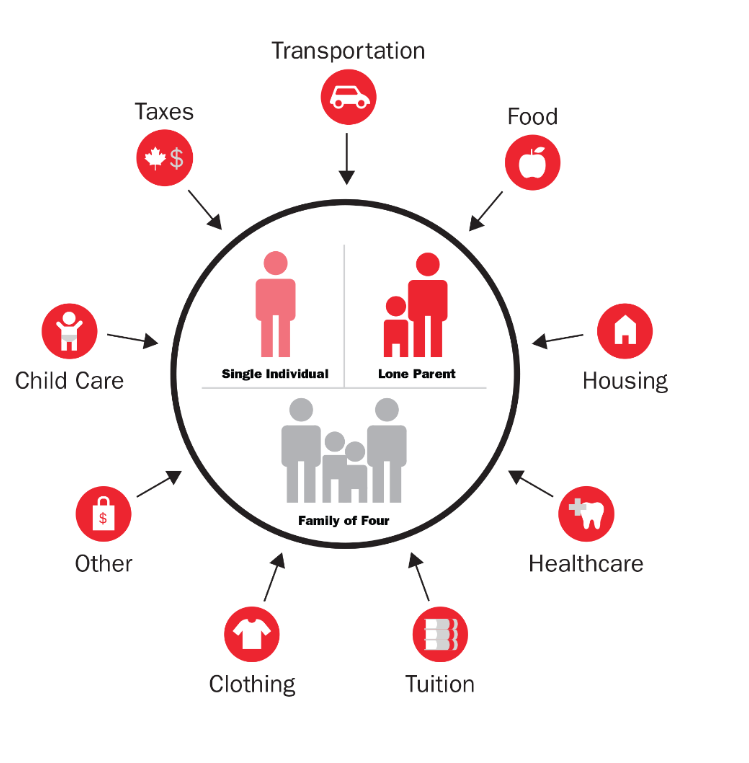
A Living Wage, a “proxy for the cost of living in a community,” is not the same as minimum wage as it is calculated using average expenses, taxes, and government benefits for a given household using local costs. It also considers costs like health insurance, child care, education and savings.
Per the website, the methodology for calculating Calgary’s living wage assumes that all adults in the household are working 35 hours per week full-time for 52 weeks.
The Alberta Living Wage is calculated using a weighted average of the income needs of three household types: a two-parent family with two young children ( 56.5% weightage), a lone parent with one young child (9.5%), and a single individual with no children (33.9%). The calculation also assumes that all adults in the household are working full-time hours.
In 2023, Calgary’s living wage was $23.70 per hour.
As per Vibrant Communities Calgary’s calculations:
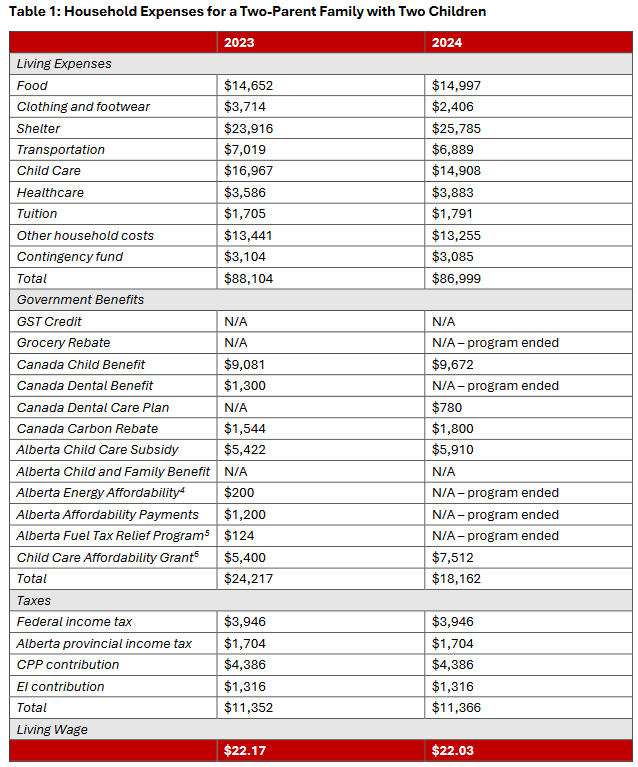
- a family of four must make $22.03 per hour;
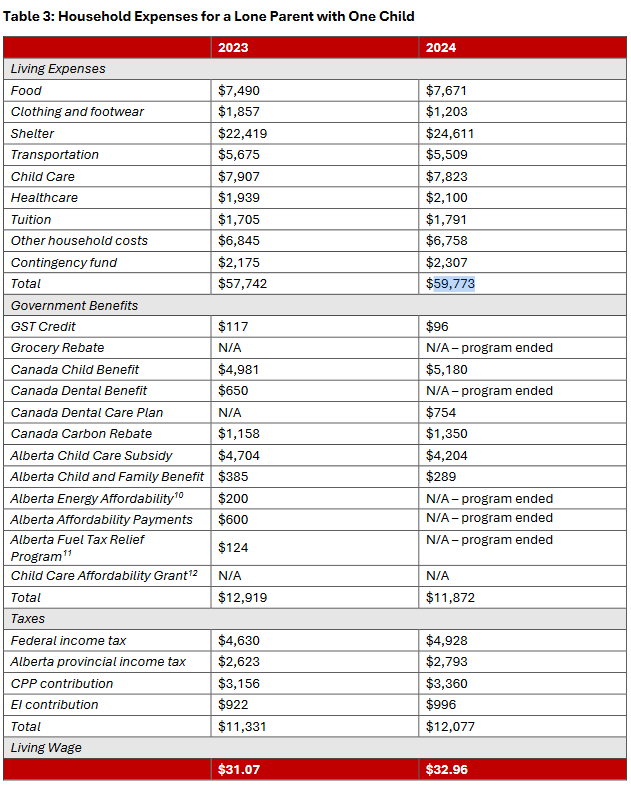
- a single parent with one child $32.96 per hour;
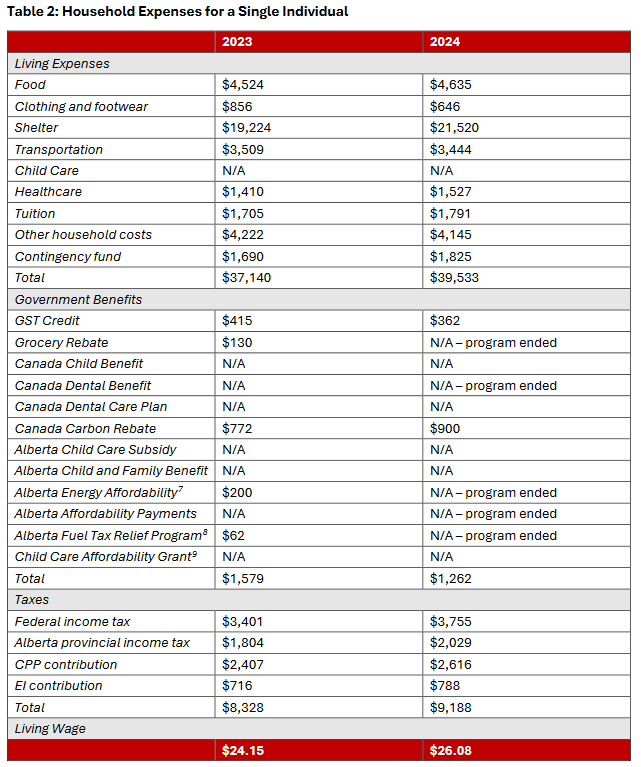
- and a single individual $26.08 per hour to live modestly in Calgary.
This leads to the average weighted 2024 living wage for Calgary is $24.45 per hour.
The calculations indicate that a family of four necessitates an annual income of $86,999 for a modest standard of living.
A single individual requires $39,533 annually, and a single adult with a child needs $59,773 yearly.
Vibrant Communities Calgary says contrary to the misconception that low-wage workers are primarily young and living with parents, nearly half of Albertans earning minimum wage are over 24.
Rising costs exacerbate the issue, with Calgarians paying about 10% more for food and approximately $2,000 more annually for shelter.
Compared to Edmonton, Calgarians face even steeper housing costs, spending $3,300 to $4,500 more on shelter each year.
The report finds that while government policies provide some relief—families save $2,000 on childcare due to affordability grants and frozen base rates, and households benefit from $1,500 savings on electricity through regulated rate caps—these measures fail to offset the surging costs of essentials like food and housing.
More Information is available here.


