Calgary
Alberta Living Wage Network has published the hourly wages required for residents of various Alberta cities to earn to maintain a modest standard of living in 2024.
A living wage is not the same as the minimum wage, which is the legal minimum all employers must pay to their employees. Alberta’s minimum wage is $15 per hour.
The living wage is “the hourly rate of pay needed for a household to maintain a modest standard of living, once government transfers have been added to the family’s income, and taxes have been subtracted.”
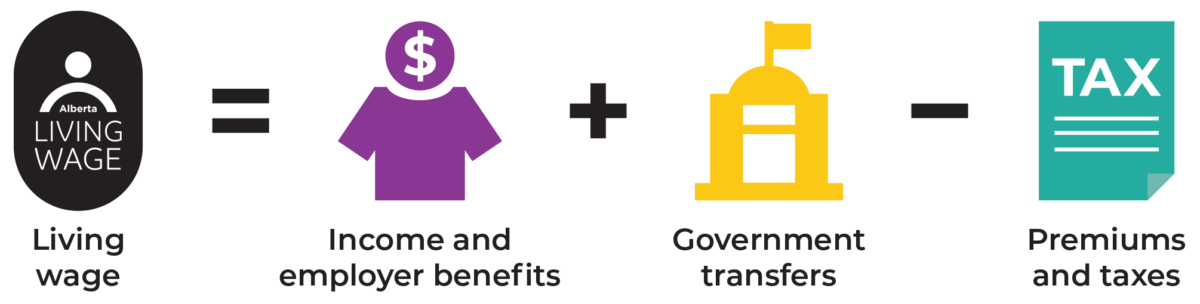
Credit: Alberta Living Wage
Alberta Living Wage Network says they have used the Ontario Living Wage Network methodology, which calculates a living wage that would allow each adult to work full-time hours and includes more than the basics of food, clothing and shelter and is based on the income needs of three household types: a two-parent family with two young children, a lone-parent family with one child and a single individual living alone.
The weighing of the family types is as follows:
• Family of four: 33.9%
• Lone parent: 9.5%
• Single individual: 56.5%
The available rate is calculated based on the average of all available 2024 months at the time of calculation (January to September 2024).
A living wage varies across communities as costs of living in a specific community, including unexpected costs, and small investments in education and childcare are taken into account while calculating the amount.
2024 Alberta Living Wage
Living wage rates across Alberta vary significantly, reflecting local costs of living. Medicine Hat has the lowest rate at $17.55, while Jasper tops the list at $31.40.
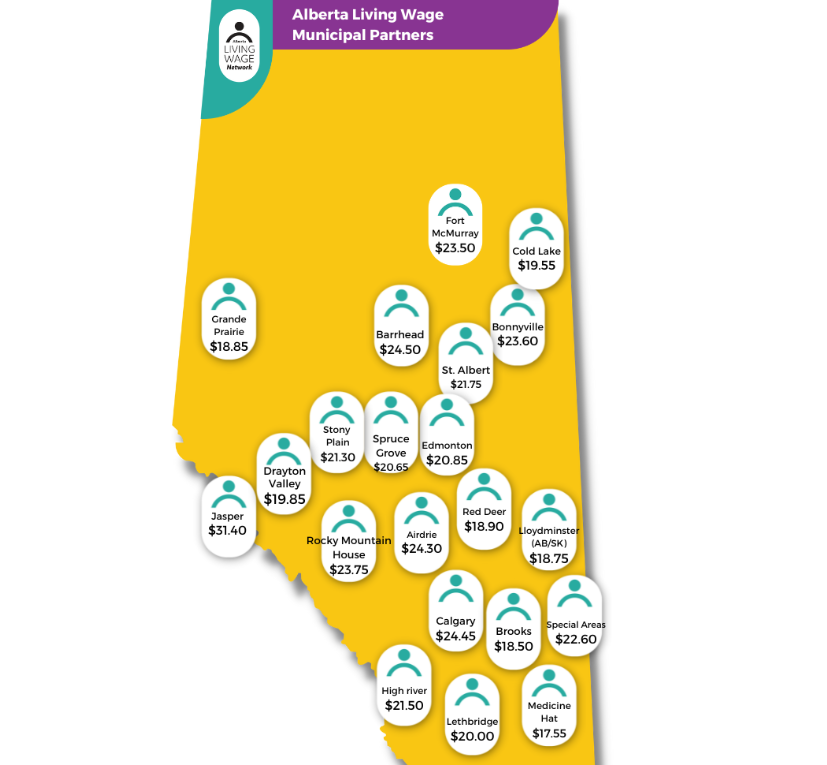
Credit: Alberta Living Wage
Calgary and Edmonton are $24.45 and $20.85, respectively. Other notable rates include Airdrie at $24.30, Fort McMurray at $23.50, and Lethbridge at $20.00, showcasing the diverse economic demands of Alberta communities.
This year’s report finds that key expenses have significantly decreased over the past year, reducing living costs for families.
Childcare costs dropped by $2,122 annually for a 3-year-old due to increased affordability grants and frozen base rates. Electricity costs fell by $1,000–$1,500 as regulated rates halved. Clothing and footwear expenses decreased by $1,308 for a family of four, driven by thrifting trends and cheaper options. These reductions contributed to lower living wage rates in many communities this year.
At the same time, rising rent is driving increased living costs in Alberta, with some communities seeing higher living wage rates. Calgary’s average 1-bedroom rent rose 20%, Stony Plain’s 3-bedroom increased 18%, and Medicine Hat’s 2-bedroom climbed 10%. Smaller increases in food, health care, tuition, and tenant insurance also contribute to higher costs, exacerbating financial strain for many Albertans.
Living wage calculations include government benefits, but these vary by household type. Families with children receive far more benefits than singles; in Special Areas, a single person gets $1,599 while a family of four receives $25,720. The absence of major benefits like Alberta Affordability Payments, Energy Relief, and Grocery Rebates this year increased living wage rates, offsetting childcare grant gains.
2024 Alberta Living Wage Across 21 Alberta Cities and Towns
- Airdrie: $24.30
- Barrhead: $24.50
- Bonnyville: $23.60
- Brooks: $18.50
- Calgary: $24.45 (Details)
- Cold Lake: $19.55
- Drayton Valley: $19.85
- Edmonton: $20.85
- Fort McMurray: $23.50
- Grande Prairie: $18.85
- High River: $21.50
- Jasper: $31.40
- Lethbridge: $20.00
- Lloydminster, AB/SK: $18.75
- Medicine Hat: $17.55
- Red Deer: $18.90
- Rocky Mountain House: $23.75
- Special Areas: $22.60
- Spruce Grove: $20.65
- St. Albert: $21.75
- Stony Plain: $21.30
Detailed information on the methodology and calculation by Alberta Living Wage Network is given here.