 Calgary
Canada’s job market took another hit in August, shedding 66,000 positions—primarily part-time roles—marking the second straight month of decline, says Statistics Canada in its monthly report.
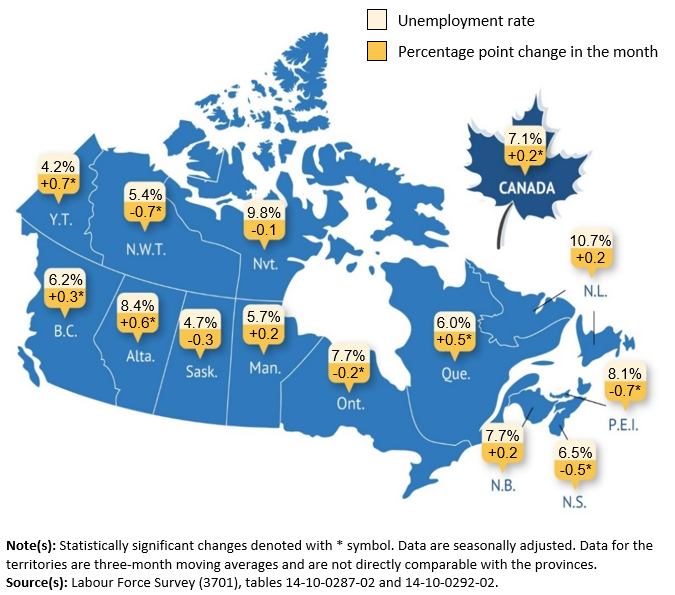
The unemployment rate crept up to 7.1%, its highest level since 2016, excluding the pandemic years. Several provinces and cities, especially in the south and west, bore the brunt of the downturn.
Core working-age adults saw the sharpest decline: employment fell by 58,000 among men and 35,000 among women aged 25–54. Their employment rates dipped to their lowest points since 2017 and 2018, respectively.
Here are the highlights of the report:
Provincial Job Trends:
-
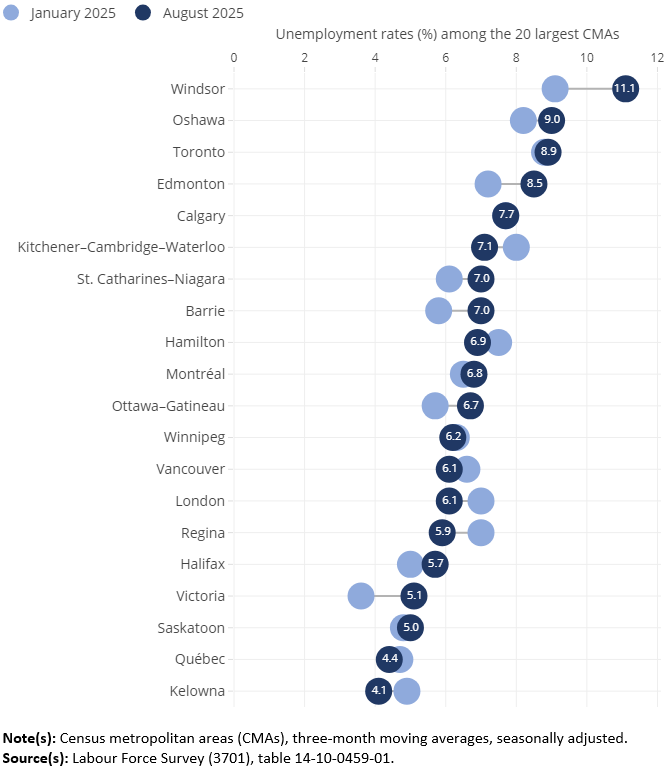
Ontario lost 26,000 jobs in August (7.7%), with a total decline of 66,000 since February. Despite fewer people actively job-hunting, Windsor’s unemployment rate soared to 11.1%, the highest among major cities. Toronto (8.9%) and Oshawa (9.0%) also reported high jobless rates amid ongoing trade uncertainties.
-
British Columbia saw a reduction of 16,000 jobs, mostly among men aged 25 to 54. This marks the second consecutive month of employment decline. The provincial unemployment rate rose to 6.2%. Victoria, previously among the lowest, jumped to 5.1% from 3.6% in January.
-
Alberta dropped 14,000 positions, following similar losses in July. Key declines were in manufacturing and retail. Edmonton’s unemployment rate increased to 8.5%, and the provincial rate reached 8.4%, the highest since 2017 (excluding pandemic years).
-
New Brunswick: Down 6,500 jobs; unemployment rose to 7.7%.
-
Manitoba: Lost 5,200 jobs; jobless rate edged up to 5.7%.
-
Newfoundland and Labrador: Fell by 3,200 jobs; unemployment reached 10.7%.
-
Prince Edward Island: Gained 1,100 jobs; rate fell to 8.1%.
-
Quebec: Employment held steady; job seekers increased sharply, pushing the unemployment rate up to 6.0%.
National Trends:
-
Core working-age Canadians (25–54) were most affected, especially men (-58,000) and women (-35,000). Their employment rates dropped to levels not seen since 2017 and 2018, respectively.
-
Youth (15–24) and seniors (55+) saw little change, though the youth unemployment rate remained high at 14.5%.
-
Returning students faced a summer unemployment rate of 17.9%—the highest since 2009, excluding 2020.
Sector-Specific Changes:
-
Losses:
-
Professional, scientific, and technical services (-26,000)
-
Transportation and warehousing (-23,000)
-
Manufacturing (-19,000)
-
-
Gains:
-
Construction (+17,000), reversing July’s losses
-
Wage growth remained steady, with hourly earnings up 3.2% year-over-year to $36.31. However, 8.8% of employed workers said they’d prefer more hours, particularly in Newfoundland and Labrador (11.3%), Ontario (9.6%), and Alberta (9.4%)—many driven by the need to cover daily expenses.
Meanwhile, students struggled in the summer job market, with unemployment for returning students reaching 17.9%—the worst summer since 2009. Youth unemployment overall held at a high 14.5%.
The share of Canadians working multiple jobs stayed at 5.4%, with a third doing so just to meet essential needs.
Average hourly wages rose 3.2% year-over-year, reaching $36.31.


