Toronto

More Canadians are turning to food banks than ever before, and an increasing number of those seeking help have jobs.
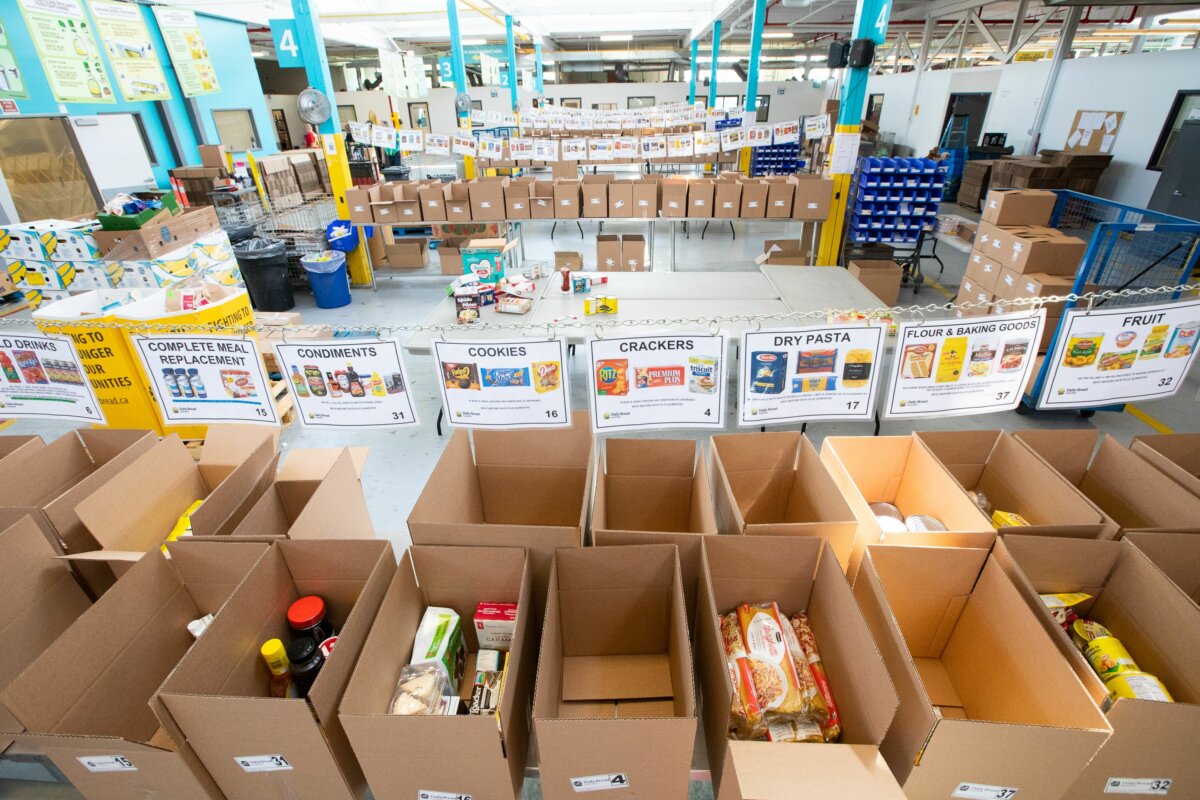
Credit: Daily Bread Food Bank
Food Banks Canada’s 2026 HungerCount report, released October 21, recorded 2.35 million food bank visits in March 2026, an 8.7% increase from 2025 and a 117% jump from 2019.
The study covers more than 5,500 food banks and community organizations across the country.
One finding stands out: 18% of food bank clients are employed, compared with 12.2% in 2019. Having a job, in other words, is not necessarily enough to keep people from needing food assistance.
Children account for 32.5% of food bank clients, representing nearly 776,000 monthly visits.
Housing costs are another major pressure. The report found that 72% of food bank clients live in market-rent housing, while Canada’s lowest-income households spend an average of 60% of their disposable income on housing.
Everyday expenses have also risen considerably. Since 2021, food prices have increased approximately 30%, housing costs 28%, and transportation costs nearly 24%.
“In the past, most people in Canada could absorb a small financial setback,” said Food Banks Canada CEO Kirstin Beardsley, pointing to expenses such as vehicle repairs and illness.
Ontario Records More Than 846,000 Monthly Visits
Ontario recorded the highest provincial total, with 846,724 food bank visits, up 10.9% from 2025 and 149.3% from 2019.
Quebec followed with 785,889 visits, while British Columbia recorded 250,505 and Alberta 230,196.
The sharpest annual increases occurred in the Northwest Territories and Nunavut, grouped together at 29.1%, and Yukon at 24.2%.
Prince Edward Island and Newfoundland and Labrador were the only provinces reporting year-over-year declines, at 4.2% and 2.9%, respectively.
2026 HungerCount Across Canada
| Region | 2026 Monthly | % Change 2025-2026 | % Change 2019-2026 | 2026 Monthly Visits |
| BC | 250,505 | +14 % | +100.9 % | 75,753 |
| AB | 230,196 | +9.3 % | +156.3 % | 86,055 |
| SK | 61,859 | +11.8 % | +66.2 % | 24,015 |
| MB* | 71,127 | +9.5 % | — | 27,065 |
| ON | 846,724 | +10.9 % | +149.3 % | 253,520 |
| QC* | 785,889 | +5.3 % | +127.7 % | 274,193 |
| NB | 35,832 | +10.8 % | +60.9 % | 12,026 |
| NS | 46,627 | +7.4 % | +81.9 % | 14,798 |
| PEI | 5,125 | -4.2 % | +73.2 % | 1,678 |
| NL | 14,971 | -2.9 % | +39.9 % | 4,456 |
| YT | 2,543 | +24.2 % | +131.4 % | 715 |
| NWT/NU*** | 3,677 | +29.1 % | — | 1,383 |
What Food Banks Canada Wants Changed
The organization is calling for changes to Employment Insurance, including better access for part-time, seasonal and gig workers.
It also recommends doubling the Canada Workers Benefit, removing barriers to the Disability Tax Credit, expanding affordable housing and directing up to $500 million from the Food-Link Fund toward food bank infrastructure.
For Northern communities, the report proposes changes to grocery assistance and Nutrition North Canada.
The findings illustrate how food insecurity extends beyond unemployment, with rising living costs leaving even working households struggling to cover basic expenses.