Winnipeg
Canada’s population growth slowed significantly in the final quarter of 2025, with overall numbers declining during that period, contributing to an overall population decrease for the year.
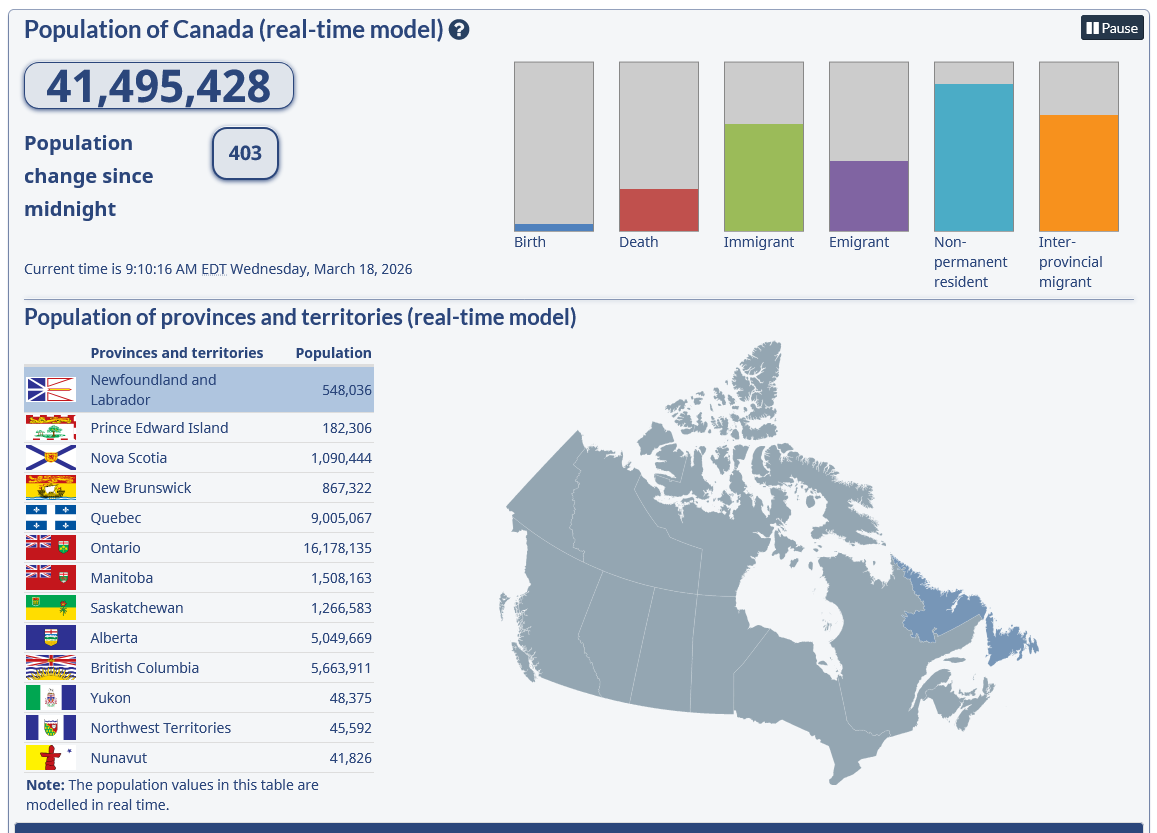
New preliminary estimates from Statistics Canada put the country’s population at 41,472,081 as of January 1, 2026. That’s a drop of 103,504 people, or 0.2 per cent, over the previous three months. It marks a noticeable shift from recent years, when the population grew by 80,385 in late 2024 and by 256,804 during the same period in 2023.
A big part of that slowdown comes down to fewer non-permanent residents. Between October 2025 and January 2026, that group declined by 171,296 people. The decrease was seen across all provinces and in the Yukon, largely due to fewer study and work permit holders.
Permanent immigration is still adding to the population, just at a lower pace. Canada welcomed 83,168 new permanent residents in the fourth quarter of 2025, down 19.6 per cent from 103,438 a year earlier. Even so, immigration remained the only factor preventing a sharper decline, as the country also recorded a negative natural increase, with 781 more deaths than births.
Regionally, population trends varied. Ontario, Quebec, British Columbia and Prince Edward Island all saw declines, with Ontario and Quebec each down 0.3 per cent. Alberta stood out with a slight 0.1 per cent growth and continued to attract the most interprovincial migrants, gaining 3,684 people, its 14th straight quarter leading the country.
Looking at the full year, Canada’s population fell by 102,436 people in 2025. However, officials note these figures could change, as updates, particularly around extended work and study permits, are still expected.