Toronto
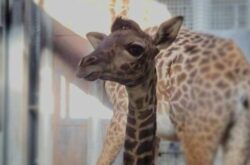
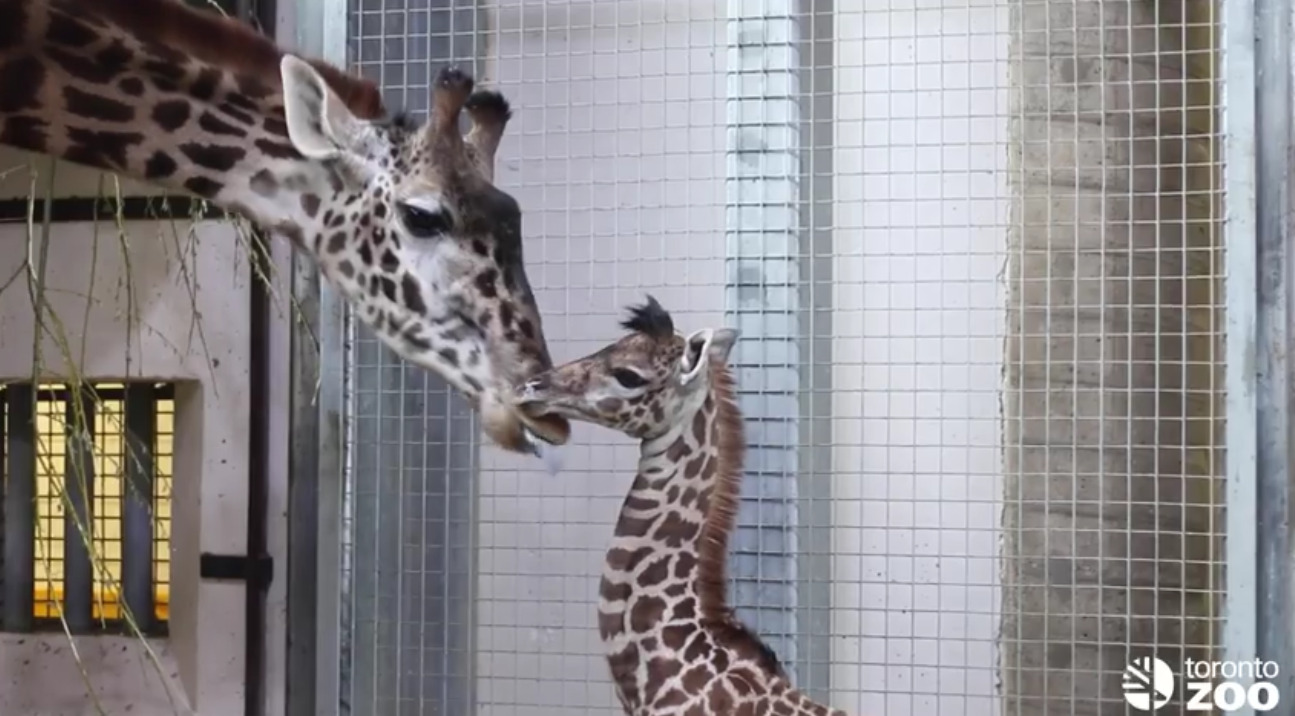 The Toronto Zoo has announced the birth of Giraffa camelopardalis tippelskirchi calf (Masai Giraffe).
The announcement comes on heels of successful hatching of critically endangered Madagascar spider tortoise and birth of a litter of arctic pups.
Mstari, a six-year-old female Masai giraffe gave birth on Tuesday, May 12, 2020 to a healthy calf after a fifteen-month-long pregnancy. Giraffe pregnancies can range from 420-488 days in length.
This is the first offspring for both mother Mstari and father Kiko, a seven-year-old male who came to Toronto Zoo from Greenville Zoo in South Carolina in 2015.
The Toronto Zoo has had 19 giraffes born since 1980, and this birth represents the first third-generation Toronto-born giraffe – both Mstari and her mother, Twiga, were also born at the Toronto Zoo.
The pairing of Kiko and Mstari was at the recommendation of the AZA Masai giraffe Species Survival Plan (SSP), a cooperative breeding program among accredited zoos.
The Toronto Zoo’s Reproductive Sciences branch has been tracking Mstari’s reproductive cycles since summer 2017, using fecal hormone analysis to confirm that she was sexually mature and had a 14-day cycle, typical for Masai giraffes. Since then, Wildlife Care Keepers have followed Mstari’s reproductive cycles and observed interactions between her and Kiko.
Breeding was observed in early and mid-January 2019, and a lack of breeding activity in at the end of January was the first sign of a suspected pregnancy.
Using fecal hormone analysis, elevated progesterone (pregnancy hormone) levels were confirmed on February 26, 2019, indicating early pregnancy for Mstari. Wildlife Care Keepers have continued to collect fecal samples three times a week throughout her pregnancy, and are continuing after the birth, in order to add to the global dataset of hormone levels in pregnant and postpartum giraffes.
Chief Executive Officer of Toronto Zoo Dolf DeJong said, “This birth is an important contribution to a genetically healthy Masai giraffe population especially as Mstari is the most genetically valuable giraffe in North America. Masai giraffes are under increasing pressure due to habitat loss and illegal hunting.”
Both mom and calf are doing well.
The Room to Grow Campaign
The Toronto Zoo is part of the AZA Masai Giraffe Species Survival Plan (SSP) and continues to support field conservation efforts for the species; Mstari is currently the most genetically valuable female in the SSP, and so this calf represents an important genetic contribution to the North American population.
In December 2018, the conservation status of Masai giraffes was elevated to Endangered by the International Union for Conservation and Nature (IUCN). Fewer than 35,000 Masai giraffes survive in the wild, having experienced more than a 50% decline in the past 30 years. Illegal hunting and habitat loss are their primary threats.
The Toronto Zoo Wildlife Conservancy has launched a new campaign to raise money to support the growing giraffe family. The Room to Grow Campaign will support many different aspects and modifications including:
- Increasing available space by reconfiguring the existing rooms and equipment
- Allowing for better access to the giraffes by Wildlife Care staff and the veterinary team
- Incorporating features to improve enrichment, educational and monitoring opportunities