Toronto
The Toronto Zoo has announced the birth of Giraffa camelopardalis tippelskirchi calf (Masai Giraffe).
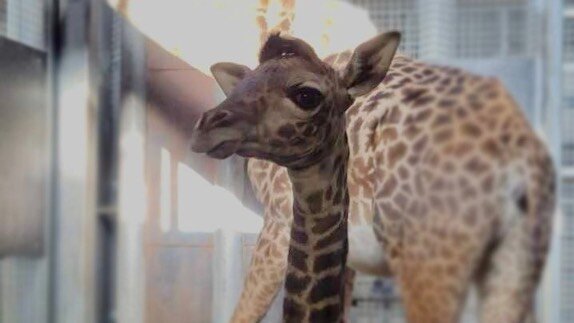
Toronto Zoo
Mstari, an eight-year-old female Masai giraffe gave birth at 9:00 a.m. Thursday, February 24th to a healthy calf after a nearly sixteen-month-long pregnancy. Giraffe pregnancies can range from 420-488 days in length.
This is the second offspring for both mother Mstari and father Kiko, a nine-year-old male who came to Toronto Zoo from Greenville Zoo in South Carolina in 2015.
Amani, Mstari’s first calf is now 22 months old. The Toronto Zoo through a news release said, “Although she (Amani) was separated from her mom during the birthing process, she has nose-to-nose access to Mstari and can hear and smell her new sibling. Once Mstari and the new calf have forged a strong bond, the new big sister will be reintroduced.”
The Toronto Zoo has had 20 giraffes born since 1980, and this birth represents the second third-generation Toronto-born giraffe – both Mstari and her mother, Twiga, were also born at the Toronto Zoo.
The pairing of Kiko and Mstari was at the recommendation of the AZA Masai giraffe Species Survival Plan (SSP), a cooperative breeding program among accredited zoos.
The Toronto Zoo’s Reproductive Sciences branch has been tracking Mstari’s reproductive cycles, using fecal hormone analysis to confirm that she was sexually mature and had a 14-day cycle, typical for Masai giraffes.
Breeding was observed in October and early November 2020, and a lack of breeding activity at the end of January was the first sign of a suspected pregnancy
Using fecal hormone analysis, elevated progesterone (pregnancy hormone) levels were confirmed on February 24, 2021, indicating early pregnancy for Mstari. Toronto Zoo announced the pregnancy in May when Mstari was about six months into her nearly 16-month-long pregnancy. Wildlife Care Keepers have continued to collect fecal samples three times a week throughout her pregnancy, and are continuing after the birth, in order to add to the global dataset of hormone levels in pregnant and postpartum giraffes.
Both mom and calf are doing well.