Toronto
Canada is set to experience a hotter-than-usual summer in 2025, with conditions ranging from severe drought in the west to powerful thunderstorms in the east, according to The Weather Network’s seasonal forecast.
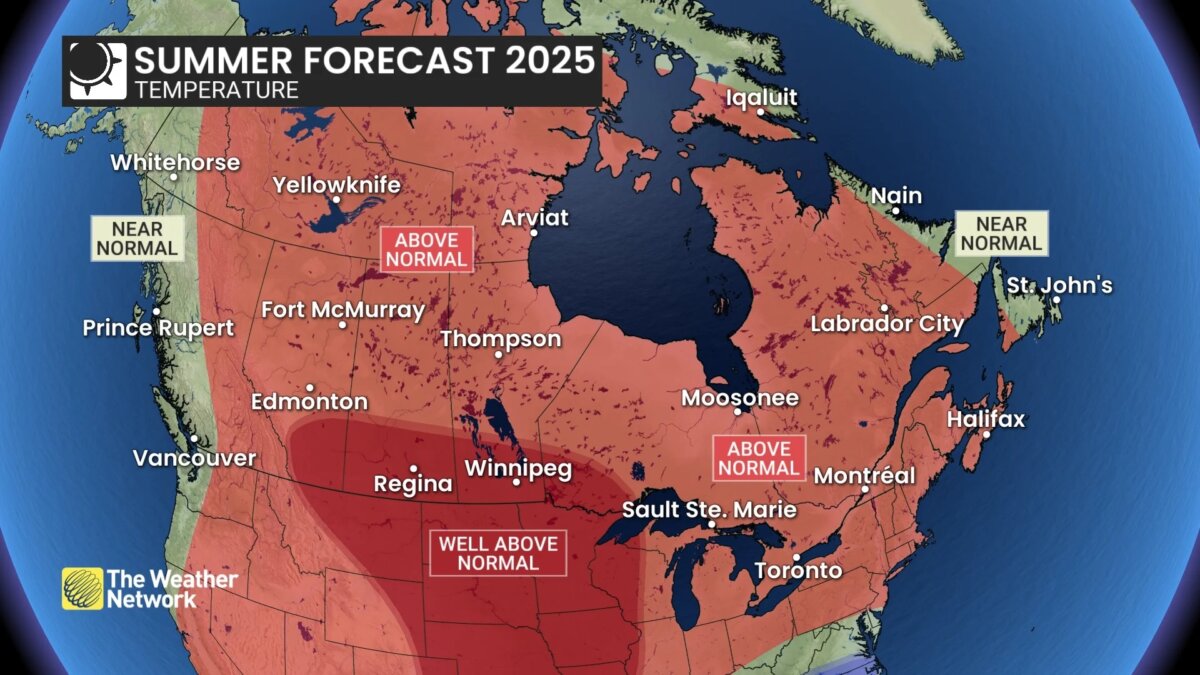
Credit: Weather Network
“This summer will really come through for those who have been longing for warmer weather,” said Doug Gillham, Senior Meteorologist with The Weather Network.
Gillham highlighted the risk of excessive heat in western regions, particularly British Columbia and the Prairies, where drought and wildfire threats are expected to intensify.
Ontario and Quebec will face humid conditions, occasional heatwaves, and frequent thunderstorms. Northern Ontario and the Territories are also at risk for wildfires and smoke-related air quality issues. Atlantic Canada should see near-normal rainfall but remains vulnerable to tropical systems due to jet stream patterns.
The Weather Network forecasts the Atlantic hurricane season to be near or slightly above normal, with fewer storms than in recent years. However, Eastern Canada remains at elevated risk, as jet stream patterns may steer tropical systems toward Atlantic Canada, southern Quebec, and eastern Ontario. While the deep tropics may be quieter, more storms could form closer to North America, increasing local impact potential.
The agency expects summer to begin with a rapid transition from an inconsistent spring.
The Weather Network: 2025 Summer Forecast
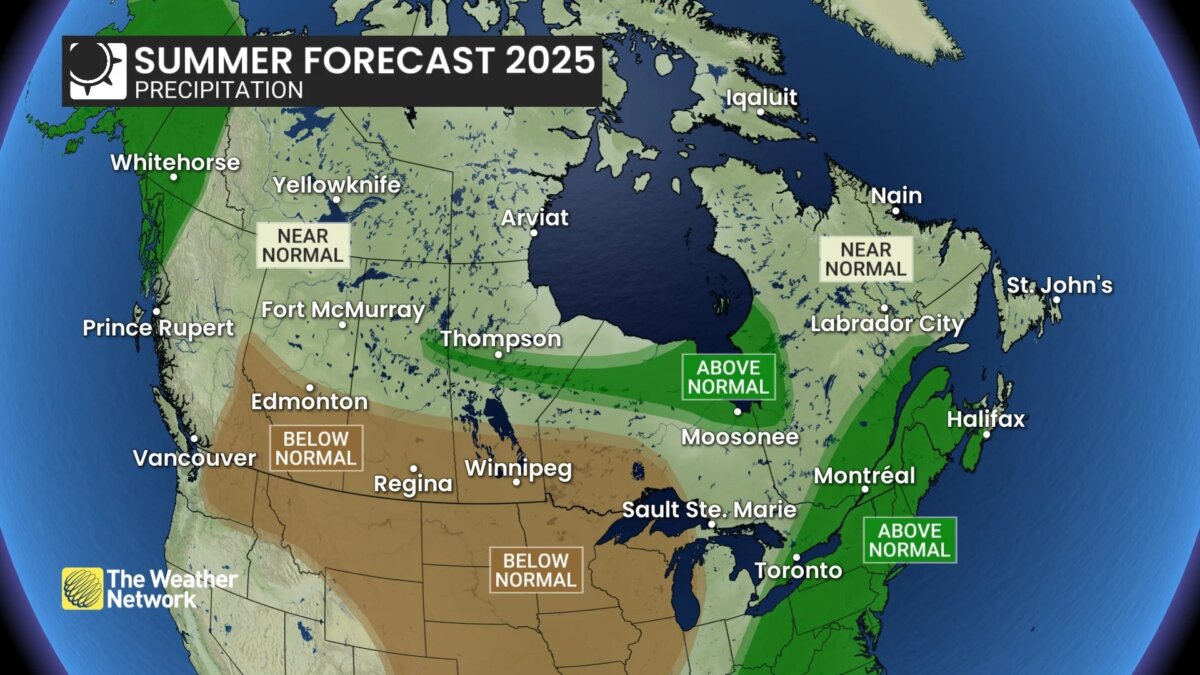
Credit: The Weather Network
British Columbia:
A hot summer is forecast for B.C.’s interior, including Kelowna and Kamloops, especially in July and August, while coastal regions like Vancouver and Victoria should see more typical temperatures.
Rainfall is expected to be near or below normal, raising concerns about wildfires, smoke, and poor air quality. Although scattered thunderstorms may bring some relief, they also pose risks of lightning and flash flooding. If eastern heat shifts westward, B.C. could see intensified dryness unless increased storm activity offers some reprieve.
- Temperature Outlook: Above normal central and east; Near normal west
- Precipitation Outlook: Below normal southern interior; Above normal
northwest; Near normal elsewhere
The Prairies:
Prairies are expected to face a hot, dry summer, with drought conditions extending from the central U.S. into Alberta, Saskatchewan, and Manitoba. Southern Alberta, including Calgary and Edmonton, is at particular risk for prolonged heatwaves, extreme temperatures, and below-normal rainfall. Wildfires, smoke, and poor air quality are major concerns across the region.
Saskatchewan and Manitoba, including Saskatoon, Regina, and Winnipeg, will also see extended heat with potential impacts on agriculture. While rainfall will be limited, central and northern areas may experience powerful thunderstorms, which could bring temporary relief but also pose risks of severe weather.
Alberta
- Temperature Outlook: Above normal; Much above normal south
- Precipitation Outlook: Below normal south; Near normal north
Saskatchewan
- Temperature Outlook: Above normal; Much above normal south
- Precipitation Outlook: Below normal south; Near normal north
Manitoba
- Temperature Outlook: Above normal; Much above normal south
- Precipitation Outlook: Below normal south; Near normal north
Ontario and Quebec:
Ontario and Quebec are expected to experience a warm, humid summer, with several heatwaves possible, including one before Canada Day. However, persistent extreme heat is not anticipated, except in western Northern Ontario near Thunder Bay. This area, along with regions north and west of Lake Superior, faces elevated wildfire risks that could affect air quality across Canada.
Southern and eastern Ontario, including Toronto and Ottawa, will see muggy conditions, warm nights, and frequent thunderstorms.
Quebec, including Montreal and Quebec City, will have similar weather, with humidity contributing to storm activity and the possibility of tropical system remnants later in the season.
Ontario
- Temperature Outlook: Above normal; Much above normal northwest
- Precipitation Outlook: Above normal south, east and far north; Below normal northwest; Near normal elsewhere
Québec
- Temperature Outlook: Above normal
- Precipitation Outlook: Above normal south and east; Near normal elsewhere
Atlantic Canada:
Atlantic Canada is forecast to have a warm and humid summer, particularly across the Maritimes and western Newfoundland, including Halifax, Fredericton, and Charlottetown.
Periodic cold fronts will bring temporary relief from the humidity. Rainfall is expected to reach near or above normal levels due to frequent showers and thunderstorms, limiting drought risk.
In Newfoundland and Labrador, temperatures will be near normal overall, with warmer conditions in the southwest and western Labrador. The region also faces an elevated risk of tropical system impacts later in the season due to expected jet stream patterns.
- Temperature Outlook: Above normal; Near normal central and eastern Newfoundland
- Precipitation Outlook: Above normal; Near normal eastern Nova Scotia and Newfoundland
Northern Canada:
Northern Canada is expected to experience a warm summer in 2025, with above-normal temperatures forecast for the Northwest Territories, most of Nunavut, and eastern Yukon. Baffin Island and western Yukon will see near-normal temperatures.
Precipitation levels are predicted to be above normal in much of Yukon, while the rest of the region should see near-normal rainfall. However, periods of heat and dry conditions may lead to an increased risk of wildfires, along with smoke and deteriorating air quality in affected areas.
- Temperature Outlook: Above normal; Near normal western Yukon and northern Baffin Island
- Precipitation Outlook: Near normal; Above normal western Yukon