 Winnipeg
The coming of the new year heralds another celestial event – the Quadrantid Meteor Shower. This annual shower usually runs from the end of December to the second week of January and will be 2025’s first major meteor shower.
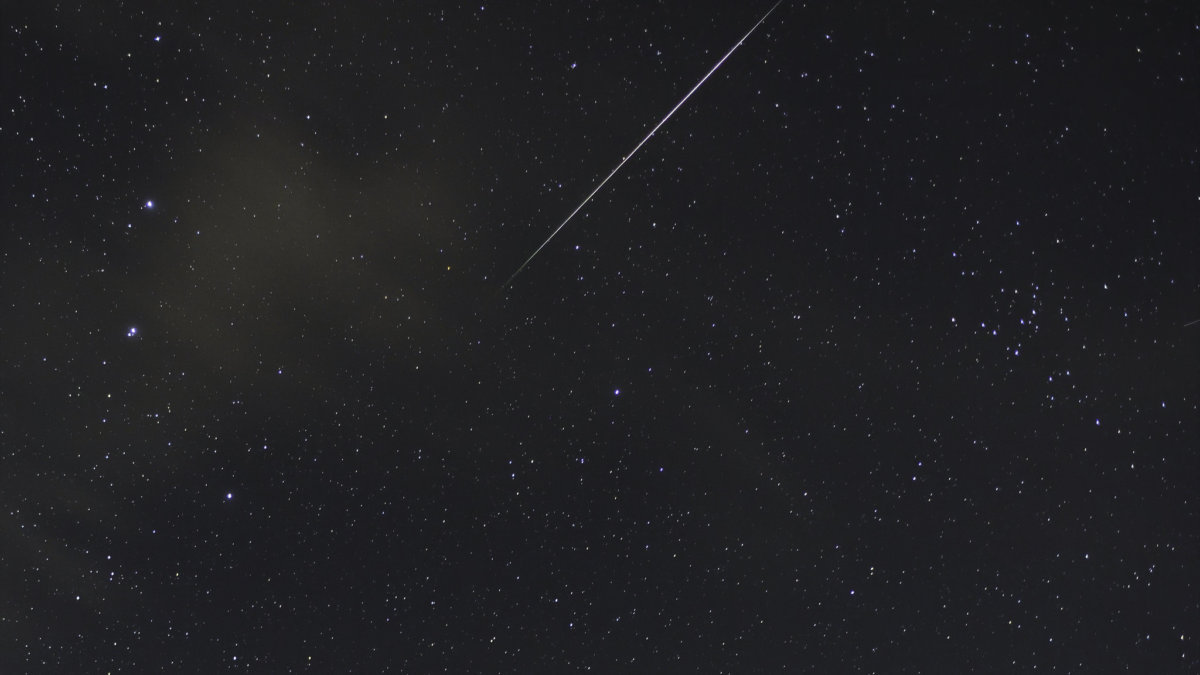
Quadrantid Meteor Shower; Tom Lee/ Flickr
What is a Quadrantid Meteor Shower:
The Quadrantid Meteor Showers originate from an asteroid 2003 EH1. However, the Quadrantids are named for a now obsolete constellation called the Quadrans Muralis. The constellation’s name was not changed even though it was left out of the 1992 list of constellations by the International Astronomical Union (IAU).
When to See the Quadrantid Meteor Showers:
The showers run from December 26 to January 16 and will peak in the predawn hours of January 3. You can expect to see about 50 to 100 meteors per hour at its peak. However, unlike the Geminid or the Perseid, which persist for a day or more, allowing people in all time zones to enjoy their amazing display, the peak period of the Quadrantids only lasts six hours.
The best time to view is before dawn when the shower’s radiant will be high in the northeastern sky. This year, the moon will be in its first quarter on January 3rd, with 17% illumination, and will set by 9:30 p.m. on the night of January 2. This makes the viewing conditions ideal for seeing bright showers in a cloudless sky as Quadrantids feature fireballs, bright, colourful, and longer-lasting than typical meteors.
When: December 26th to January 16th, 2025, with the best views overnight from January 2 to January 3. (predawn).
How & Where to See Quadrantid Meteor Shower:
The shower will favour the Northern Hemisphere, which means that if you live anywhere in the Northern Hemisphere, you can expect to see one or more of these fireballs. The radiant point of the Quadrantids is at the northern tip of Boötes near the Big Dipper and makes an approximately 90-degree angle with the Big Dipper and the bright star Arcturus. One can see the shower when the radiant climbs high in the sky, which will occur in the early dawn hours.
Remember that you don’t need to find the radiant to see the showers as the showers appear in all parts of the sky.
Where to go to see Quadrantid Meteor Shower:
Meteor showers can be observed with the naked eye. You won’t need binoculars or a telescope. If possible, move away from city lights and give your eyes some time (at least 20 minutes) to adjust to the darkness.
Required Conditions: Clear Sky away from city lights — Check clear sky (cloud) conditions in your area – here.
–The best way to see it is to get away from city lights, preferably to Dark Sky Preserves. If not, visit open sky areas (so that you have a 360-degree view of the sky) away from city lights like provincial/regional parks (where you can typically see a million stars on a clear starry night ) around midnight and look up. If you live in the countryside, there is a good possibility that you can see the meteor shower from your yard.
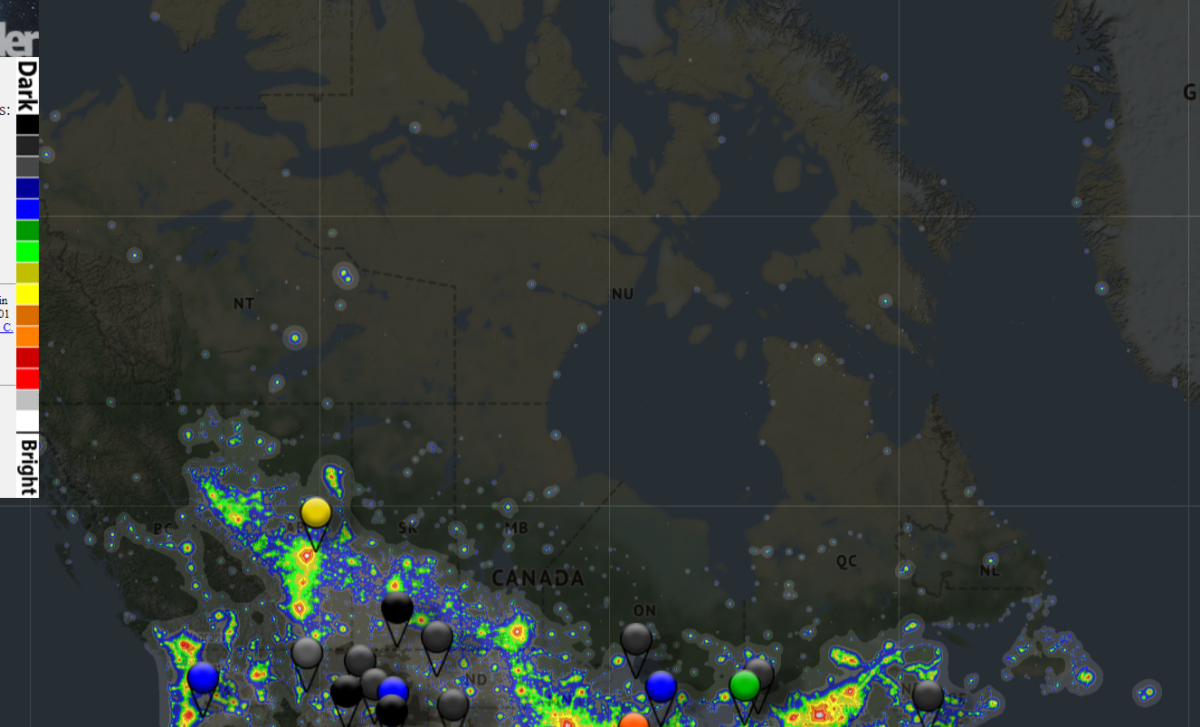
Screengrab: DarkSiteFinder Light Pollution Map.
To find reasonably dark areas near your location, check the darkskyfinder map. Search for a park (or a safe place with no streetlights and away from roads/traffic) within the areas coloured dark (mustard), yellow, green, blue, grey or black (transparent). (Before travelling, please check cloud cover.)
Take a blanket or a lawn chair so that you can sit comfortably to watch the shower.
Once you are at the location:
— Make sure you switch off the phone, and your eyes need ~ 30 minutes to get adjusted to the dark. If you are carrying a flashlight, cover it with red cellophane wrap or some red filter so it doesn’t interfere with viewing.
— Watch the night sky for at least 15 to 20 minutes for a chance to spot meteors.
