 Toronto
U.S. President Donald Trump has announced a new 10% baseline tariff on goods imported from all foreign countries, effective April 5, 2025.

US/Canada Border
Canada and Mexico are not included in the reciprocal tariffs. USMCA-compliant goods face no tariffs, while non-compliant goods face 25%, and certain energy products 10%.
“For Canada and Mexico, the existing fentanyl/migration IEEPA orders remain in effect, and are unaffected by this order. This means USMCA compliant goods will continue to see a 0% tariff, non-USMCA compliant goods will see a 25% tariff, and non-USMCA compliant energy and potash will see a 10% tariff,” reads the press release from the Whitehouse.
“In the event the existing fentanyl/migration IEEPA orders are terminated, USMCA compliant goods would continue to receive preferential treatment, while non-USMCA compliant goods would be subject to a 12% reciprocal tariff.”
Though Canada is not included in the new reciprocal measures announced today, higher reciprocal tariffs will apply to countries with the U.S. having the largest trade deficits, and all other countries will continue to be subject to the original 10% tariff baseline.
The tariff is being introduced under the International Emergency Economic Powers Act of 1977 (IEEPA), which Trump invoked to address what he described as a national emergency caused by long-standing trade deficits and non-reciprocal trade practices.
Here is the list of countries with reciprocal tariffs announced Wednesday, and these will come into effect April 9 at 12:01 a.m. EDT.:
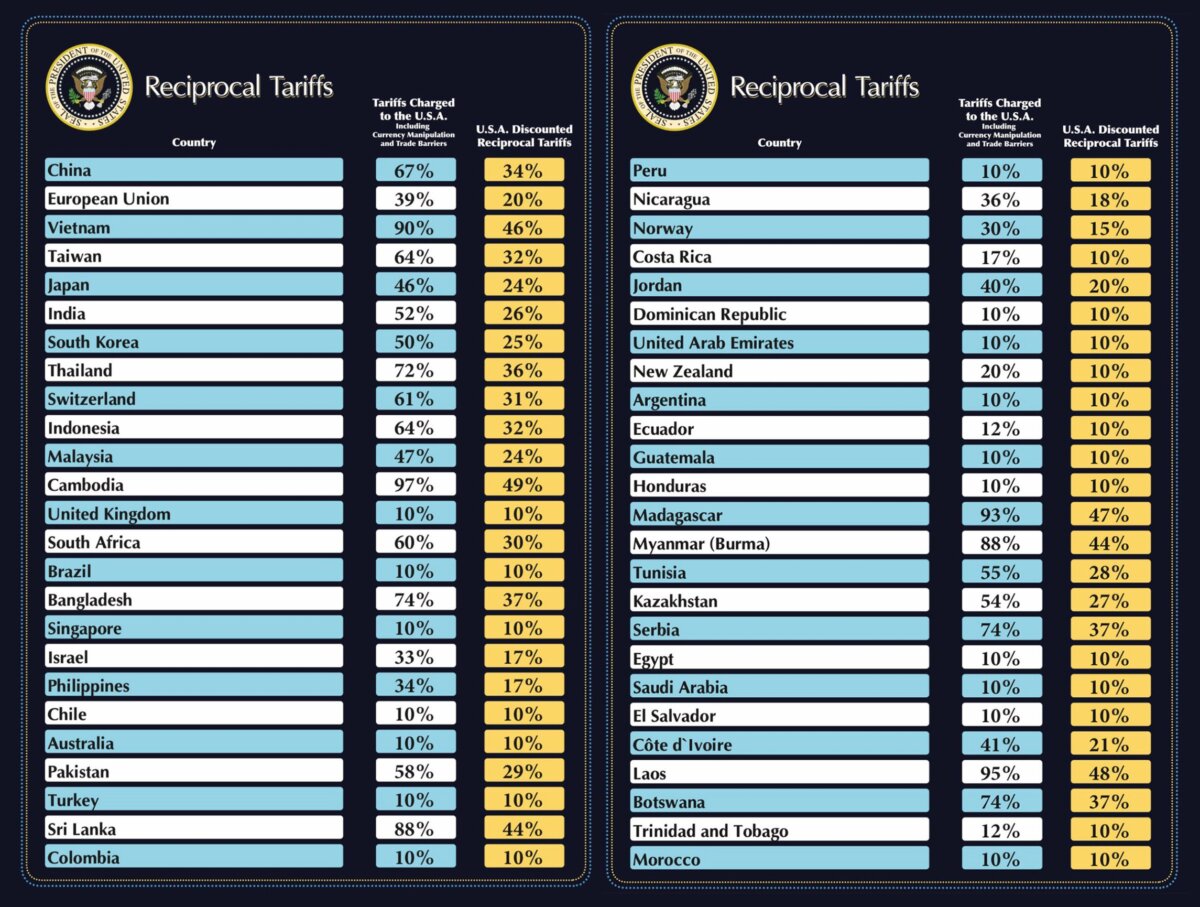
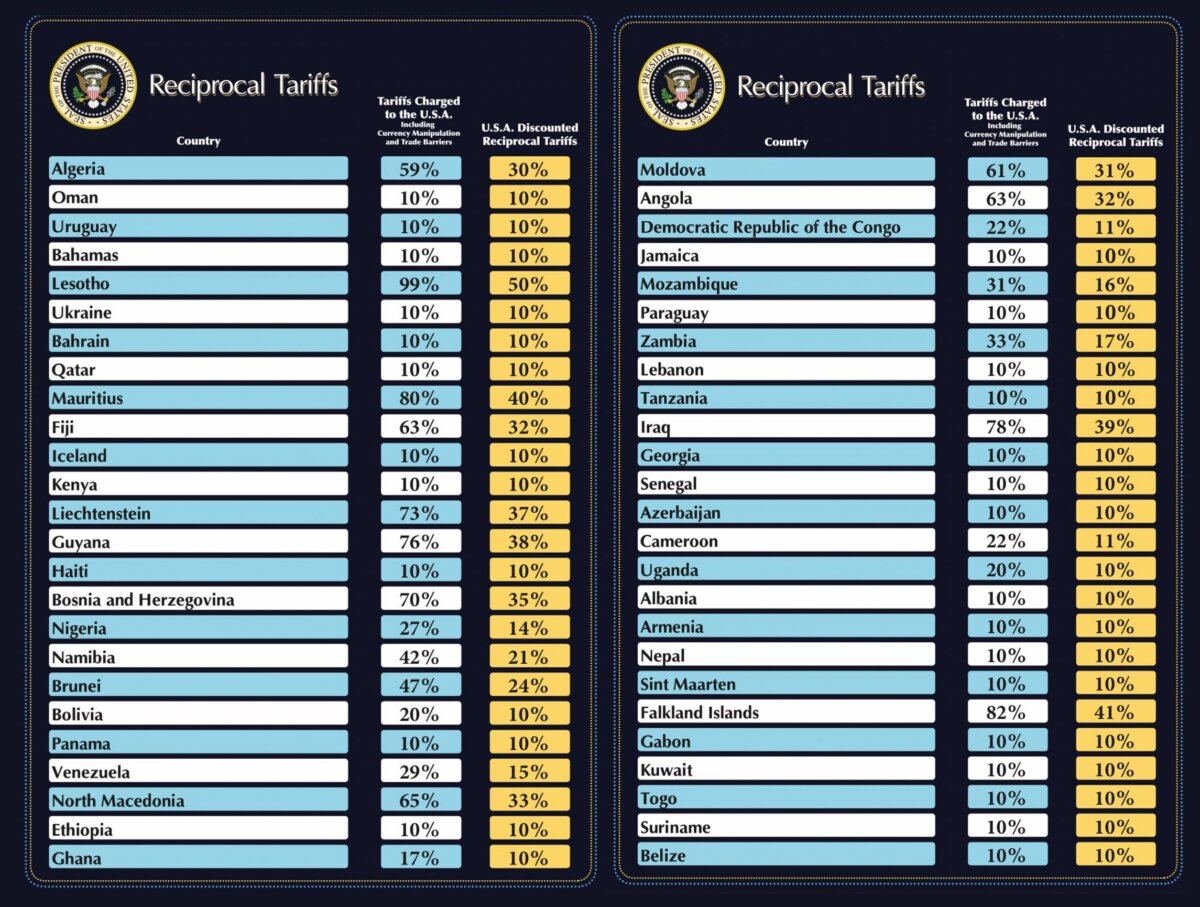
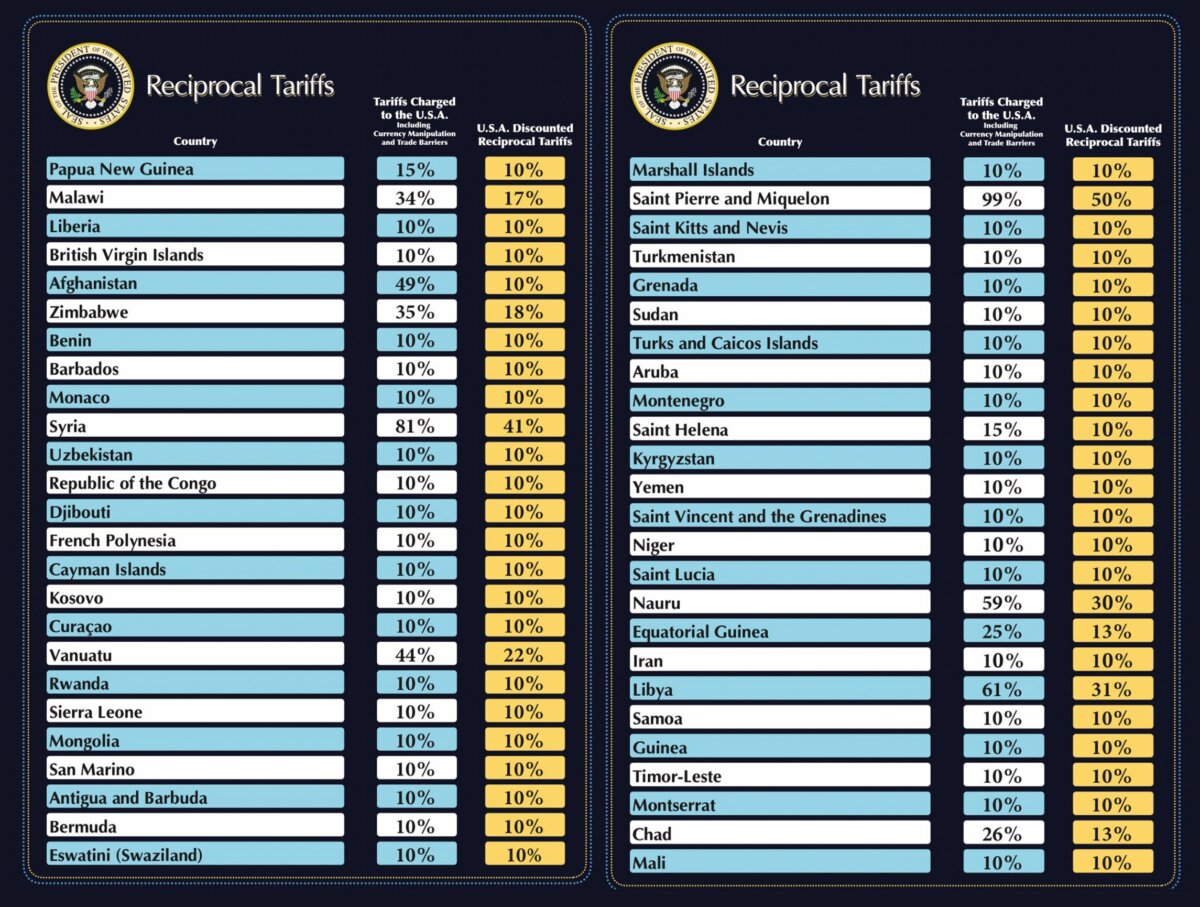
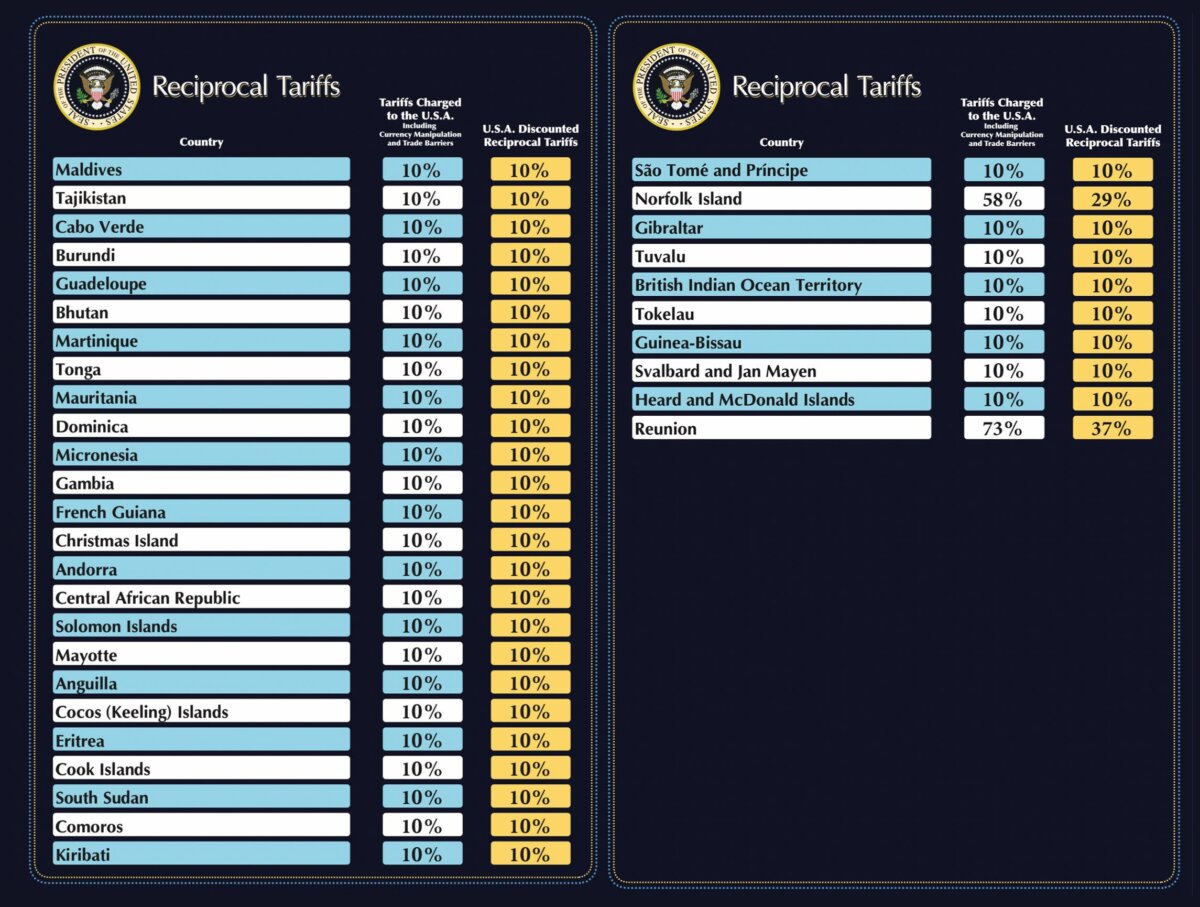
Trump also confirmed that the previously announced 25% tariff on all foreign-made automobiles will be effective at midnight.
The 25% tariff on steel imports and a 10% tariff on aluminum imports from Canada are also in effect. Canada, in response, has imposed a 25% tariff on U.S. steel, aluminum, and various goods, including tools, electronics, and sports equipment.


