 Toronto
Ontario is set to begin construction of Canada’s first small modular reactor (SMR), setting a new milestone as the first G7 nation to launch such a project. The first of four SMRs is being built at the Darlington nuclear site by Ontario Power Generation (OPG), with the aim of delivering 300 megawatts of clean electricity — enough to power about 300,000 homes.
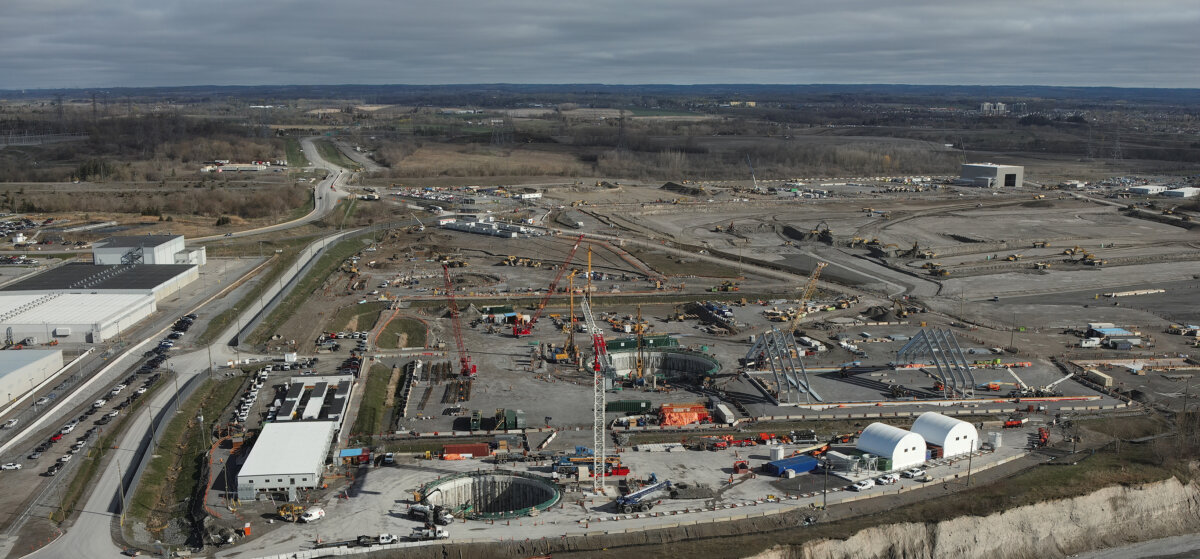
The Darlington New Nuclear Project site, future home of North America’s first Small Modular Reactor./Credit: OPG
The move comes as the province anticipates electricity demand to rise by at least 75 per cent by 2050.
Energy Minister Stephen Lecce called the start of construction a “historic day for Canada,” highlighting the use of Canadian materials and labour.
Here are the highlights of Thursday’s announcement:
-
Power Output and Reach
The four SMRs will collectively produce 1,200 megawatts (MW) of electricity, which is enough to power 1.2 million homes. The first unit alone will serve around 300,000 households. -
Economic Impact
Construction and operation are expected to support up to 18,000 Canadian jobs and contribute an average of $500 million annually to Ontario’s economy. Over 65 years, the total impact on Canada’s GDP is estimated at $38.5 billion. -
Cost and Timeline
The first SMR will cost $6.1 billion, with shared systems for all four units adding another $1.6 billion. Future units are expected to be less costly due to process efficiencies. OPG began preparing the site in December 2022 and secured a Licence to Construct from the Canadian Nuclear Safety Commission in April 2025. -
Partnerships and Local Benefit
More than 80 Ontario-based companies are already involved in the project. OPG is also working with the Williams Treaties First Nations on a potential equity partnership—something not yet seen in Canadian nuclear energy.
Credit: OPG
-
Technology and Comparison
The reactor design, BWRX-300, uses commercially available uranium. The Independent Electricity System Operator (IESO) determined this nuclear option is more cost-effective and less risky than alternatives like solar, wind, and battery storage, which would require up to 8,900 MW and substantial land and infrastructure. -
Future Collaboration
Ontario is working with other provinces, including Alberta, Saskatchewan, and New Brunswick on expanding SMR use. Globally, agreements are in progress to export Ontario-made SMR components, creating additional economic opportunities.


