 Toronto
Prime Minister Mark Carney has announced the first set of developments to be reviewed by Canada’s new Major Projects Office (MPO), which was created to streamline approvals for large-scale, nationally significant initiatives aimed at boosting the country’s economy.
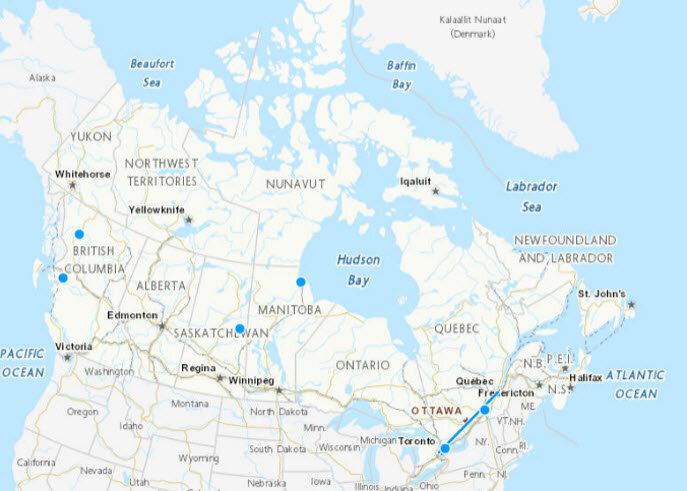
The MPO aims to cut regulatory timelines to two years, establish a “one project, one review” process with provinces and territories, and assist in structuring financing.
Five Projects Selected for Review
LNG Canada Phase 2 (Kitimat, B.C.) – Planned expansion will double production capacity, positioning the facility as the world’s second-largest liquefied natural gas site. The project is expected to attract substantial private investment, expand Canada’s role in global energy security, and deliver emissions 35% below top-performing LNG plants worldwide.
Darlington New Nuclear Project (Bowmanville, Ont.) – This development will introduce Canada’s first operational small modular reactor, a G7 first. One unit will power 300,000 homes and sustain 3,700 jobs annually, including 18,000 during construction. The initiative will add $500 million a year to Ontario’s nuclear supply chain.
Contrecœur Terminal Container Project (Québec) – An expansion of the Port of Montréal, increasing capacity by 60%. The project is projected to generate $140 million annually in economic benefits and strengthen supply chain resilience in Eastern Canada.
McIlvenna Bay Copper Mine (Saskatchewan) – A partnership with the Peter Ballantyne Cree Nation, this mine is slated to be Canada’s first net-zero copper project. It will create 400 jobs, supply copper and zinc, and support smelting operations in both Saskatchewan and Quebec.
Red Chris Mine Expansion (Northwest B.C.) – This upgrade will extend the mine’s life by over a decade, lift copper production by more than 15%, and employ about 800 workers, with peaks of 1,500 during construction. Greenhouse gas emissions are expected to fall by over 70%. The project also forms part of the proposed Northwest Critical Conservation Corridor.
Collectively, these ventures represent over $60 billion in investment and thousands of jobs.
Longer-Term Strategies
The MPO is also advancing early-stage concepts that could be transformative for Canada’s economy:
-
Critical Minerals Strategy – Aims to fast-track projects supplying minerals vital for clean technologies and defence, including Ontario’s Ring of Fire, with a two-year decision window.
-
Wind West Atlantic Energy – Plans to unlock 60 GW of wind power potential in Nova Scotia and beyond, with prospects for exports to the U.S. Northeast through new transmission links.
-
Pathways Plus (Alberta) – A carbon capture, utilization, and storage project with pipeline infrastructure to reduce oil sands emissions while supporting energy exports.
-
Arctic Economic and Security Corridor – A dual-use infrastructure project to boost northern mineral development, connect communities, and expand defence capabilities.
-
Port of Churchill Plus (Manitoba) – Envisions upgrades to road, rail, and energy infrastructure, transforming the port into a four-season gateway in partnership with Indigenous communities.
-
Alto High-Speed Rail (Ontario–Québec) – A 1,000-km line between Toronto and Québec City, reaching 300 km/h speeds, projected to create 51,000 construction jobs and add $35 billion to GDP.
Indigenous Participation
Alongside the project announcements, Carney introduced the Indigenous Advisory Council, which will work with the MPO to ensure reconciliation, equity ownership, and Indigenous leadership remain central to future developments.
“These projects are about connecting our communities, empowering workers, and building Canada’s strength,” Carney said, underscoring the government’s intention to fast-track major nation-building initiatives.


