 Banff
Banff 
Today, Justin Trudeau announced a legislative measure to suspend the Goods and Services Tax/Harmonized Sales Tax (GST/HST) on holiday essentials from December 14, 2024, to February 15, 2025.
Credit: Mastermind Toys
Once passed, the tax relief will apply to a variety of items, including groceries, restaurant meals, children’s clothing, and gifts.
This temporary exemption is intended to alleviate financial pressures during the holiday season by making these items essentially tax-free at the point of purchase.
The initiative is expected to provide approximately $1.6 billion in federal tax relief. Per the news release, a family that spends $2,000 on qualifying items could save $100 in GST alone. In provinces like Ontario, where the HST is also suspended, the savings could increase to $260 for the same amount spent.
The federal government says the policy covers goods purchased or imported during the specified period, including children’s footwear, diapers, car seats, printed newspapers, and selected toys.
Alcoholic beverages, some snacks, and prepared foods will also qualify for the tax break.
Businesses will be responsible for removing the GST/HST from these items at the checkout starting December 14, 2024, ensuring that the relief is directly passed on to consumers.
The federal government says that this initiative is part of the government’s effort to provide immediate financial relief and support consumer spending during the peak shopping season. Eligible Canadians will also receive a $250 Working Canadians Rebate in early spring 2025.
Qualifying Goods With GST/HST Suspension From December 14, 2024, to February 15, 2025
Per the news release, the following are descriptions of goods that would qualify for the proposed tax relief.
- Children’s clothing: meaning garments (other than garments of a class that are used exclusively in sports or recreational activities, costumes, children’s diapers, or children’s footwear) that are:
- Designed for babies, including baby bibs, bunting blankets and receiving blankets;
- Children’s garments up to girls size 16 or boys size 20, according to the national standard applicable to the garments, and if no national standard applies to the children’s garments, girls or boys sizes extra small, small, medium, or large; or,
- Hosiery or stretchy socks, hats, ties, scarves, belts, suspenders, or mittens and gloves in sizes and styles designed for children or babies.
- Children’s footwear: meaning footwear (other than stockings, socks or similar footwear or footwear of a class that is used exclusively in sports or recreational activities) that is designed for babies or children and has an insole length of 24.25 centimetres or less.
- Children’s diapers: meaning a product designed for babies or children and that is a diaper, a diaper insert or liner, a training pant, or a rubber pant designed for use in conjunction with any of those items.
- Children’s car seats: meaning a restraint system or booster seat that conforms to the Canada Motor Vehicle Safety Standard 213, 213.1, 213.2 or 213.5 under the Motor Vehicle Restraint Systems and Booster Seats Safety Regulations.
- Print newspapers: meaning print newspapers containing news, editorials, feature stories, or other information of interest to the general public that are published at regular intervals. They would not include electronic or digital publications. They would also exclude most fliers, inserts, magazines, periodicals, or shoppers.
- Printed books: including a printed book or an update of such a book, an audio recording where 90 per cent or more of it is a spoken reading of a printed book, or a bound or unbound printed version of scripture of any religion. However, they would not include:
- a magazine or periodical purchased individually, not through a subscription;
- a magazine or periodical in which the printed space devoted to advertising is more than 5 per cent of the total printed space;
- a brochure or pamphlet;
- a sales catalogue, a price list or advertising material;
- a warranty booklet or an owner’s manual;
- a book designed primarily for writing on;
- a colouring book or a book designed primarily for drawing on or for affixing or inserting items such as clippings, pictures, coins, stamps, or stickers;
- a cut-out book or a press-out book;
- a program relating to an event or performance;
- an agenda, calendar, syllabus or timetable;
- a directory, an assemblage of charts or an assemblage of street or road maps (other than a guidebook or an atlas that consists in whole or in part of maps other than street or road maps);
- a rate book; or,
- an assemblage of blueprints, patterns, or stencils.
- Christmas trees or similar decorative trees: whether natural or artificial.
- Food or beverages: items for human consumption that are:
- Alcoholic beverages (excluding spirits but including wine, beer, ciders, and spirit coolers up to 7 per cent ABV);
- Carbonated beverages, non-carbonated fruit juice or fruit flavoured beverages or products that, when added to water, produce one of these beverages;
- Candies; confectionery classed as candy or goods sold as candies (e.g., candy floss, chewing gum, and chocolate); fruits, seeds, nuts or popcorn coated or treated with candy, chocolate, honey, molasses, sugar, syrup, or artificial sweeteners;
- Chips, crisps, puffs, curls, or sticks (e.g., potato chips, corn chips, cheese puffs, potato sticks, bacon crisps, and cheese curls), popcorn, brittle pretzels, and salted nuts or seeds;
- Granola products and snack mixtures that contain cereals, nuts, seeds, dried fruit, or other edible products;
- Ice lollies, juice bars, ice waters, ice cream, ice milk, sherbet, frozen yoghurt or frozen pudding, including non-dairy substitutes;
- Fruit bars, rolls or drops or similar fruit-based snack foods;
- Cakes, muffins, pies, pastries, tarts, cookies, doughnuts, brownies, croissants with sweetened filling or coating (note that many bread products, such as bagels, English muffins, croissants, and bread rolls, are already zero-rated);
- Pudding, including flavoured gelatine, mousse, flavoured whipped dessert product, or any other products similar to pudding;
- Prepared salads, sandwiches, platters of cheese, cold cuts, fruit or vegetables, and other arrangements of prepared food;
- Food or beverages heated for consumption;
- Beverages dispensed at the place where they are sold;
- Food or beverages sold in conjunction with catering services;
- Food or beverages sold at an establishment where all or substantially all of the food or beverages sold are currently excluded from zero-rating (e.g., a restaurant, coffee shop, take-out outlet, pub, mobile canteen, lunch counter, or concession stand); and
- Bottled water or unbottled water that is dispensed at a permanent establishment of the supplier.
- Select children’s toys: a product that is designed for use by children under 14 years of age in learning or play and that is:
- a board game or card game (e.g., a strategy board game, playing cards, or a matching/memory card game);
- a toy that imitates another item (e.g., a doll house, a toy car or truck, a toy farm set, or an action figure);
- a doll, plush toy or soft toy (e.g., a teddy bear); or,
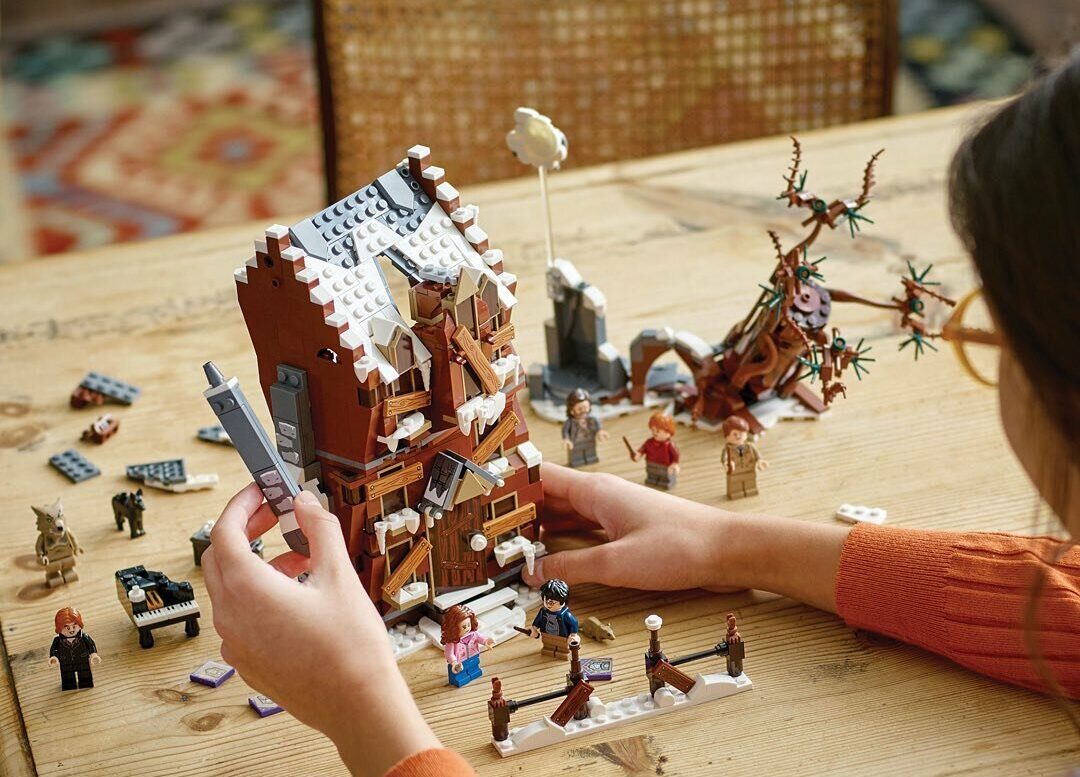
- a construction toy (e.g., building blocks, such as Lego, STEM assembly kits, or plasticine).
- Jigsaw puzzles, for all ages.
- Video-game consoles, controllers or physical game media (e.g., a video-game cartridge or disc).


are car repairs on the list of no gst?