Kelowna
Up to 50 earthquake early warning sensors are being installed in high seismic risk areas around British Columbia.
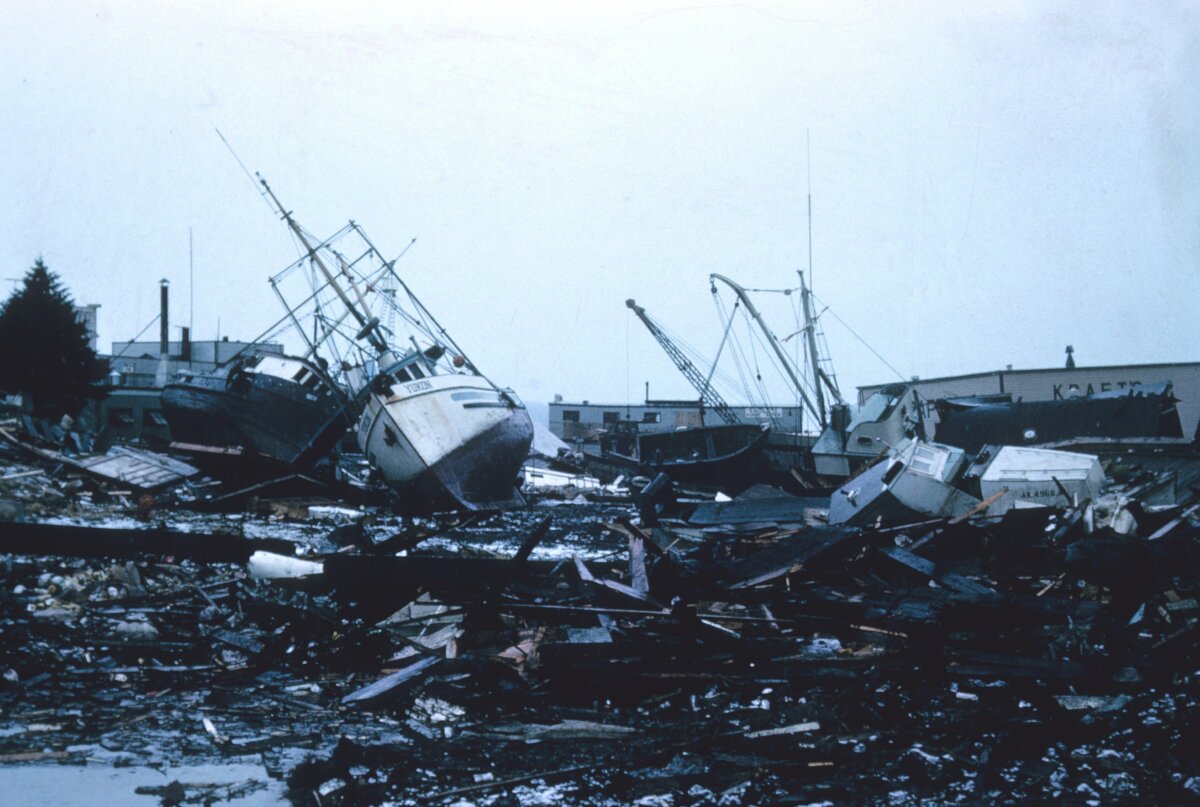
Alaska 1964 Good Friday earthquake and tsunami damage./NOAA
These early warning sensors and several hundred sensors already installed by Natural Resources Canada will be connected to a national Earthquake Early Warning (EEW) system that will be operational in 2024.
The first sensors for the national EEW system were installed at the BC Ferries’ terminal at Horseshoe Bay in the spring of 2022.
According to a joint press release by the provincial and federal governments, the EEW system will give seconds to tens of seconds of warning before the strongest shaking arrives at coastal communities in British Columbia.
The press release cites the example of a massive megathrust (magnitude 9) earthquake which occurred on January 26, 1700, along the west coast of North America, that caused a tsunami which swept across the Pacific destroying the Pacific coast of Japan. If such a megathrust earthquake were to occur after the National EEW system is operational, it could give up to four minutes of warning before the strongest shaking begins in coastal communities in British Columbia.
The Earthquakes Canada website cites geological evidence and says 13 great earthquakes have occurred in the last 6000 years.
British Columbia Minister of Emergency Management and Climate Readiness, Bowinn Ma said in the statement, “An early earthquake warning system is critical to our ability to help British Columbians mitigate the impacts of another major seismic event. By installing these sensors, we will help provide critical seconds of notice in the event of an earthquake, so that people, businesses and automated systems can take protective action.”
When the full system is operational in 2024, more than 10 million people in Canada living in the most earthquake-prone regions of the country will receive Earthquake Early Warning alerts.
According to the new release, alerts from the EEW system could also be used to take automatic infrastructure actions like:
- Stopping traffic from driving onto bridges or into tunnels
- Triggering trains to slow down
- Diverting incoming air traffic
- Allowing surgeons to stop surgery
- Closing gas valves
- Opening fire hall and ambulance bay doors
Automatic detection of seismic event: magnitude 4.0 – 21 Jan 22:06 MST – TUNGSTEN, NT region
— Earthquakes Canada (@CANADAquakes) January 22, 2023
Canada experiences approximately 5,000 earthquakes each year. It is most common along the Pacific Coast of British Columbia with approximately 20 percent also occurring along the St. Lawrence River and Ottawa River valleys.