 Toronto
A recent poll by the Angus Reid Institute indicates a significant shift in Canadian concerns, with anxiety about immigration quadrupling over the last two years.
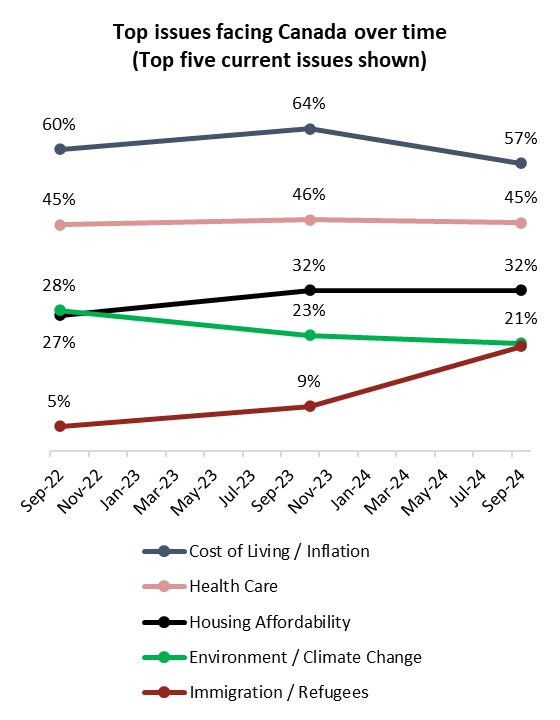
Currently, 21% of Canadians rank immigration and refugee issues as a primary concern, equalling the percentage worried about climate change but still trailing behind economic issues such as the high cost of living (57%), healthcare (45%), and housing affordability (32%).
Here are the highlights of the report by Angus Reid Institute:
- Immigration Concerns: 21% of Canadians now rank immigration and refugee issues as a top national concern, reflecting a fourfold increase over the last two years.
- Youth Unemployment and Housing: Economic pressures are especially pronounced among young Canadians. Data shows a significant number of younger individuals (19% of those aged 18 to 34) are struggling with employment, while a worrying 40% in the same age group are concerned about housing affordability.
- Political Impact: These shifts in public concern are reshaping the political landscape, with the Conservative Party leading national vote intentions by 22 points. If an election were held today, 43% of decided voters would opt for the Conservative Party, a stark contrast to the 21% who would support the Liberals and the 19% backing the NDP.
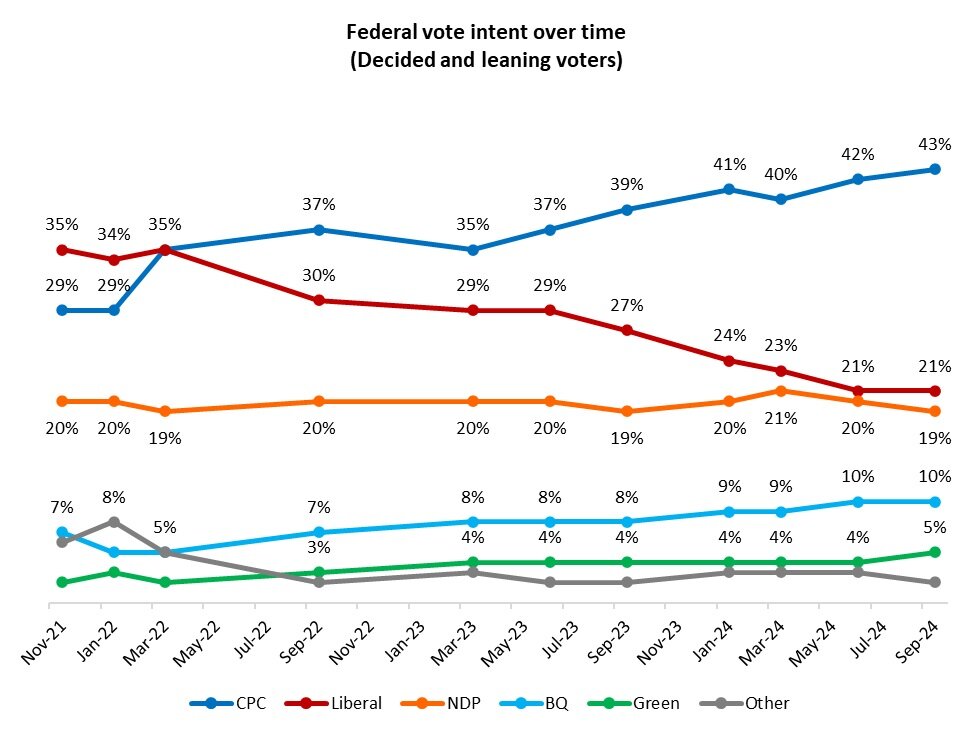
Credit: Angus Reid
- Conservative Gains: Since Pierre Poilievre became leader nearly two years ago, the Conservatives have seen significant increases in support across various demographics despite no improvement in Poilievre’s personal favorability ratings.
- Popularity of Poilievre: Despite the Conservative Party’s popularity, Poilievre himself has seen little change in his personal favorability ratings. Approximately 52% of Canadians hold an unfavourable view of him, a statistic that remains largely unchanged from when he first assumed leadership. His favorability has increased slightly among men aged 35-54 and younger women, although these are offset by a decline in favorability among younger men.
- Liberal Decline: The Liberals face a considerable deficit, particularly in Ontario and Atlantic Canada, where they have seen declines of 13 and 17 percentage points, respectively.


