Winnipeg
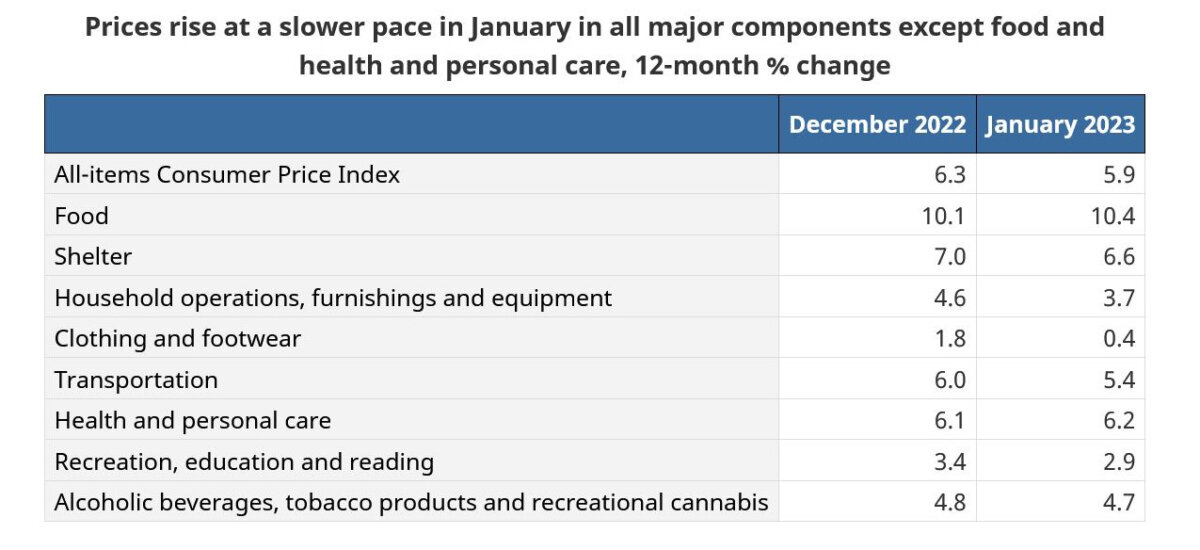
The annual rate of inflation has fallen to 5.9 per cent, compared to 6.3 per cent in December 2022, says Statistics Canada in the Consumer Price Index report for January 2023.
While overall inflation decreased, mortgage interest costs and prices for food continued to rise.
On a monthly basis, Statistics Canada says Consumer Price Index (CPI) increased by 0.5% in January 2023 compared to a decline of 0.6% in December, primarily driven by high gasoline prices and an increase in mortgage interest and meat costs.
The mortgage interest cost index rose at an accelerated pace, increasing by 21.2% year over year, the largest jump since September 1982, as a result of the higher interest rate.
Statistics Canada says the year-over-year increase in shelter prices slowed to 6.6% in January from 7.0% in December, primarily due to slower growth in other owned accommodation expenses (+1.1%) and homeowners’ replacement cost (+4.3%) caused by the cooling housing market.
Gasoline prices rose 4.7% on a month-over-month basis in January due to refinery closures in the southwestern United States, while on a year-over-year basis, gasoline prices rose 2.9%, slightly decelerating from a 3.0% increase in December.
Cellular service prices declined 7.9% year-over-year in January, attributed to Boxing Day sales.
The year-over-year growth in passenger vehicle prices slowed down to 6.2% in January, partly due to a base-year effect and lower availability of new model-year vehicles compared to the same period last year.
Food Prices:
Food prices, including groceries and restaurant food, increased at a slightly faster pace in January (+10.4%) compared to December (+10.1%), with meat prices (+7.3%) being a significant contributor.
Chicken prices saw the largest monthly increase since September 1986 due to stronger seasonal demand and supply constraints caused by issues related to avian influenza, while bakery products (+15.5%), dairy products (+12.4%), and fresh vegetables (+14.7%) also saw year-over-year price increases.
Food purchased from restaurants rose 8.2% in January, with higher prices for fast food and takeout being the main drivers.
Inflation Across Provinces:
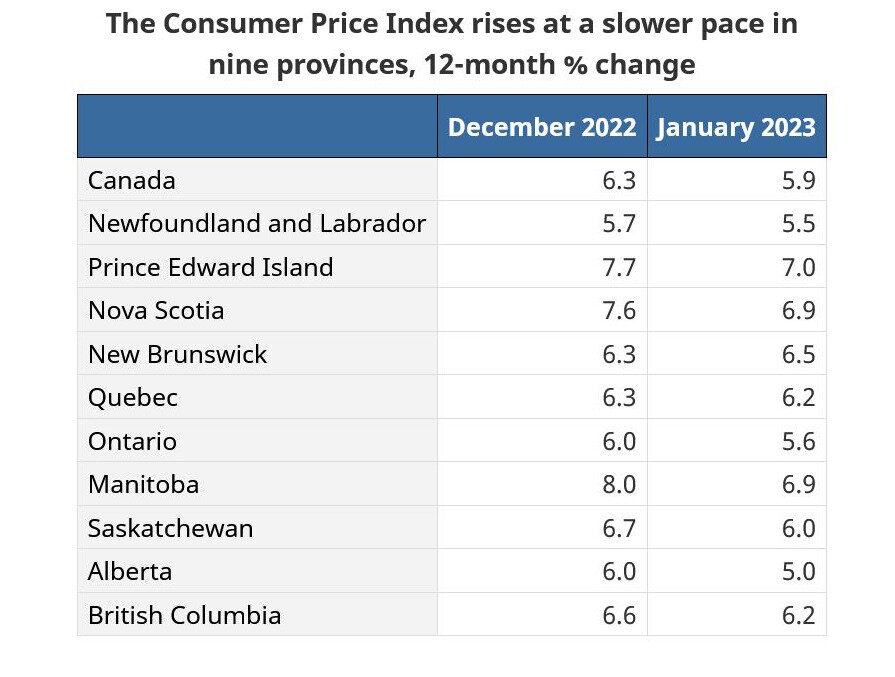
Prices rose at a slower year-over-year pace compared to December in nine Canadian provinces, with Manitoba having the largest deceleration in gasoline prices.
New Brunswick was the only province with a faster pace of price growth due to accelerated gasoline prices.
Alberta saw a record monthly decline of 45.6% in electricity prices due to a provincial initiative to reduce rates and increase rebates, and also had the only year-over-year decline in gasoline prices due to a complete suspension of the provincial gas tax.
Bank of Canada uses CPI-trim, CPI-median, and CPI-common to influence its policy interest rate. The central bank says these “core” inflation measures better reflect the underlying inflation trend as it eliminates volatile components from inflation data.
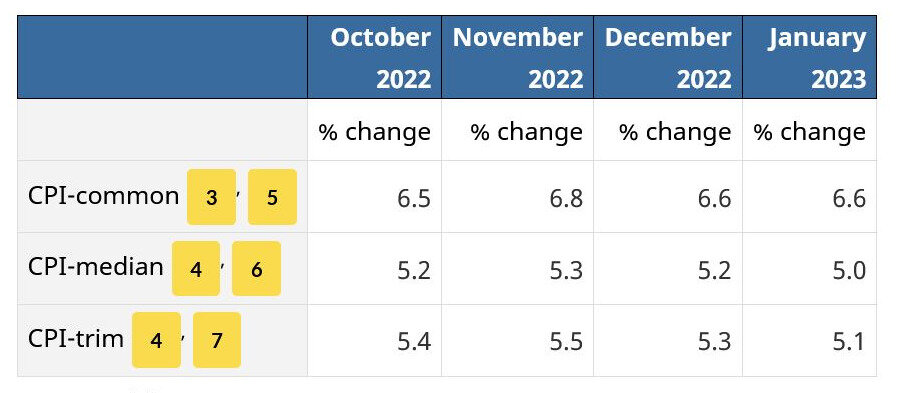
Those inflation indices have reduced slightly but are still above 5%. Bank of Canada will announce whether it will increase or hold the rates steady on Wednesday, March 8.