 Calgary
Statistics Canada, in their latest population estimate report, reveals that the nation’s population continues to surge, reaching 40,097,761 by July 1, 2023.
This marks an impressive increase of 1,158,705 people, representing a growth rate of 2.9% compared to July 1, 2022.
Canada’s population reached a significant milestone, crossing 40 million people on June 16, 2023.
Highlights of the 2023 Quarter 2 Population Report:
- Record-Breaking Growth: The 2023 population growth rate of 3.3% is the highest since 1957, driven by factors such as increased immigration and a growing number of non-permanent residents.
- Immigration Dominance: Nearly 98% of the population growth from July 1, 2022, to July 1, 2023, was attributed to net international migration. This surge in immigration included 468,817 new immigrants and a substantial increase in non-permanent residents.
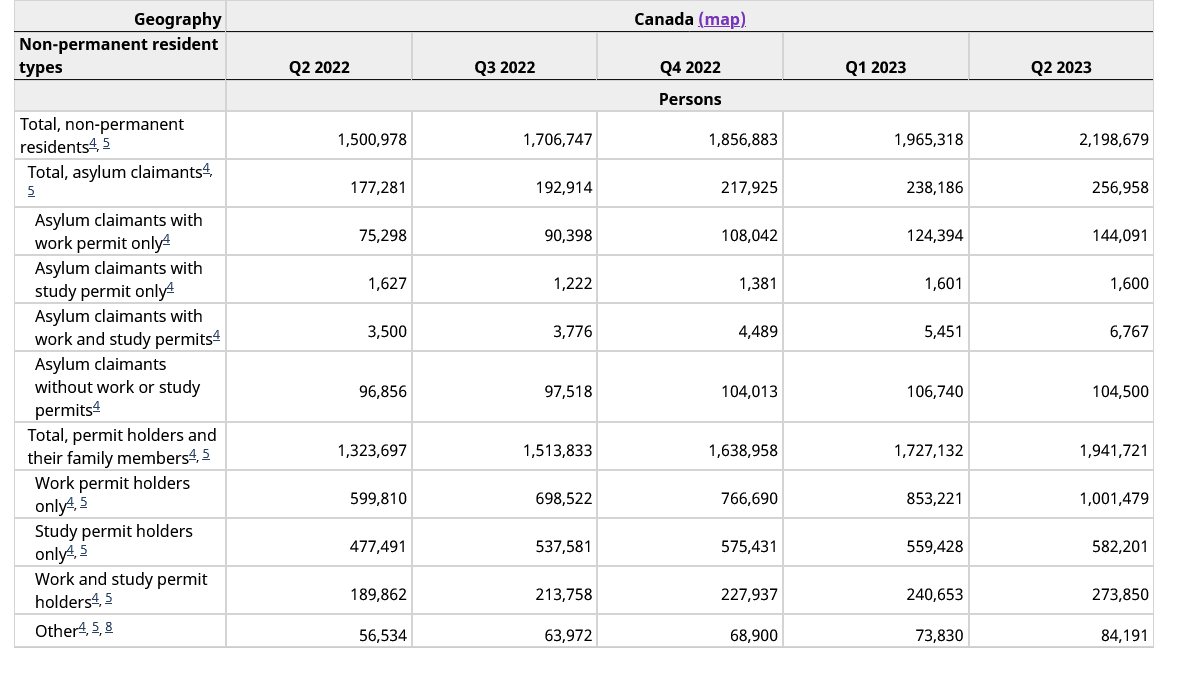
- Non-Permanent Residents Surge: As of July 1, 2023, Canada has an estimated 2,198,679 non-permanent residents, marking a 46% increase from the previous year. This rapid growth is mainly attributed to an influx of work and study permit holders (1,941,721).
- Canadian Population Doubling: If the current growth rate were to remain constant, Canada’s population could double in just 25 years.
- Fertility Decline: Fertility rates reached a record low in 2022, with an average of 1.33 children per woman compared to 1.44 in 2021.
- Canada-Ukraine Authorization: The ongoing conflict in Ukraine has led to tens of thousands of Ukrainians relocating to Canada, aided by the Canada-Ukraine Authorization for Emergency Travel implemented in March 2022.
- Aging Population: Per Statistics Canada report, Canada’s demographic landscape is shifting rapidly. The population aged 65 and older is growing significantly, with the largest cohorts of baby boomers now reaching age 65. This demographic shift has resulted in the elderly outnumbering children aged 0 to 14 in recent years.
Provincial and Territorial Growth:
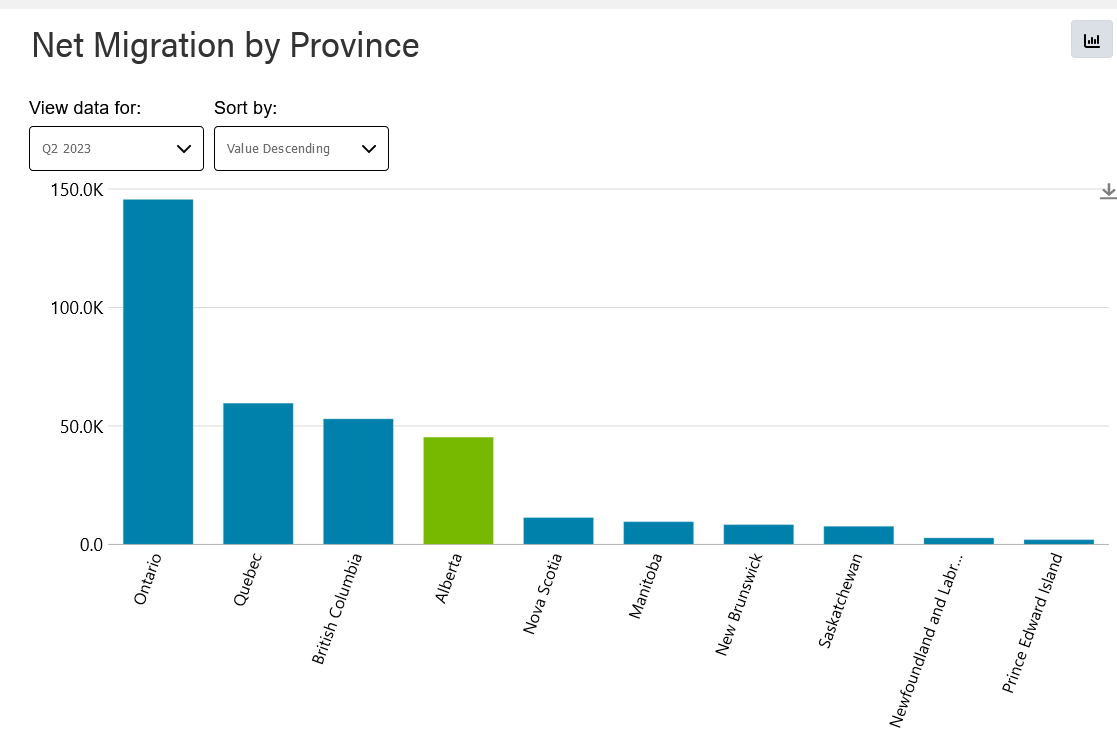
Net migration Q2; Credit: Alberta.ca
- Alberta’s Demographic Boom: Alberta experienced the fastest demographic growth, at an impressive 4.0%, attributed to both international migration and record net gains from interprovincial migration. The province saw a net gain of 56,245 people from other provinces, a historical high.
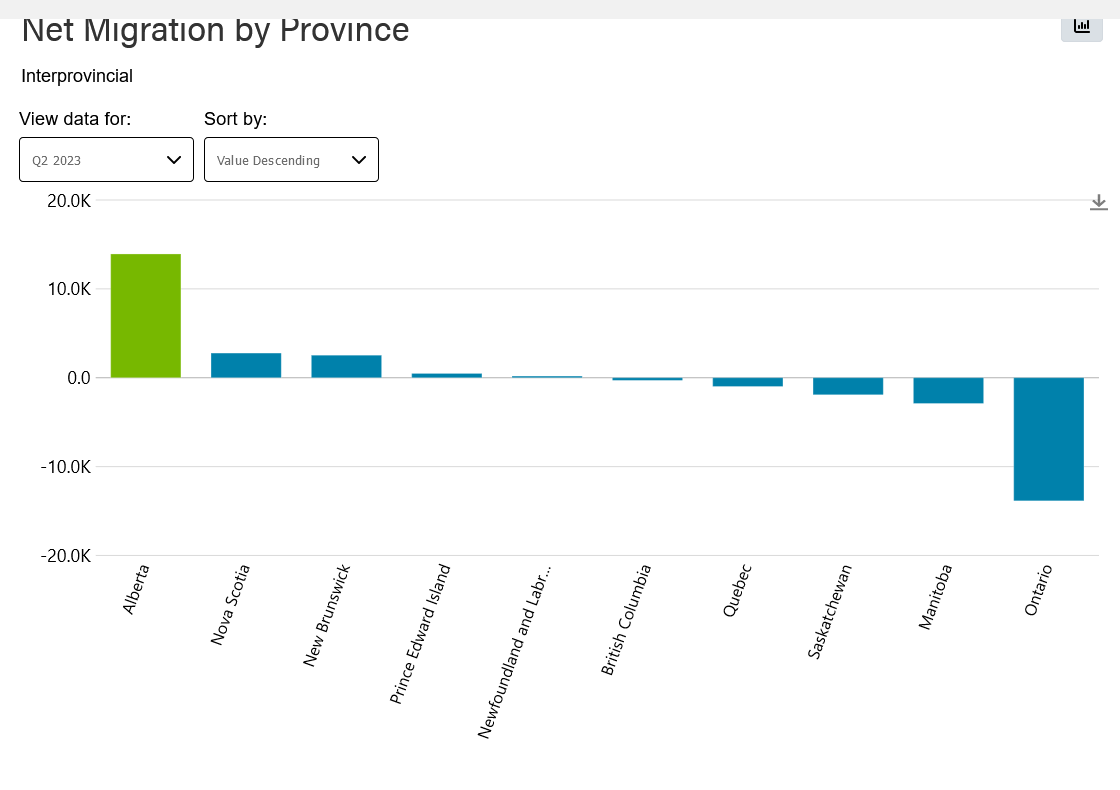
Interprovincial migration Q2; Credit: Alberta.ca
- Remarkable Growth in Multiple Provinces: Seven provinces, including Prince Edward Island, Nova Scotia, New Brunswick, Quebec, Ontario, Manitoba, and Saskatchewan, recorded population increases at rates unseen in comparable data. All three Maritime provinces saw significant growth, with Prince Edward Island leading at 3.9%.
- Ontario, Quebec, and British Columbia: These provinces are home to the largest populations of non-permanent residents, with nearly 1 million in Ontario, close to half a million in Quebec, and approximately 400,000 in British Columbia.
- Quebec: Quebec, despite experiencing record-high growth at 2.3%, still had the second-lowest growth rate among provinces.
- Newfoundland and Labrador: This province registered its highest population growth in over 50 years but still had the lowest growth rate among provinces, at 1.3%.


